
Tack & kit
Best Horse Rugs for UK Weather: Turnout, Stable and Fly Sheets Explained
UK weather is notoriously unpredictable. Having the right rug for every condition is essential for every horse owner. This guide explains what you need and when to use it.
By Debbie Irwin · 9 May 2026 · 7 min read
UK weather is notoriously unpredictable. One minute you're basking in a rare sunny spell, and the next, you're battling freezing rain and gale-force winds. For horse owners, having the right rug for every condition isn't just a luxury—it's essential for your horse's health and comfort.
But with so many options on the market, how do you choose? This guide breaks down exactly what you need, when to use it, and how to keep your horse perfectly regulated throughout the year.
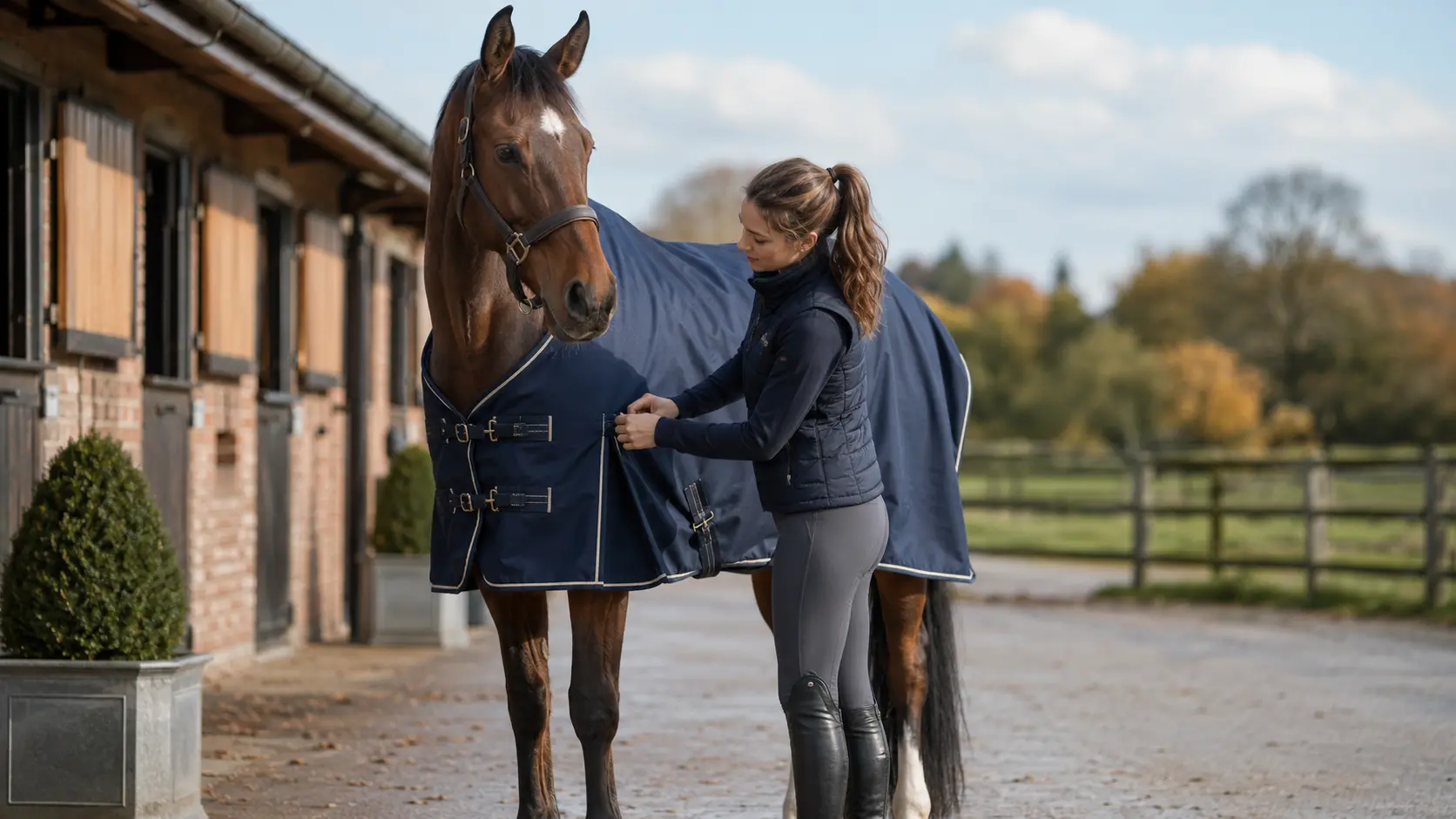 Horse rider fitting a horse rug outside stables in autumn
1. Understanding Rug Fill Weights: The Gram Guide
Rug fill weight is measured in grams (g) and is the primary indicator of warmth. However, the "right" weight depends heavily on your individual horse.
- 0g (Lightweight/No-Fill): These are essentially waterproof sheets. They offer no insulation but protect against wind, rain, and mud. Perfect for mild days or horses that generate their own heat easily.
- 100g – 200g (Medium Fill): The "all-rounder" for the UK. Ideal for milder autumn and spring nights, or for horses that are clipped but still need moderate warmth.
- 300g – 400g (Heavy Fill): Reserved for the depths of a British winter. Essential for unclipped horses in freezing conditions, elderly horses, or those with thin coats.
Crucial Considerations
Don't just look at the grams. Always factor in:
- Body Condition: A horse in good flesh generates more natural heat than a thin one.
- Breed: Native ponies (like Highland or Welsh) have thick winter coats and often need less fill than Thoroughbreds.
- Clipping: A full clip removes natural insulation, necessitating a heavier rug.
- Shelter Access: Horses with constant access to a dry field shelter may need less fill than those exposed 24/7.
2. The Critical Difference: Clipped vs. Unclipped Horses
One of the most common mistakes in rugging is treating every horse the same. A horse's natural coat is their primary insulation system, and removing it via clipping fundamentally changes their thermal needs.
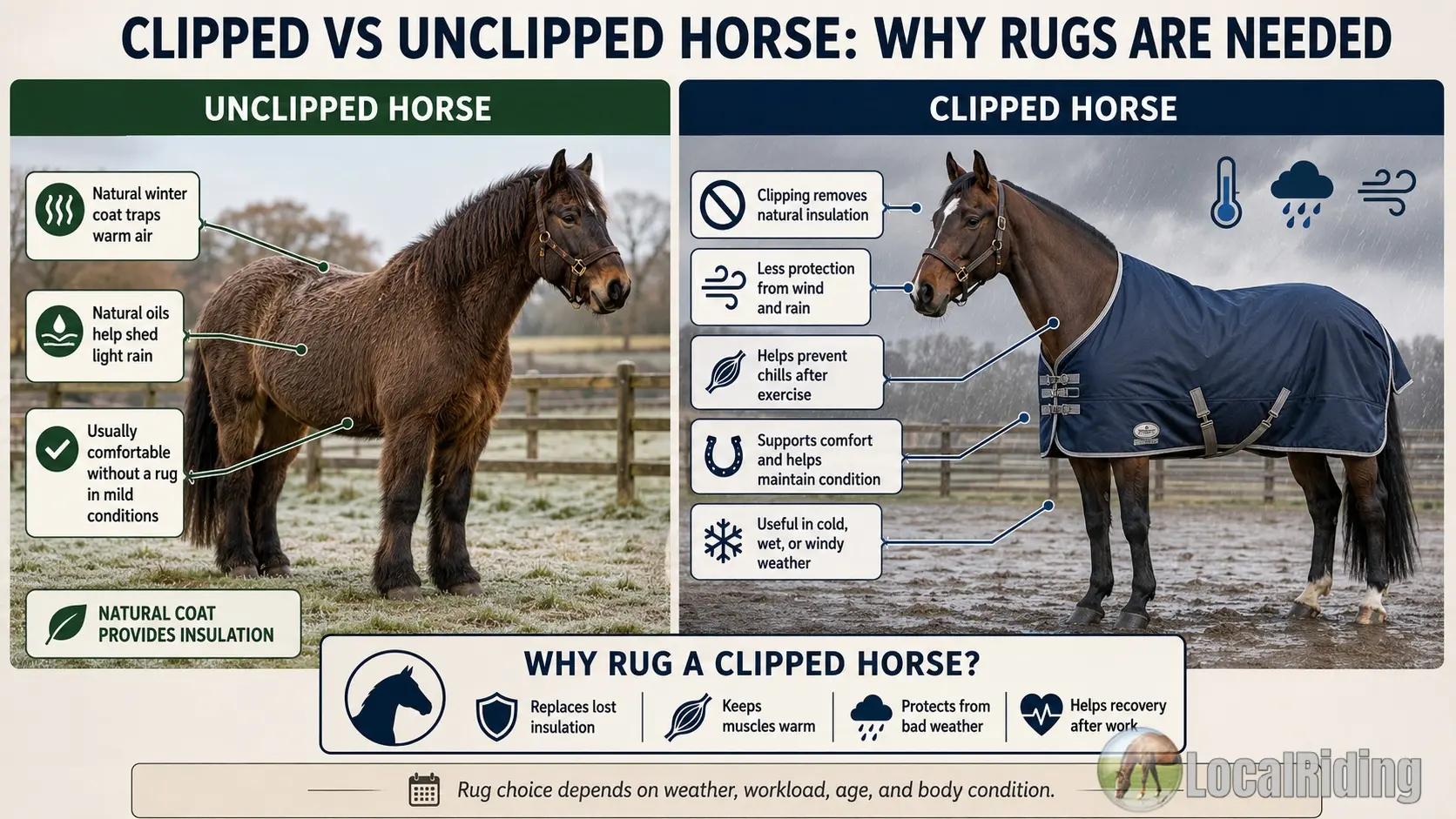 Infographic comparing clipped and unclipped horses — why rugs are needed, with the unclipped horse's natural winter coat trapping warm air and shedding rain, and the clipped horse needing a rug for warmth and weather protection
Clipped vs unclipped horses — why a clipped horse needs a rug, while many unclipped horses cope well with their natural coat.
The Unclipped Horse: Working with Nature
An unclipped horse grows a dense winter coat that traps a layer of air close to the skin, providing excellent natural insulation.
- The Strategy: "Less is More." Over-rugging an unclipped horse can cause them to overheat, sweat, and then get chilled when the sweat cools.
- When to Rug:
- 0g-100g: Often sufficient for most of the winter if the horse has access to shelter. Their coat handles the cold; the rug just keeps the rain off.
- Heavy Fill (300g+): Usually only needed for elderly horses, those in poor condition, or during extreme cold snaps (below -5°C) combined with high wind/rain.
- The "Coat Test": Run your hand through their winter coat. If it stands up and feels fluffy, they are generating good insulation. If it lies flat and looks greasy, they may need a bit more help.
The Clipped Horse: Artificial Winter Coat
Clipping removes the horse's natural ability to trap heat. Whether it's a trace clip (light neck/shoulder), hunter clip (body only), or a full clip (entire body), the horse loses their primary defence against the cold.
- The Strategy: "Layer and Protect." A clipped horse relies almost entirely on the rug for warmth.
- When to Rug:
- Trace Clip: Needs a medium fill (150g-200g) as soon as temperatures drop below 10°C.
- Hunter/Body Clip: Requires a heavy fill (300g+) much earlier in the season. They often need a liner underneath if temperatures drop below freezing.
- Full Clip: These horses are effectively "naked." They need a heavy turnout rug immediately upon clipping, often starting in late autumn. In deep winter, they may require a stable rug + turnout rug combination or a heavy-duty 400g+ turnout with a neck cover.
- The Danger Zone: A clipped horse in a light rug during a cold, wet spell can develop hypothermia much faster than an unclipped horse. Conversely, if the weather warms up unexpectedly, a clipped horse can overheat quickly if the rug isn't removed immediately.
[
Your browser does not support the video tag. ](/__l5e/assets-v1/bc7a6280-579f-4ff4-b684-817492a1ce2a/horse-rugging.mp4)
Watch: how to correctly rug a horse for UK weather.
Practical Tips for Managing Both
- Monitor the Neck: The neck is a great indicator of temperature. If a clipped horse's neck feels cold to the touch, they need more layers. If an unclipped horse's neck is sweaty under the rug, they need less.
- The "Liner" Trick: Instead of buying a new heavy rug, many owners use a fleece liner under their existing turnout rug. This adds 100g-150g of warmth without changing the waterproof shell, perfect for clipped horses on chilly mornings.
- Gradual Transition: When clipping, start with a lighter rug and increase the weight as the horse adjusts to the loss of coat. Don't jump straight to a 400g rug unless the weather demands it.
- Summer Clipping: Remember that summer clips (for sweat management) also require protection. A fly sheet or lightweight turnout is essential to prevent sunburn and insect bites, as the short hair offers no barrier.
Bottom Line: An unclipped horse needs a rug primarily for dryness, while a clipped horse needs a rug for both dryness and warmth. Always adjust your rugging strategy based on the clip level, not just the calendar date.
3. Turnout Rugs: Built for the Elements
Turnout rugs are your horse's first line of defence against the elements. They must be waterproof and breathable.
- Denier Rating: This refers to the thickness of the outer fabric. Higher denier equals greater tear resistance.
- Standard: 600D–900D is fine for calm horses in small paddocks.
- Heavy Duty: For horses in large herds, those who roll frequently, or in rough terrain, opt for 1200D or above.
- Top Picks: Brands like the Horseware Amigo and WeatherBeeta Comfitec ranges consistently receive excellent reviews from UK owners for their durability and fit.
- Breathability is Key: A non-breathable rug traps sweat, leading to chills and skin issues. Look for rugs with moisture-wicking liners.
4. Stable Rugs: Comfort Indoors
Stable rugs are designed for use in the stable only. They are not waterproof and should never be worn in the field, as rain will soak through instantly, leaving your horse colder than if they had no rug at all.
- The Fit Check: A correctly fitting stable rug should:
- Sit just in front of the withers without rubbing.
- Cover down to the dock (tailhead).
- Allow enough room at the chest for a flat hand to pass through comfortably.
- Layering: In very cold stables, owners often layer a lightweight stable rug under a heavier one, but ensure there is no bunching that could cause pressure points.
5. Fly Sheets and Combo Rugs: Summer Protection
The British summer brings its own challenges: midges, horseflies, and mosquitoes. These pests can cause severe irritation and transmit diseases like Sweet Itch (Culicoides hypersensitivity).
- Mesh Fly Sheets: Lightweight and breathable, these protect against insects while allowing airflow on warm days.
- Combo Rugs: For Sweet Itch sufferers, a full combo fly rug is essential. These feature a neck cover and sometimes a belly band to block insects from accessing the most vulnerable areas.
- Timing: Put fly rugs on early in the morning and late in the evening when midge activity peaks.
6. The Art of Rug Management: When to Change
The biggest mistake owners make is leaving a heavy rug on too long or taking it off too soon.
- Check Daily: Feel your horse's neck and chest under the rug. If they are sweating, remove the rug or switch to a lighter weight immediately.
- The "Hand Test": If the horse feels hot to the touch, they are overheating. If they feel cold, they need more insulation.
- Transition Seasons: Spring and Autumn are the trickiest. Temperatures can swing from 5°C to 15°C in a single day. Keep a variety of weights handy and be ready to swap rugs twice a day if necessary.
7. Rug Care and Maintenance
A well-cared-for rug lasts longer and performs better.
- Weekly Inspections: Check for tears, broken surcingles (belly straps), and worn areas. A small tear can quickly become a large hole if left unrepaired.
- Cleaning: At the end of each season, wash rugs thoroughly. Dirt and sweat can degrade waterproof coatings.
- Re-proofing: Most UK equestrian stores offer rug washing and re-proofing services. Re-applying a waterproofing spray (like Nikwax) can extend the life of your rug significantly.
Final Thoughts
Rugging is a balancing act. By understanding fill weights, choosing the right materials for your horse's lifestyle, and checking them daily, you can ensure your equine companion stays comfortable, dry, and healthy regardless of what the British sky throws at them.
Have a favourite rug brand or a specific tip for managing UK weather? Share your experiences in our Facebook group.
Debbie Irwin
Livery Yard Manager & Equestrian Professional
Debbie has run professional showing yards and mixed livery yards in Lincolnshire and Essex for over 30 years. She has competed and taught at various levels. She writes about practical horse health, yard life, livery and everyday horse health and management.
Support Debbie on Ko-fi ☕Found this guide helpful? LocalRiding is run independently without ads. If you'd like to chip in towards the site's upkeep, you can buy Debbie a hot drink on a cold day on Ko-fi, she'll really appreciate it.