
Tack & kit
Sweet Itch in UK Horses: Complete Management Guide
Complete UK guide to sweet itch (Culicoides hypersensitivity) — how to spot it, prevent midge bites with rugging and stabling, and manage active cases.
By Debbie Irwin · 1 May 2026 · 5 min read
Sweet itch is one of the most common and distressing skin conditions affecting horses in the UK. This comprehensive guide explains everything you need to know to identify, prevent and manage this challenging allergy effectively.
Important note: This article is for general information only and does not replace professional veterinary advice. If your horse is showing severe symptoms, open sores or signs of infection, contact your vet.
What is Sweet Itch?
Sweet itch, medically known as Culicoides hypersensitivity, is an allergic reaction to the saliva of Culicoides midges — tiny biting insects that are extremely prevalent across the UK, particularly in Scotland, Wales, Ireland and areas near standing water.
Unlike regular insect bites, sweet itch is an immune-mediated allergic response. Once a horse becomes sensitised, even a single midge bite can trigger an intense reaction that lasts for days or weeks. Affected horses suffer intense itching along the mane, tail and belly that can lead to hair loss, open sores and significant distress if not properly managed.
Prevalence: Studies suggest that up to 10% of UK horses are affected by sweet itch, with certain breeds (such as Icelandic horses, Welsh ponies and Connemaras) showing higher genetic susceptibility.
Understanding the Midges
To manage sweet itch effectively, you need to understand your enemy. Culicoides midges are:
- Size: Less than 3mm — barely visible to the naked eye.
- Activity: Most active at dawn and dusk, but can bite throughout the day in shaded, humid areas.
- Flight Range: Can travel up to 5km, meaning even horses far from breeding sites can be affected.
- Season: Peak activity runs from April to October in the UK, with the worst months typically being June through September.
- Breeding Grounds: Standing water, marshy areas, woodland edges and slow-moving streams.
Important: Midges are attracted to carbon dioxide, body heat and dark colours. This is why darker rugs and horses with higher metabolic rates may be bitten more frequently.
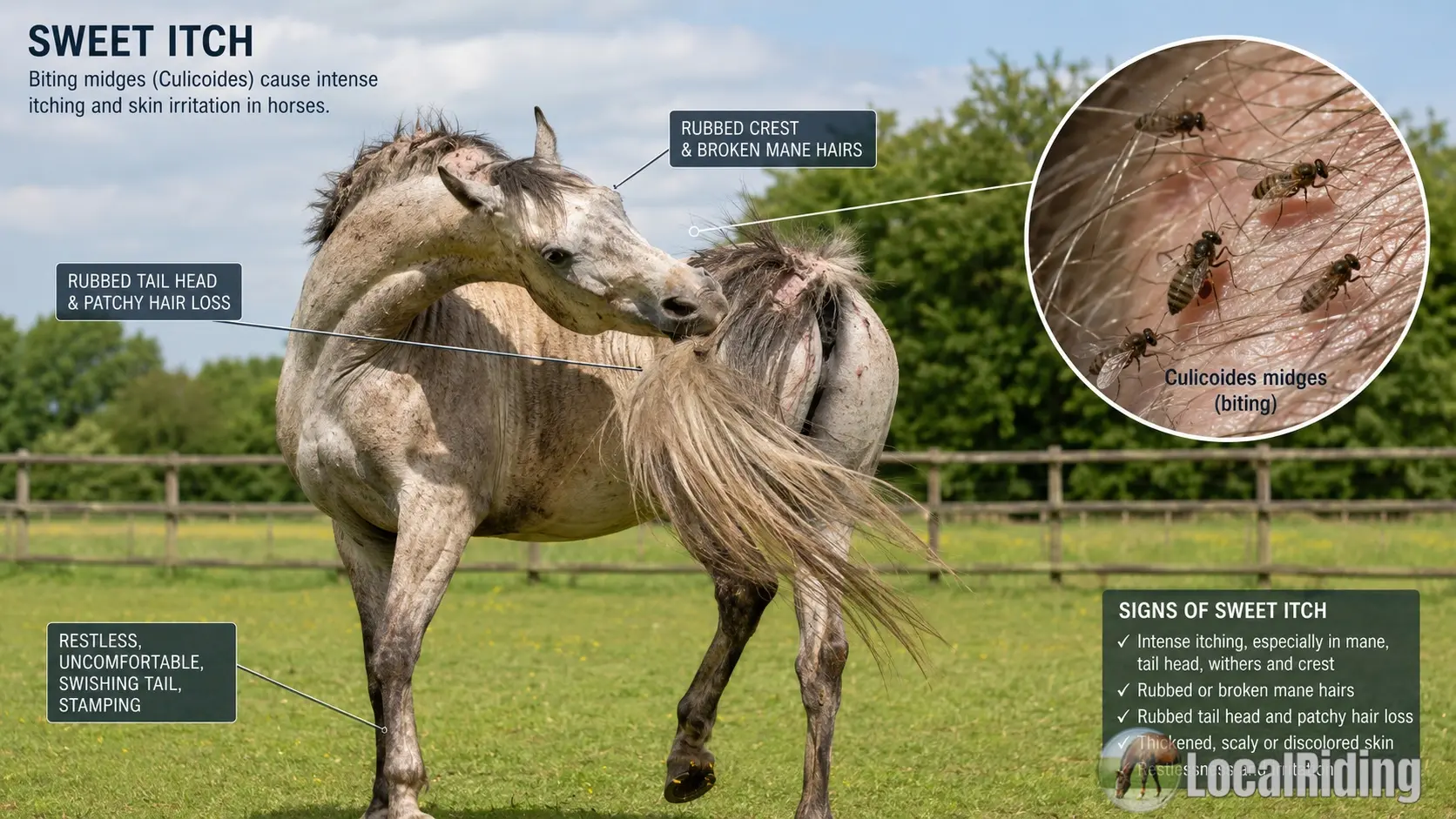 Diagram of a grey horse suffering with sweet itch — rubbed crest and broken mane hairs, rubbed tail head with patchy hair loss, restless and swishing, with close-up of biting Culicoides midges
Classic signs of sweet itch — rubbed mane and tail, broken hairs and constant irritation caused by Culicoides midges.
Identifying Sweet Itch: Symptoms to Watch For
Symptoms typically begin in spring when midges first emerge and worsen through summer. Early detection is crucial for preventing severe reactions.
Common Physical Signs
- Persistent Rubbing: Mane and tail rubbing leading to hair loss (often described as "rat tail" appearance).
- Broken Skin: Along the neck, withers, rump and belly where midges commonly bite.
- Thickened Skin: Chronic cases develop leathery, hyperpigmented skin in affected areas.
- Open Sores: Secondary infections can develop from constant scratching and rubbing.
- Scaly Patches: Especially around the ears and face.
Behavioural Indicators
- Restlessness: Particularly around dawn and dusk when midges are most active.
- Head Tossing: Attempting to shake off biting insects.
- Reduced Performance: Irritability can affect training and competition results.
- Lethargy: Chronic discomfort may lead to decreased appetite and energy.
Prevention Strategies: The First Line of Defence
Prevention is far more effective than treatment once a horse is already sensitised. A multi-layered approach works best.
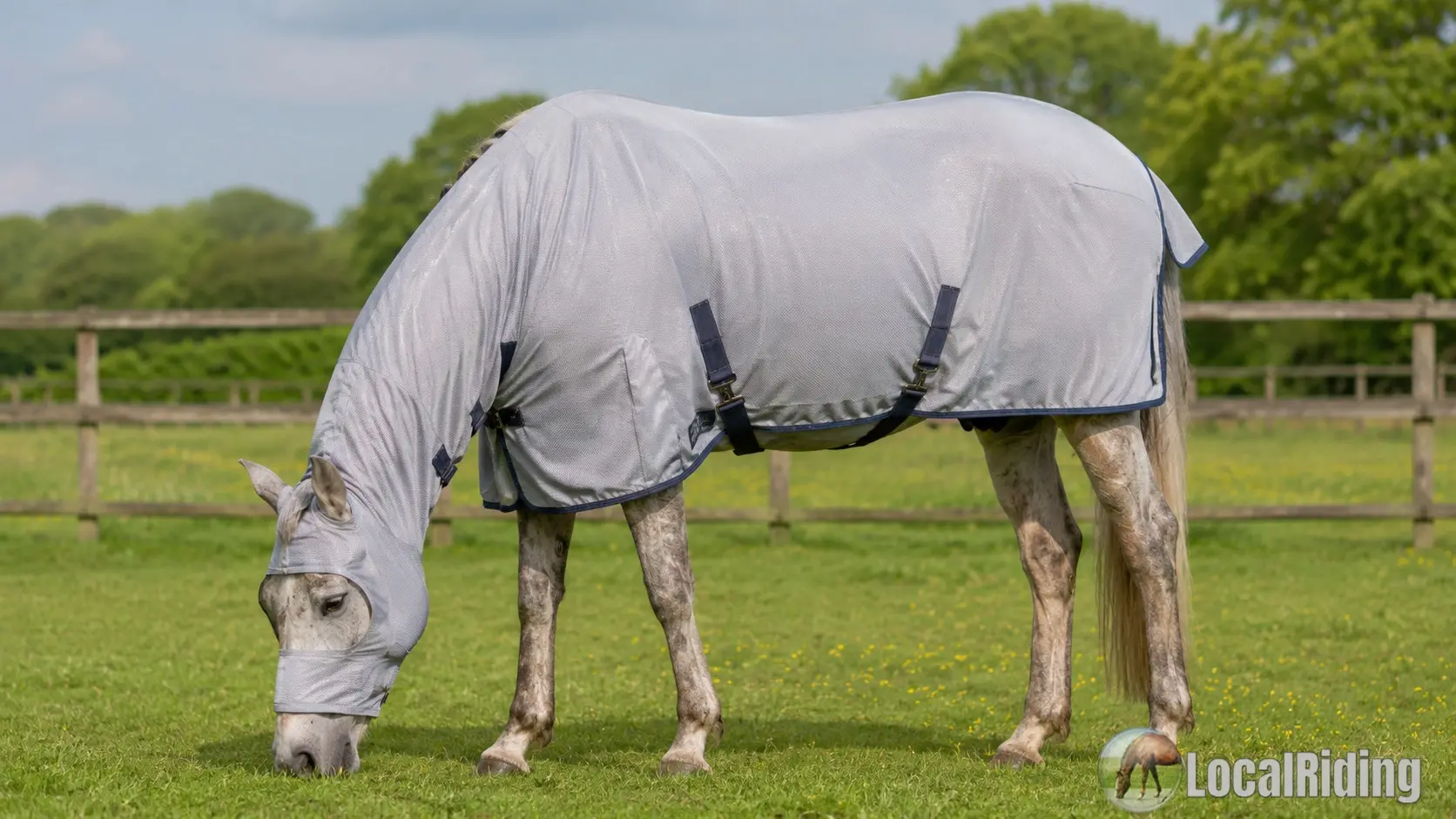 Grey horse wearing a full sweet itch combo rug with belly band, neck cover and fly mask, grazing calmly in a UK paddock — well protected from biting midges
A horse properly protected with a full sweet itch combo rug, neck cover and fly mask — the single most effective prevention measure.
1. Protective Rugging
Use a full sweet itch combo rug with belly band and neck cover. The rug must be:
- Tightly Woven: Mesh fine enough to prevent midge bites (less than 1mm openings).
- Waterproof: To keep the horse dry and comfortable.
- Breathable: To prevent overheating during warmer months.
Top UK Picks: The Shires Tempest Original and WeatherBeeta ranges offer excellent coverage and are widely recommended by UK vets and saddle fitters.
2. Strategic Stabling
Keep horses stabled from one hour before sunset to one hour after sunrise during midge season. This is when midge activity peaks. Ensure stables have:
- Mesh Windows: Fine mesh screens on all windows and doors.
- Extraction Fans: Midges struggle to fly in strong air currents. Ceiling fans or oscillating fans can deter them.
- Yellow Lighting: Midges are less attracted to yellow or sodium vapour lights compared to white light.
3. Insect Repellents
Apply insect repellent products to exposed areas (face, ears, lower legs) where rugs cannot cover. Effective options include:
- Lincoln Fly Repellent: Contains permethrin, effective against biting insects.
- NAF Off DEET Power: Long-lasting protection with DEET-based formula.
- Equi-Shield: Natural oil-based repellents for horses sensitive to chemicals.
Application Tip: Reapply every 4–6 hours, especially after sweating or rain.
4. Environmental Management
- Avoid High-Risk Areas: Don't graze near water, marshy areas, or woodland edges where midges breed.
- Drain Standing Water: Remove buckets, old tyres and any containers that collect water around the yard.
- Turnout Timing: Graze during midday when midge activity is lowest.
Treatment Options: Managing Active Cases
For horses already suffering, a combination of veterinary care and supportive treatments can provide relief.
Veterinary Prescriptions
- Antihistamines: Can help reduce itching during acute flare-ups.
- Corticosteroids: Prednisolone or dexamethasone prescribed by a vet for severe cases. Warning: Long-term steroid use can suppress the immune system and increase diabetes risk.
- Antibiotics: If secondary bacterial infections develop from open sores.
Topical Treatments
- Sudocrem: Soothes inflamed skin and protects open wounds.
- Aloe Vera Gel: Natural anti-inflammatory properties.
- Calamine Lotion: Reduces itching and calms irritated skin.
- Medical Shampoos: Chlorhexidine-based shampoos can treat secondary infections.
Immunotherapy
In severe cases, immunotherapy through a veterinary practice has shown promising results. This involves administering gradually increasing doses of midge allergens to desensitise the horse's immune system. Success rates vary, but some horses experience significant long-term improvement.
Diet and Supplements: Supporting from Within
Many sweet itch sufferers also benefit from dietary adjustments. While diet alone won't cure the condition, it can reduce the severity of reactions.
Reduce Sugar and Starch
High sugar intake is thought to exacerbate inflammatory conditions. Consider:
- Low-NSC Hay: Soak hay for 12–24 hours to reduce sugar content.
- Limited Concentrates: Reduce or eliminate high-energy feeds during peak season.
- Pasture Management: Avoid lush spring grass which is high in sugars.
Supportive Supplements
- Omega-3 Fatty Acids: Fish oil or linseed oil can reduce inflammation and improve skin health.
- Vitamin E: Antioxidant properties support immune function.
- Zinc and Copper: Essential for skin repair and integrity.
- Quercetin: A natural antihistamine supplement gaining popularity among UK owners.
Seasonal Management Calendar
| Month | Action |
|---|---|
| January–February | Prepare rugs and repellents. Consult vet about prophylactic treatment. |
| March–April | Begin protective measures as midges emerge. Start supplements. |
| May–August | Peak prevention mode. Rug 24/7 if possible. Stable at dawn/dusk. |
| September–October | Continue protection as midges remain active. Monitor for late-season flare-ups. |
| November–December | Wind down prevention. Assess skin condition. Plan for next season. |
When to Seek Veterinary Help
Contact your vet immediately if you notice:
- Severe Hair Loss: Large patches of mane or tail falling out.
- Infected Wounds: Pus, heat, or swelling around sores.
- Lameness: Could indicate secondary complications.
- No Improvement: After 2 weeks of consistent management.
- Systemic Signs: Fever, lethargy, or loss of appetite.
Final Thoughts
Sweet itch is a lifelong condition — there is currently no cure. The key is consistent, proactive management from the first signs of spring. With the right combination of protective rugging, environmental control, dietary support and veterinary care, most horses can live comfortably despite their allergy.
Debbie Irwin
Livery Yard Manager & Equestrian Professional
Debbie has run professional showing yards and mixed livery yards in Lincolnshire and Essex for over 30 years. She has competed and taught at various levels. She writes about practical horse health, yard life, livery and everyday horse health and management.
Support Debbie on Ko-fi ☕Found this guide helpful? LocalRiding is run independently without ads. If you'd like to chip in towards the site's upkeep, you can buy Debbie a hot drink on a cold day on Ko-fi, she'll really appreciate it.