
Horse health
Best Horse Supplements in the UK: A Practical Guide for Horse Owners
With hundreds of horse supplements on the UK market, choosing the right product can feel overwhelming. This practical guide breaks down joint, gut, coat, hoof, calming and electrolyte supplements — and how to choose wisely.
By Debbie Irwin · 15 May 2026 · 5 min read
With hundreds of horse supplements available in the UK, choosing the right product can feel overwhelming. From joint support and hoof health to digestive aids, calmers and coat supplements, every tub seems to promise a healthier, happier horse. The truth is that supplements can be extremely useful when chosen carefully, but they are not a substitute for good forage, correct feeding, regular turnout, veterinary care and sensible management.
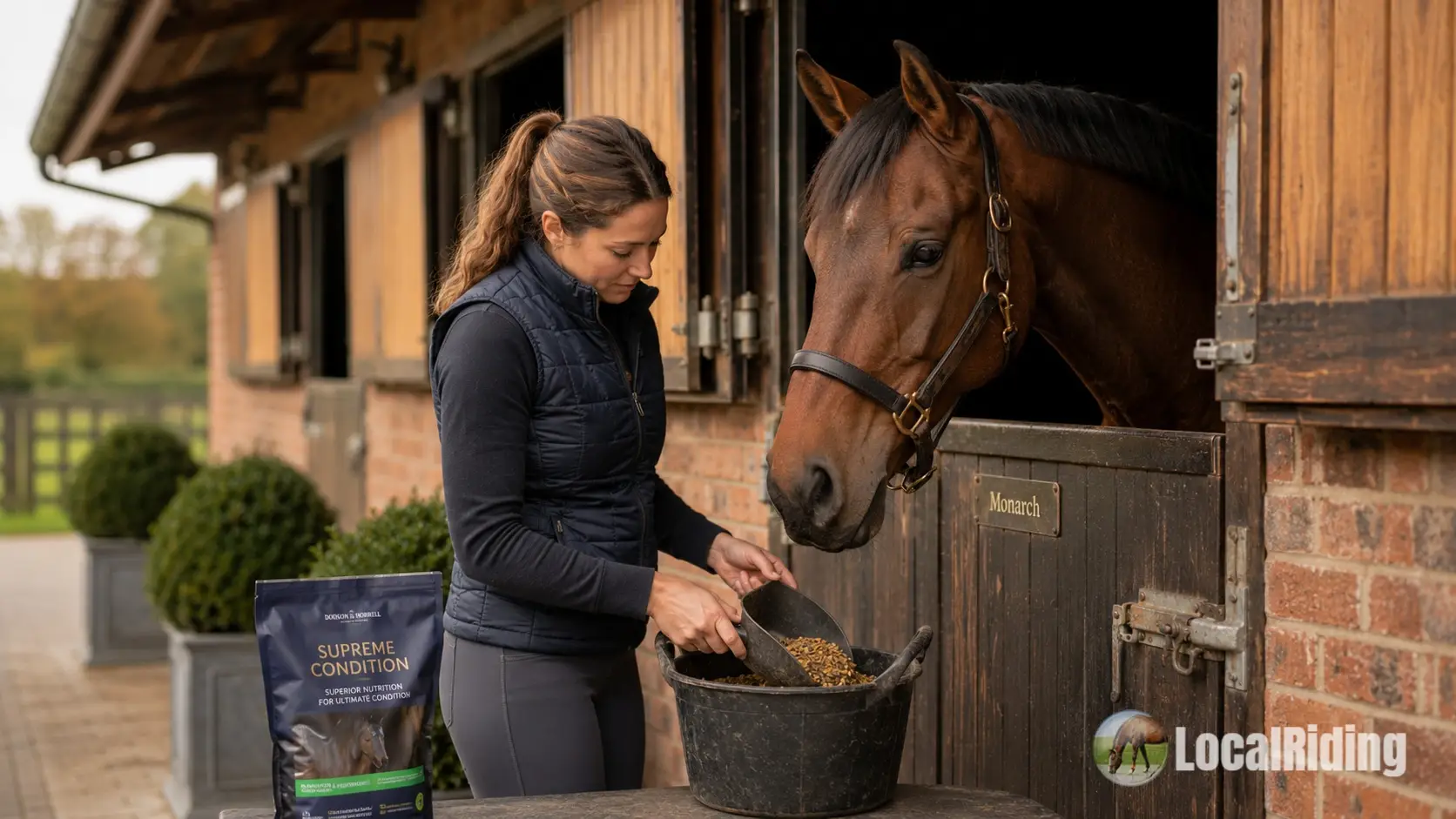 UK horse owner adding a supplement to her horse's feed at the stable
This guide explains the main categories of horse supplements, what they are commonly used for, and how to decide whether your horse may benefit from them.
Do Horses Really Need Supplements?
Many horses do not need a cupboard full of supplements. A healthy horse receiving good-quality forage, appropriate hard feed and a balanced vitamin and mineral balancer may already be getting everything required for normal health and performance.
However, targeted supplementation can be helpful for certain horses. These may include older horses, competition horses, horses in heavy work, those on restricted grazing, poor doers, horses with digestive sensitivity, horses recovering from illness, or animals with specific issues such as stiff joints, poor hoof quality or dull coat condition.
Before adding a supplement, ask what problem you are trying to solve. Is your horse stiff, anxious, lacking condition, struggling with loose droppings, or showing poor hoof growth? A clear goal makes it easier to choose the right product and assess whether it is working.
Start with the Basics: Forage, Feed and Balancers
The foundation of equine nutrition is forage. Most horses should receive a forage-based diet built around grass, hay or haylage. If forage quality is poor, or if grazing is restricted, a good balancer can help provide key vitamins, minerals and amino acids without adding unnecessary calories.
It is often better to start with a broad-spectrum balancer before adding several individual supplements. Too many overlapping products can become expensive and may lead to unnecessary duplication of ingredients.
Joint Supplements
Joint supplements are among the most popular choices for UK horse owners, especially for older horses, horses in regular work and those with a history of stiffness. Common ingredients include glucosamine, chondroitin sulphate, MSM, hyaluronic acid and omega-3 fatty acids.
These ingredients are generally used to support cartilage, joint fluid and normal mobility. They are not a cure for arthritis or lameness, but they may help support comfort and flexibility as part of a wider management plan.
Popular UK options include products such as NAF Five Star Superflex, which is marketed for joint health and contains ingredients including glucosamine, chondroitin and hyaluronic acid. Other options include glucosamine-based supplements from established equine nutrition brands.
When using a joint supplement, allow at least six to eight weeks before judging the result. For older horses or those with obvious lameness, always involve your vet rather than relying on supplements alone.
Gut Health and Digestive Supplements
The equine digestive system is sensitive, and gut health can be affected by stress, travel, competition, box rest, worming, antibiotics, sudden feed changes or limited turnout. Digestive supplements usually contain prebiotics, probiotics, yeast cultures, herbs, fibre sources or ingredients designed to support hindgut balance.
These products are often used for horses prone to loose droppings, poor condition, digestive upset during travel, or changes in routine. Protexin Equine products, for example, are widely used in the UK digestive supplement category and include products designed to support healthy digestion and gut balance.
If your horse has recurring colic signs, weight loss, persistent diarrhoea or suspected gastric ulcers, speak to your vet. Supplements may support management, but they should not delay proper diagnosis.
Coat, Skin and Condition Supplements
A shiny coat usually reflects overall health, good nutrition and correct grooming. Coat and skin supplements often include omega-3 oils, linseed, soya oil, biotin, zinc, methionine and other nutrients linked with skin and hair quality.
Linseed is a popular UK choice because it can support coat shine and condition while also providing useful fatty acids. It may be particularly helpful for horses coming out of winter with a dull, flat coat or those needing support during coat change.
Oils can add calories, so introduce them gradually and avoid overfeeding, especially to good doers or horses prone to weight gain. If a horse has itchy skin, bald patches, scabs or persistent irritation, investigate the underlying cause rather than simply adding a coat supplement.
Hoof Supplements
Hoof supplements are designed to support horn quality and growth. They commonly include biotin, zinc, copper, methionine and other amino acids. These ingredients may help horses with brittle feet, slow hoof growth or poor horn quality.
Patience is essential. Hoof growth is slow, so visible improvement may take four to six months or longer. A hoof supplement is most effective when combined with regular farrier visits, correct trimming or shoeing, clean bedding and good field management.
If your horse has severe cracks, repeated lost shoes, white line disease, laminitis or ongoing lameness, involve your farrier and vet.
Calming Supplements
Calming supplements are used for horses that are sharp, spooky, anxious, tense or difficult to manage. Common ingredients include magnesium, L-tryptophan, herbs and B vitamins. Some horses respond well, while others show little change.
It is important to consider why a horse is unsettled. Pain, ulcers, poor saddle fit, dental problems, lack of turnout, unsuitable feed, insufficient work or inconsistent handling can all cause difficult behaviour. A calmer should not be used to mask a welfare or training issue.
Competition riders must be especially careful. Some calming ingredients, particularly certain herbal ingredients, may not be suitable under competition rules. Always check the label, look for products from reputable manufacturers and review current competition guidance before use.
Electrolytes and Performance Support
Electrolytes help replace salts lost through sweating. They can be useful for horses in hard work, during hot weather, after transport or following intense training and competition.
For light leisure horses, electrolytes may only be needed occasionally. For competition horses, they can form an important part of recovery management. Always provide fresh water and follow feeding instructions carefully.
Choosing a Good Horse Supplement
When comparing supplements, look for clear ingredient lists, realistic claims, feeding rates, cost per day and manufacturer reputation. Avoid products that promise dramatic results without explaining how they work.
For competition horses, choose products from companies that take prohibited substance risk seriously. The British Equestrian Trade Association's NOPS scheme is designed to help reduce the risk of contamination from natural and other prohibited substances, although no scheme can offer an absolute guarantee.
Final Thoughts
The best horse supplement is the one that meets a specific need, fits your horse's diet and is used consistently at the correct dose. Start with forage, a balanced diet and good management. Then choose targeted supplements only where they add genuine value.
If you are unsure, speak to your vet, farrier or an independent equine nutritionist. Used wisely, supplements can play a valuable role in supporting joint comfort, digestion, hoof strength, coat condition and overall wellbeing.
Debbie Irwin
Livery Yard Manager & Equestrian Professional
Debbie has run professional showing yards and mixed livery yards in Lincolnshire and Essex for over 30 years. She has competed and taught at various levels. She writes about practical horse health, yard life, livery and everyday horse health and management.