
Horse health
Laminitis in UK Horses: Causes, Prevention and Management
A complete UK guide to laminitis — what it is, the triggers (fructans, EMS, PPID), how to spot the early signs, and how to prevent and manage it long term.
By Debbie Irwin · 19 April 2026 · 6 min read
Laminitis is one of the most painful, debilitating and common conditions affecting horses in the UK. Often described as a "silent killer" until symptoms become obvious, it can rapidly progress from mild discomfort to a catastrophic failure of the hoof structure. This comprehensive guide explains the causes, recognition, prevention and long-term management strategies specifically tailored for UK horse owners.
⚠️ Important disclaimer: This article is for informational and educational purposes only. It is not medical or veterinary advice. Laminitis is a life-threatening emergency. If you suspect your horse is suffering from laminitis, contact your vet immediately.
What is Laminitis?
Laminitis is the inflammation of the sensitive laminae within the horse's hoof. The laminae are thousands of tiny, interlocking leaf-like structures that act as the "velcro" connecting the hoof wall to the pedal bone (coffin bone) inside.
When these tissues become inflamed, they swell and weaken. In severe cases, the connection fails, allowing the pedal bone to rotate downwards or sink vertically within the hoof capsule. This condition is known as founder. The rotation can puncture the sole of the foot, leading to infection and permanent disability.
Who is at risk? While any horse can develop laminitis, native breeds (such as Welsh ponies, Highland ponies and Exmoor ponies), overweight "good doers," and horses with underlying metabolic disorders are at the highest risk in the UK.
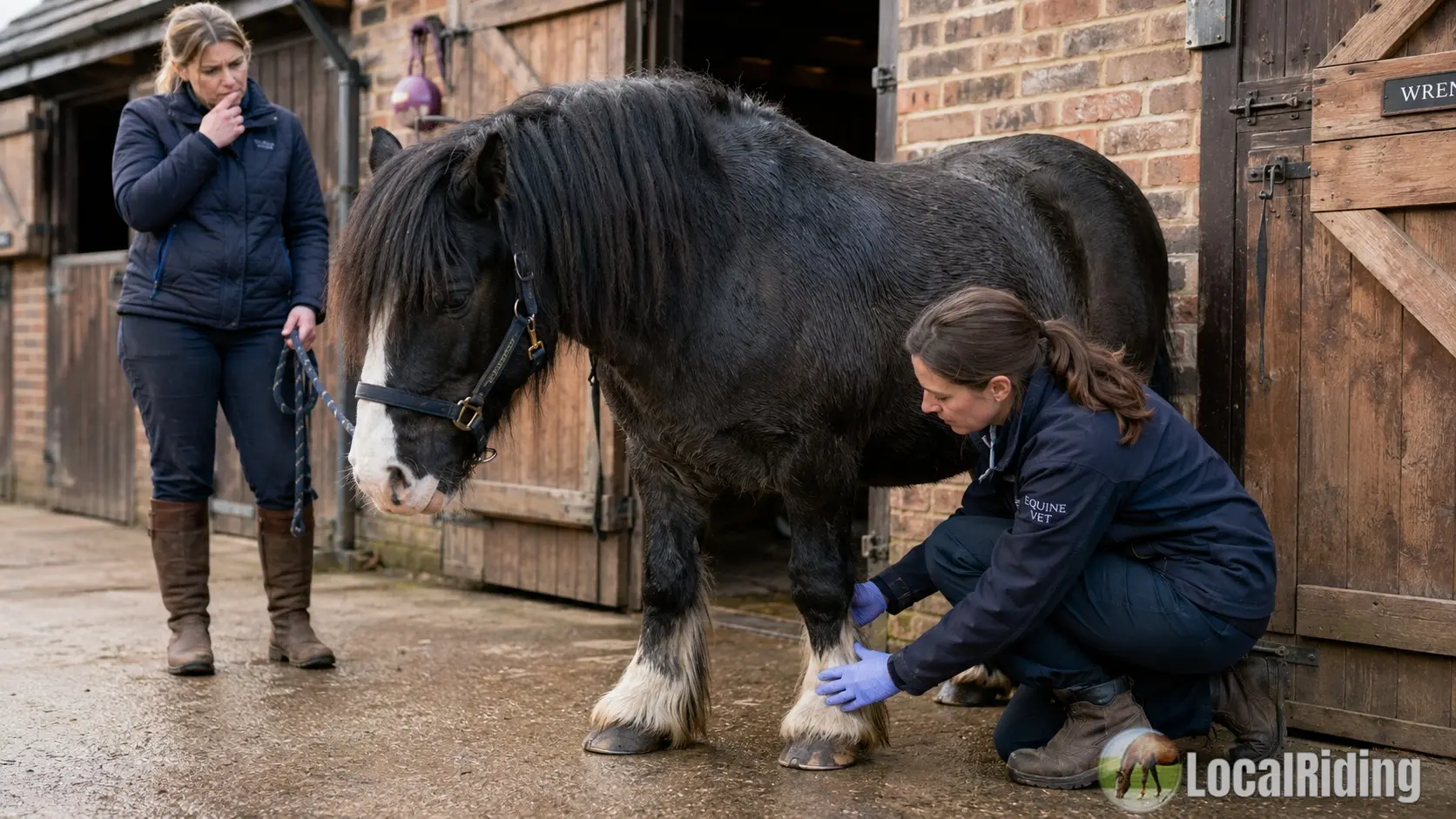 UK equine vet examining a native pony's front leg for laminitis outside a stable, with the owner looking on concerned
A UK equine vet examining a native pony for early signs of laminitis — fast veterinary involvement is critical.
Understanding the Triggers: The UK Context
Laminitis is rarely caused by a single factor; it is usually the result of a systemic issue triggering a cascade of events in the hoof. Understanding the triggers is key to prevention.
1. Dietary Triggers (Fructans)
The most common trigger in the UK is lush, rapidly growing grass, particularly in spring and autumn. These grasses are high in fructans, a type of carbohydrate that horses cannot digest in the small intestine. When fructans reach the hindgut, they disrupt the bacterial balance, releasing toxins that cause blood vessel constriction in the hooves.
- Spring flush: Rapid growth after winter rains.
- Autumn frost: Cold nights followed by sunny days cause grass to store sugars (fructans) to survive the cold, creating a "sugar bomb."
- Drought stress: Grass recovering from drought can also spike in sugar content.
2. Metabolic Disorders
Many cases of laminitis are linked to underlying hormonal imbalances:
- Equine Metabolic Syndrome (EMS): Characterised by obesity, insulin resistance and regional fat deposits (cresty neck). Insulin resistance is a major driver of laminitis.
- Pituitary Pars Intermedia Dysfunction (PPID/Cushing's): Common in older horses, causing hormonal imbalances that increase laminitis risk year-round.
3. Mechanical and Systemic Causes
- Concussion: Prolonged work on hard surfaces (e.g. road work) can cause mechanical laminitis.
- Systemic illness: Severe colic, retained placenta after foaling, or severe infections (sepsis) can trigger laminitis as a secondary complication.
- Overfeeding grain: Sudden access to large amounts of cereal feed can cause grain overload laminitis.
Recognising Laminitis: Early Warning Signs
Early detection is critical. Waiting for the horse to be "obviously lame" can mean the pedal bone has already rotated. Look for these subtle signs:
Posture and Movement
- The "laminitic stance": Standing with front legs stretched forward and back legs tucked under the body to relieve pressure on the toes.
- Reluctance to move: Walking slowly, stiffly, or refusing to walk at all.
- Rocking back: Shifting weight onto the heels to avoid pain in the toe area.
- Difficulty turning: Distress or stiffness when asked to turn tight circles.
Physical Indicators
- Warm hooves: The hooves feel noticeably hotter than usual, especially around the coronary band.
- Bounding digital pulse: A strong, thumping pulse felt in the digital arteries at the back of the fetlock. This indicates increased blood flow and inflammation.
- Increased heart rate: Due to pain.
- Foot pain: Reacting sharply when the hoof tester is applied to the toe or sole.
Immediate action: If you suspect laminitis, remove the horse from grass immediately, confine them to a small, soft area (like a stable with deep bedding) and call your vet. Do not wait.
Prevention Strategies for UK Horses
For susceptible horses and ponies, prevention is everything. A proactive approach can prevent a crisis.
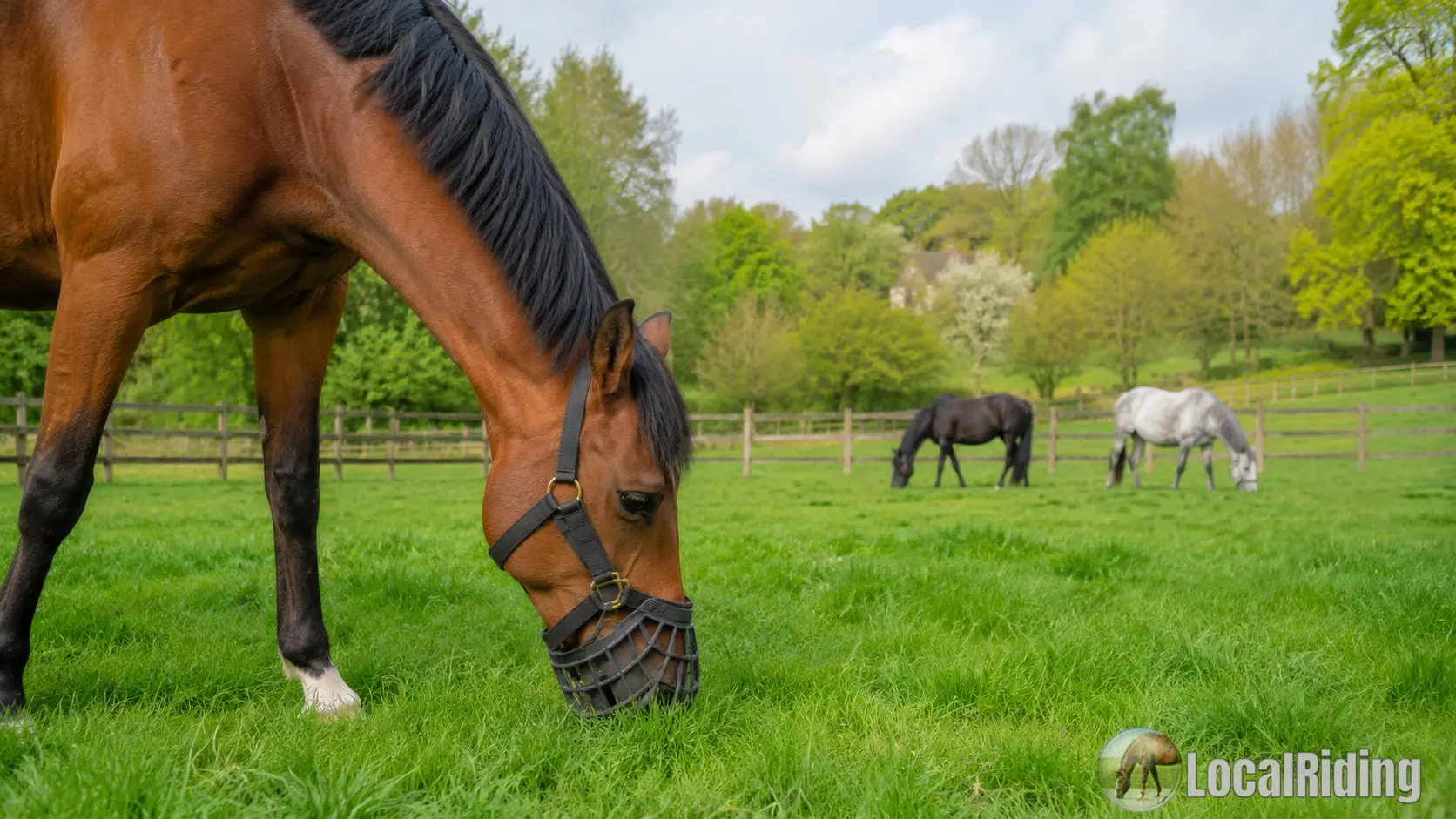 Bay horse wearing a grazing muzzle on lush spring grass in a UK paddock, with other horses grazing in the background — a key laminitis prevention measure
Lush UK spring grass is a major laminitis trigger — a well-fitted grazing muzzle can reduce intake by up to 80% while still allowing turnout.
1. Grass Management
- Restrict access: Use electric fencing to create a "bare paddock" or strip grazing system where grass is kept very short.
- Grazing muzzles: A well-fitted muzzle allows the horse to move and socialise while reducing grass intake by up to 80%. Ensure the horse can still drink water adequately.
- Timing: Avoid turnout during high-risk times: late afternoon and evening when sugar levels in grass are highest. Turn out in the early hours of the morning when fructan levels are lowest, and avoid bright sunny days after a hard frost.
- Soaking hay: Soak hay for 12–24 hours in cold water to leach out soluble sugars. Drain and feed immediately to prevent mould growth.
2. Weight Management
Maintain a healthy Body Condition Score (BCS). No horse should carry excess weight. A cresty neck or fat pads around the tailhead are warning signs of insulin resistance.
- Dietary balance: Use a low-sugar, low-starch balancer or vitamin/mineral supplement rather than high-energy concentrates.
- Exercise: Gradual, controlled exercise helps improve insulin sensitivity, provided the horse is not currently in pain.
3. Monitoring
- Regular blood tests: Test for insulin, glucose and ACTH (for PPID) annually, or more frequently if risk factors exist.
- Hoof checks: Regularly check for heat and pulses. Take photos of the hoof shape to track changes over time.
Long-Term Management and Recovery
Horses who have survived a laminitic episode require lifelong management. Recovery is a marathon, not a sprint.
Collaborative Care Team
Work closely with a team consisting of:
- Veterinarian: For pain management, medication (e.g. NSAIDs, vasodilators) and monitoring bloodwork.
- Farrier: Therapeutic trimming and shoeing are critical. An experienced farrier can use rocker-toed shoes, heart-bar shoes, or pads to support the pedal bone and redistribute weight away from the painful toe.
- Equine nutritionist: To formulate a precise diet that maintains weight without spiking insulin.
Environmental Support
- Deep bedding: Use deep straw or wood shavings to cushion the feet and encourage the horse to lie down, relieving pressure.
- Soft surfaces: If turnout is permitted, ensure the ground is soft and free of hard patches.
Prognosis
The prognosis depends on the severity of the rotation and the speed of intervention. Mild cases can recover fully with strict management. Severe cases with significant rotation or sinking may require euthanasia if the horse's quality of life cannot be maintained. Patience and consistency are the keys to success.
Myths vs. Facts
- Myth: "Only fat horses get laminitis."
Fact: Thin horses with EMS or PPID can also suffer. It is a metabolic issue, not just a weight issue. - Myth: "Once they recover, they can go back to normal grazing."
Fact: Most laminitics are permanently susceptible and require lifelong dietary restrictions. - Myth: "Ice boots cure laminitis."
Fact: Ice can help in the acute phase to reduce inflammation, but it is not a cure. It must be combined with veterinary care and rest.
Final Thoughts
Laminitis is a devastating condition, but with awareness, early detection and strict management, many horses can live comfortable, productive lives. The key for UK owners is to respect the power of the seasons, manage grass intake rigorously and never ignore the subtle signs of hoof pain.
Debbie Irwin
Livery Yard Manager & Equestrian Professional
Debbie has run professional showing yards and mixed livery yards in Lincolnshire and Essex for over 30 years. She has competed and taught at various levels. She writes about practical horse health, yard life, livery and everyday horse health and management.
Support Debbie on Ko-fi ☕Found this guide helpful? LocalRiding is run independently without ads. If you'd like to chip in towards the site's upkeep, you can buy Debbie a hot drink on a cold day on Ko-fi, she'll really appreciate it.