
Horse health
Horse Hoof Care: A Complete Guide for UK Horse Owners
Healthy hooves are the foundation of a sound horse. This comprehensive guide covers daily hoof care, common UK hoof problems, and the best products available on Amazon UK.
By Debbie Irwin · 7 May 2026 · 6 min read
Healthy hooves are the foundation of a sound, comfortable and happy horse. Whether your horse is a leisure companion, competition partner or retired field friend, good hoof care should be part of your daily routine. The old saying "no hoof, no horse" remains true because even a small problem in the foot can quickly affect movement, performance and overall welfare.
In the UK, hoof care can be especially challenging because of wet weather, muddy gateways, changing ground conditions and seasonal shifts between soft winter fields and hard summer tracks. Regular checks, sensible management, a reliable farrier and the right products can help prevent many common hoof problems before they become serious.
Why Hoof Care Matters
A horse's hoof is a complex structure designed to absorb shock, support body weight and provide grip. It includes the hoof wall, sole, frog, white line, bars and internal sensitive tissues. When hooves are balanced and healthy, the horse is more likely to move freely and stay sound. When they are neglected, issues such as cracks, bruising, thrush, abscesses and lameness can develop.
Good hoof care is not just about appearance. It supports circulation, comfort, posture and long-term mobility. Many hoof problems are easier and cheaper to manage when spotted early, so owners should get into the habit of checking feet every day.
Daily Hoof Picking and Inspection
Every horse should have its feet picked out at least once a day. Horses in regular work, those living on muddy ground or those stabled for part of the day may benefit from checks morning and evening. Use a sturdy hoof pick to remove stones, packed mud, bedding and debris from the sole, frog and side grooves.
While picking out each foot, look and feel for anything unusual. Check for heat, a strong unpleasant smell, dark discharge around the frog, loose shoes, raised clenches, cracks, chips, puncture wounds or signs of tenderness. A digital pulse that feels stronger than normal can also suggest inflammation or pain and should be taken seriously.
If your horse suddenly becomes lame, reacts strongly when a hoof is handled, or has a suspected puncture wound, contact your vet or farrier promptly. Do not dig into the sole or frog aggressively, as this can cause further damage.
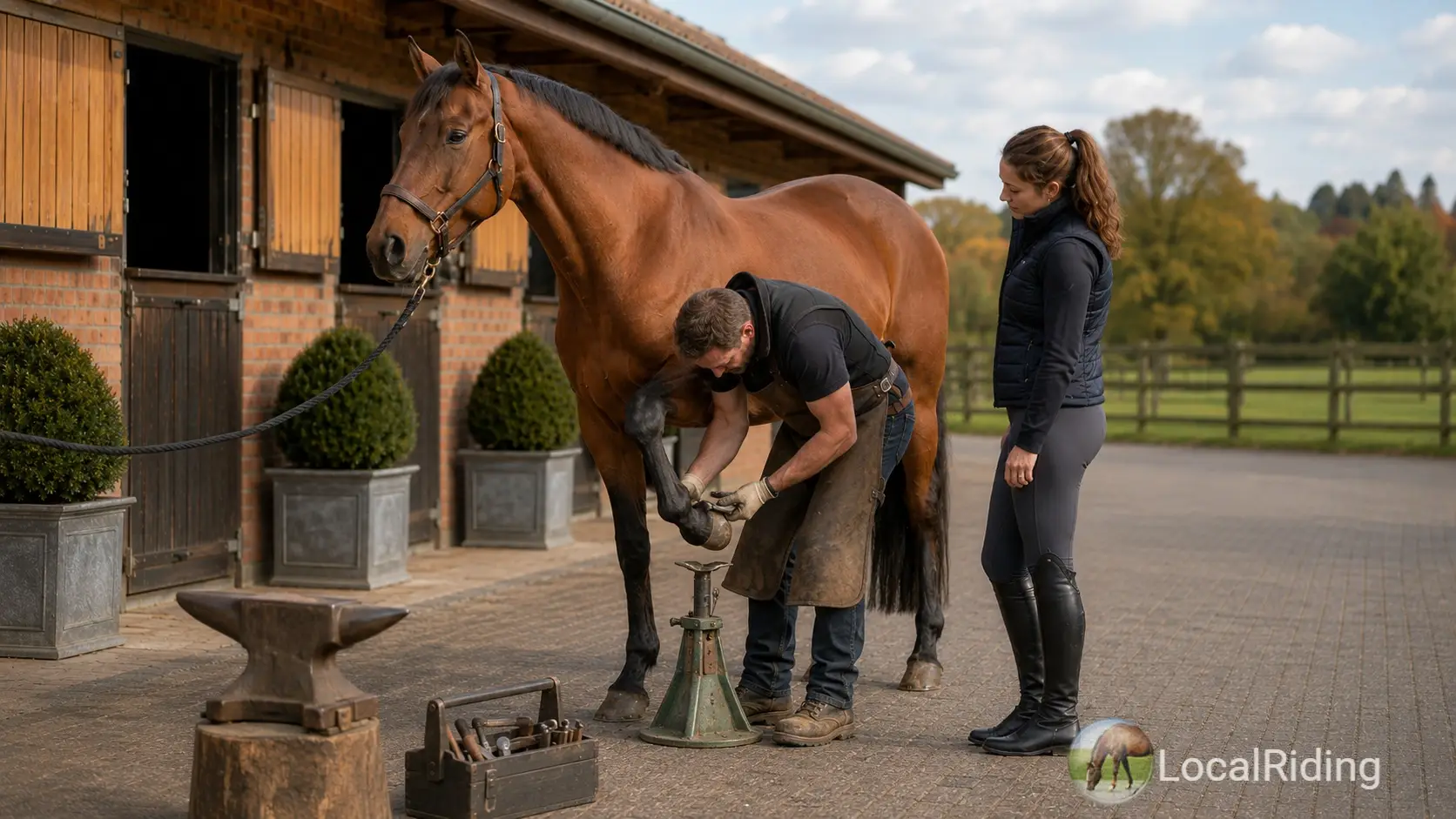 Horse rider watching a farrier shoe a horse outside the stables
Building a Good Farrier Routine
A skilled, reliable farrier is one of the most important professionals in your horse's care team. Most UK horses need trimming or shoeing every six to eight weeks, although the ideal interval depends on workload, hoof growth, conformation, season and whether the horse is shod or barefoot.
Some horses grow hoof quickly and need more frequent attention, while others can comfortably go slightly longer. However, leaving feet too long can create imbalance, strain joints and tendons, and make cracks or flare more likely. Regular appointments allow the farrier to maintain correct shape and spot changes early.
In the UK, always use a properly qualified and registered farrier. The Farriery Registration Council keeps a register of farriers, and using a registered professional helps protect your horse's welfare. A good farrier will also work with your vet if your horse has ongoing lameness, laminitis, conformational issues or remedial shoeing needs.
Common Hoof Problems in UK Horses
Thrush
Thrush is a bacterial infection that usually affects the frog and its grooves. It is particularly common in wet, muddy conditions or when horses stand in damp bedding for long periods. Signs include a black discharge, strong smell, soft or ragged frog tissue and sensitivity when the area is cleaned.
Treatment usually involves improving hygiene, keeping the foot as clean and dry as possible, and applying a suitable antibacterial hoof product. In more advanced cases, your farrier or vet may need to remove diseased tissue. Prevention is best achieved through regular picking out, clean bedding, good drainage and avoiding prolonged exposure to deep mud.
White Line Disease
White line disease affects the junction between the hoof wall and sole. It can allow infection to track upwards and weaken the hoof wall. Early signs may include a crumbly or widened white line, separation, hollow areas or recurrent lost shoes.
Management often requires farrier involvement, careful cleaning, improved hoof balance and sometimes topical treatment. Because it can undermine the hoof wall, it should not be ignored.
Cracks and Chips
Small superficial chips are common, especially in dry summer weather or when horses are working on hard ground. However, deeper cracks, vertical cracks that travel upwards, bleeding cracks, warm cracks or cracks associated with lameness require professional attention.
Cracks can be caused by poor balance, long toes, weak horn, trauma, nutritional gaps or repeated wet-dry cycles. Your farrier can advise whether the hoof simply needs tidying or whether remedial trimming, shoeing or veterinary input is needed.
Hoof Abscesses
Abscesses are a frequent cause of sudden lameness. They occur when infection becomes trapped inside the hoof. The horse may appear severely lame, sometimes almost non-weight-bearing, which can be alarming. A vet or farrier can locate and treat the abscess safely. Do not attempt deep cutting yourself.
Nutrition and Hoof Quality
Healthy hooves grow from the inside out. A balanced diet with adequate protein, minerals and vitamins is essential. Biotin is one of the best-known nutrients for hoof growth and horn quality, but it works best as part of a complete hoof supplement containing supporting nutrients such as zinc, methionine and copper.
Owners should be patient when using hoof supplements. Hoof growth is slow, and visible improvement may take four to six months or longer. Products such as Equimins Hoof Supplement and Farrier's Formula are popular among UK horse owners, but the best choice depends on your horse's diet, workload and current hoof condition.
Hoof Oils, Conditioners and Topical Products
Hoof oils and conditioners can be useful, but they are not a substitute for good trimming, nutrition and management. Some products help maintain moisture balance, while others are designed to harden or protect the sole. In wet conditions, avoid constantly sealing moisture into already soft feet. In very dry weather, controlled hydration and regular farrier care are usually more helpful than simply applying oil every day.
For thrush or minor bacterial issues, use an appropriate hoof treatment and follow the instructions carefully. If the problem persists, becomes painful or spreads, seek professional advice.
Seasonal Hoof Care Tips
Winter: Pick out feet daily, manage mud where possible, keep bedding clean and watch closely for thrush. Consider creating dry standing areas around gateways and water troughs.
Spring: Monitor horses at risk of laminitis as grass growth increases. Check digital pulses and speak to your vet if you notice foot soreness, pottery movement or a reluctance to turn.
Summer: Hard ground can cause concussion, cracks and bruising. Keep farrier appointments regular and avoid excessive work on very firm surfaces.
Autumn: Prepare for wetter conditions by improving drainage, checking field access points and reviewing your horse's hoof-care routine before mud becomes a daily challenge.
Final Thoughts
Consistent hoof care is one of the simplest ways to protect your horse's soundness. Pick out feet daily, use a registered farrier, respond quickly to changes and support hoof health through good nutrition and sensible management. With regular attention, many common hoof problems can be prevented or treated early, helping your horse stay comfortable, active and ready for work all year round.
Debbie Irwin
Livery Yard Manager & Equestrian Professional
Debbie has run professional showing yards and mixed livery yards in Lincolnshire and Essex for over 30 years. She has competed and taught at various levels. She writes about practical horse health, yard life, livery and everyday horse health and management.
Support Debbie on Ko-fi ☕Found this guide helpful? LocalRiding is run independently without ads. If you'd like to chip in towards the site's upkeep, you can buy Debbie a hot drink on a cold day on Ko-fi, she'll really appreciate it.