
Horse health
How to Care for an Older Horse: UK Veteran Horse Guide
Veteran horses — those aged 15 and over — require some additional consideration to ensure they remain healthy and comfortable in their later years. This guide covers everything UK owners need to know.
By Debbie Irwin · 15 May 2026 · 10 min read
Updated guide for UK horse owners: How to care for older horses, support their changing needs and help them stay comfortable, healthy and active for as long as possible.
Introduction: Caring for the Older Horse
Veteran horses hold a special place in many yards. They may be retired competition horses, trusted hacking partners, childrens first ponies, long-term companions or much-loved family members who have given years of service. As horses age their needs change, but old age doesn't automatically mean poor health, inactivity or loss of quality of life.
With modern veterinary care, improved dentistry, better nutrition and more thoughtful management, many horses now live comfortably into their twenties and thirties. Some remain in light or even regular work well beyond the age at which they are technically classed as veteran. The key is to manage the individual horse in front of you, not just the number on the passport.
This guide explains what UK owners should consider when caring for veteran horses, including dental care, nutrition, PPID/Cushing's disease, joint health, exercise, turnout, winter management and quality-of-life decisions.
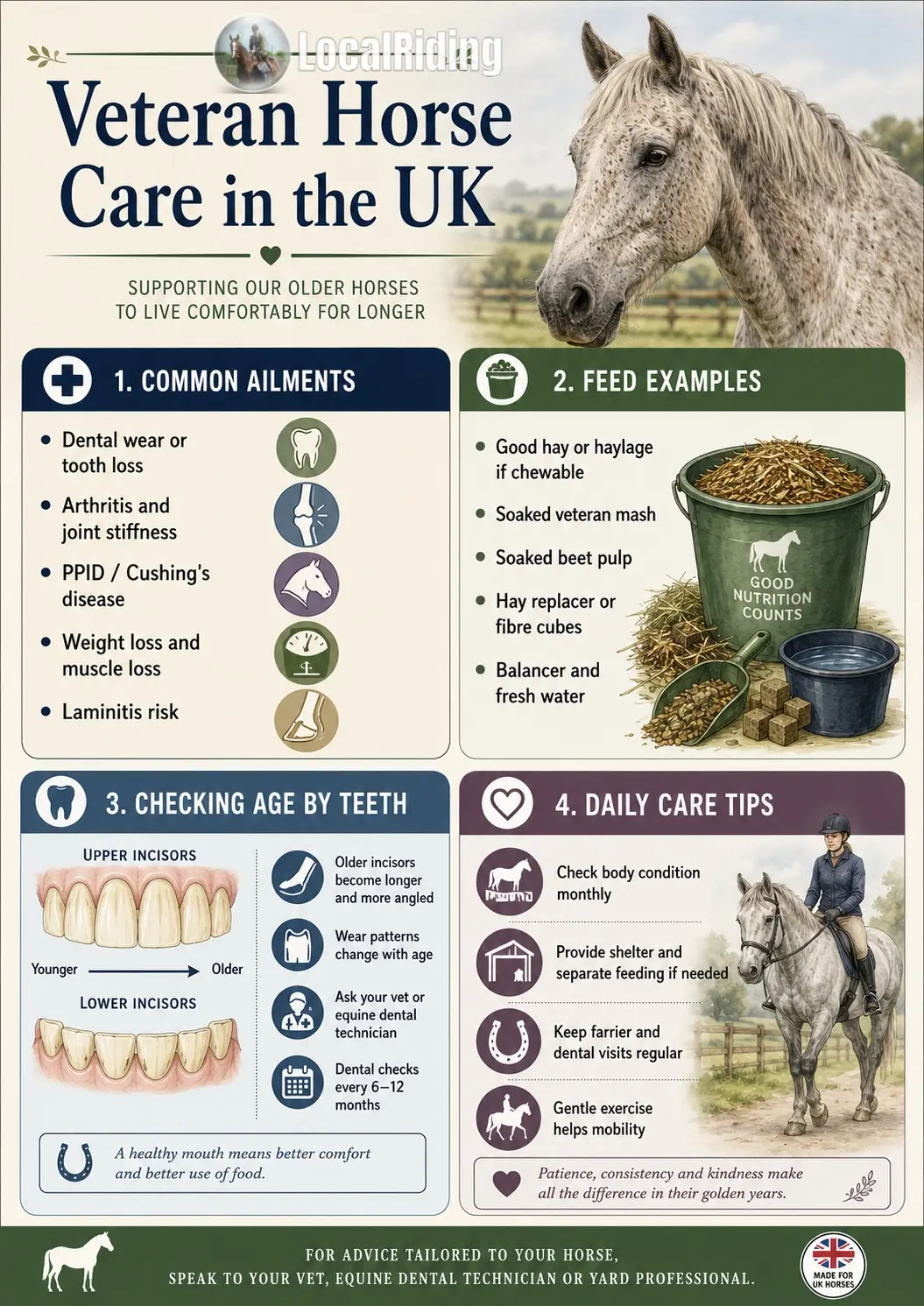 Veteran Horse Care in the UK infographic covering common ailments, feed examples, checking age by teeth and daily care tips
What Counts as a Veteran Horse?
A horse is often described as a veteran from around 15 years of age, although this is only a broad guide. A fit, healthy 16-year-old competition horse may have very different needs from a 24-year-old pony with poor teeth and arthritis. Some horses age slowly and remain robust for years, while others need extra support earlier.
It is more useful to think in terms of life stage:
- 15–19 years: Often still active, but worth starting more regular monitoring.
- 20–24 years: Dental wear, stiffness, muscle loss and metabolic conditions become more likely.
- 25 years and over: More careful management may be needed, especially in winter.
Veteran care should be proactive. Waiting until an older horse loses condition, struggles to chew or becomes obviously lame can make problems harder to correct.
Routine Health Checks for Veteran Horses
Older horses benefit from a more structured health routine. Many changes happen gradually, and owners who see their horse every day may not notice slow weight loss, muscle wastage or reduced mobility until it becomes significant.
Useful Checks to Build Into the Routine
- Body condition scoring every month, especially in winter.
- Weight taping every two to four weeks.
- Regular dental examinations.
- Annual or twice-yearly veterinary health checks.
- Monitoring for stiffness, lameness or reluctance to move.
- Checking coat shedding, drinking, urination and fat pads for possible PPID signs.
- Reviewing diet before winter and again in spring.
- Assessing whether the horse is still coping with its current herd, turnout and workload.
Photographs can be very useful. Take clear side-on, front and rear photos every month. Comparing images over time helps reveal subtle changes in weight, topline and posture.
Dental Care in Older Horses
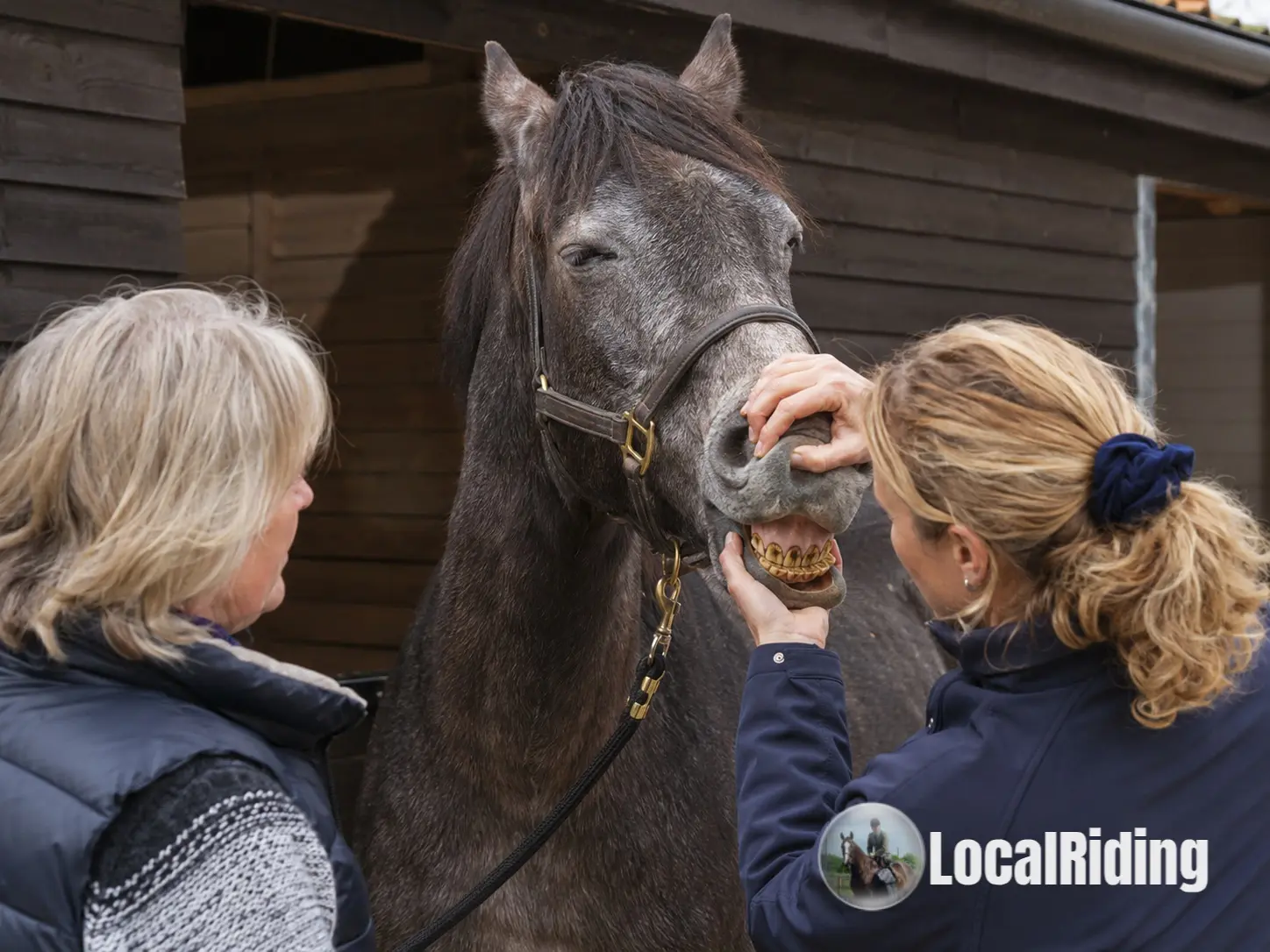 A vet and owner checking a grey horse's teeth and mouth at a UK yard
Dental care is one of the most important parts of veteran horse management. Horses' teeth continue to erupt through much of their life, but as they age the available reserve crown reduces. Older horses are more likely to develop sharp enamel points, gaps between teeth, loose teeth, missing teeth, worn grinding surfaces and periodontal disease.
Dental problems can cause pain, quidding, slow eating, weight loss, bad breath, difficulty chewing hay, bitting issues and changes in behaviour. Some horses show very few obvious signs, which is why routine checks matter.
UK welfare organisations advise regular dental checks by a vet or qualified equine dental technician, with older horses commonly needing checks every 6–12 months. Horses over 20, or horses with known dental problems, may need more frequent attention.
Signs Your Veteran Horse May Have Dental Problems
- Dropping partially chewed hay or feed.
- Quidding, where balls of forage fall from the mouth.
- Weight loss despite good appetite.
- Eating slowly or leaving long-stem forage.
- Bad breath or nasal discharge.
- Swelling around the jaw or face.
- Head tilting while eating.
- Resistance to the bit or changes when ridden.
If your horse can no longer manage hay or haylage effectively, speak to your vet or nutritionist about forage replacers. Soaked grass nuts, hay replacer cubes, high-fibre mashes and veteran feeds can help, but they must be introduced gradually and fed safely.
Feeding the Veteran Horse
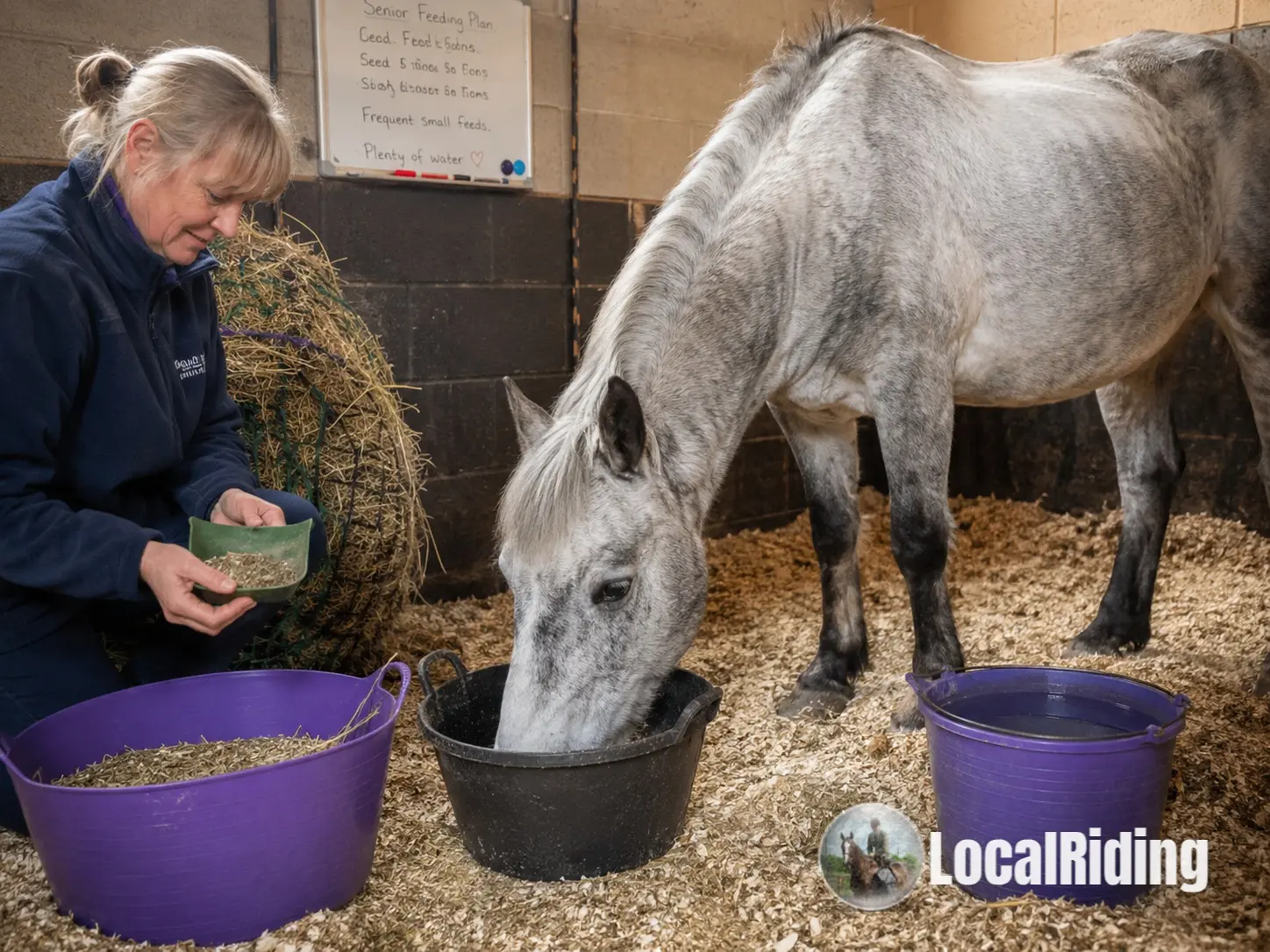 A grey veteran horse eating soaked feed from buckets in a stable with a senior feeding plan on the wall
Nutrition often needs adjusting as horses age. Some veterans remain excellent doers and require careful weight management, while others struggle to maintain condition because of dental wear, reduced digestive efficiency, pain, disease or competition for food in the herd.
Forage should remain the foundation of the diet wherever possible, but older horses may need more digestible fibre sources and higher-quality protein to support muscle maintenance. The aim is not simply to make the horse fat; it is to maintain appropriate condition, topline, gut health and energy without increasing the risk of laminitis or digestive upset.
Useful Feeding Options for Older Horses
- Good-quality hay or haylage: Suitable if the horse can chew it properly.
- Soaked fibre feeds: Useful for horses with poor teeth or reduced chewing ability.
- Veteran-specific feeds: Often higher in digestible fibre, quality protein, vitamins and minerals.
- Unmolassed beet pulp: A useful soaked fibre source for many poor doers.
- Grass nuts or hay replacer cubes: Can partially or fully replace long forage when needed.
- Balancer: Useful where extra vitamins, minerals and amino acids are needed without many calories.
- Oil or high-oil feeds: May help add condition, but must be introduced gradually.
Feeding Tips for Poor Doers
- Check teeth before increasing feed.
- Feed little and often where possible.
- Provide separate feeding if the horse is bullied.
- Use soaked feeds for easier chewing.
- Keep the horse warm and dry in winter so energy is not wasted maintaining body temperature.
- Ask your vet to investigate persistent weight loss.
Feeding Tips for Good-Doing Veterans
- Do not overfeed simply because the horse is older.
- Use a low-calorie balancer if extra nutrients are needed.
- Monitor for laminitis risk, especially with PPID or native pony types.
- Manage spring grass carefully.
- Use body condition scoring rather than guessing.
PPID/Cushing's Disease in Older Horses
Pituitary pars intermedia dysfunction, commonly known as PPID or Cushing's disease, is increasingly common in older horses and ponies. It affects hormone regulation and can have a major impact on health, weight, coat, immunity and laminitis risk.
Signs can include a long or curly coat that does not shed properly, lethargy, muscle loss, abnormal fat pads, increased drinking and urination, excessive sweating, recurrent infections and laminitis. Blue Cross notes that PPID can make horses much more susceptible to laminitis.
PPID requires veterinary diagnosis, usually involving blood testing. It cannot be managed properly by diet alone. Your vet may recommend medication, monitoring and management changes. BEVA-reported evidence reviews support ACTH or TRH-stimulation testing for diagnosis and pergolide as a treatment option for PPID.
When to Ask Your Vet About PPID
- Your horse grows a thick, curly or delayed-shedding coat.
- There is unexplained weight or muscle loss.
- Your horse develops laminitis or foot soreness.
- You notice increased drinking or urination.
- The horse seems unusually lethargic or depressed.
- There are repeated infections, abscesses or slow healing wounds.
Joint Health, Arthritis and Mobility
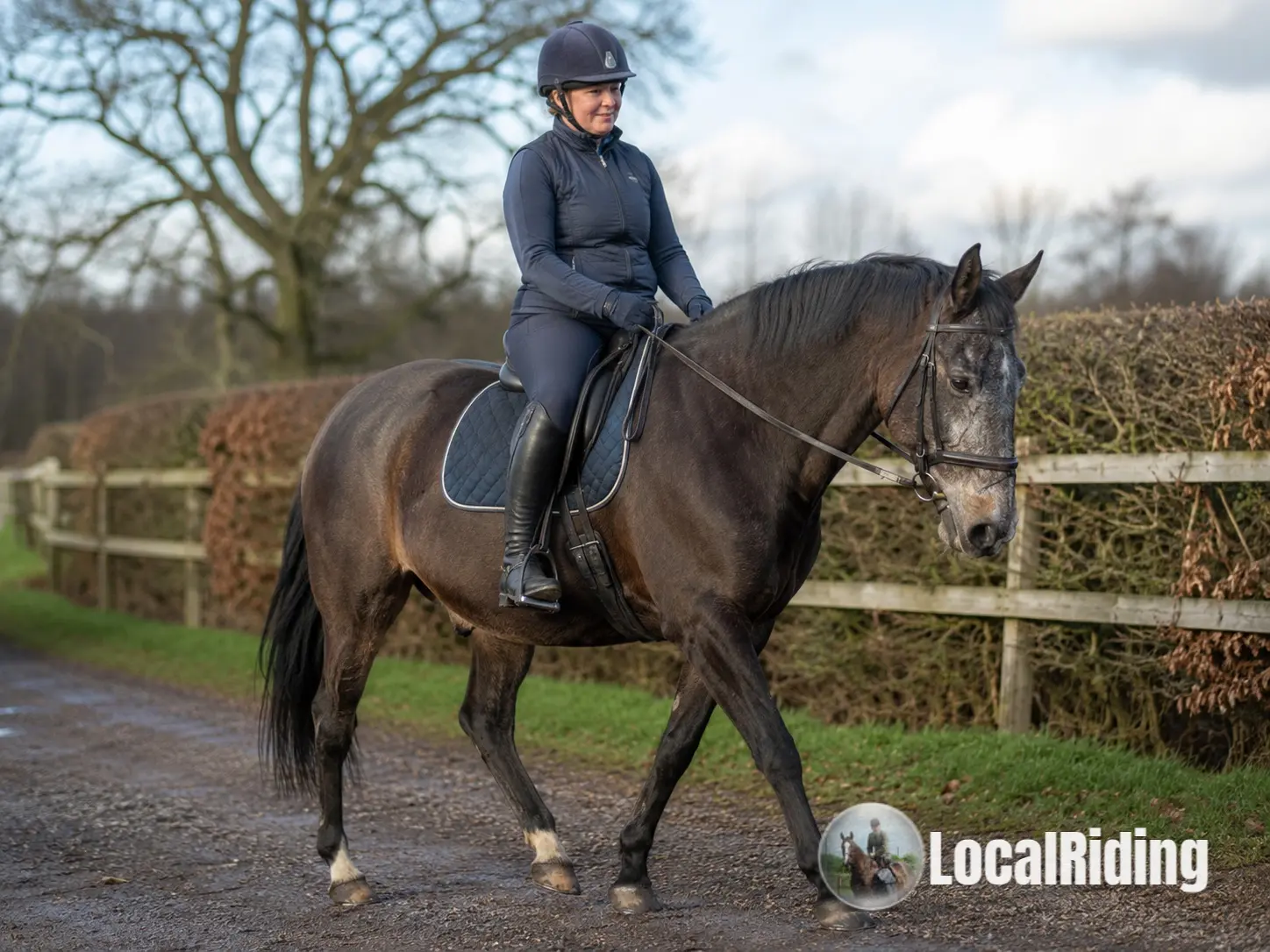 A rider hacking a grey veteran horse along a UK country lane to maintain mobility
Arthritis is common in older horses, but it does not automatically mean the horse must be retired. Many veteran horses are more comfortable with regular gentle movement than with long periods of standing still. Movement helps maintain circulation, muscle tone and joint mobility.
The right plan depends on the horse. Some veterans thrive on daily turnout and gentle hacking. Others may need shorter sessions, longer warm-ups, softer surfaces or reduced schooling circles. Sudden increases in work are unwise, especially after winter or a period of reduced activity.
Ways to Support Stiff Older Horses
- Maximise safe turnout and movement.
- Use longer warm-up and cool-down periods.
- Avoid deep, slippery or very hard surfaces.
- Keep feet balanced with regular farriery.
- Maintain healthy body weight to reduce joint strain.
- Discuss pain relief, joint medication or supplements with your vet.
- Consider physiotherapy or bodywork from a qualified professional.
If a horse is lame, reluctant to move, struggling to rise, stumbling or showing behavioural changes under saddle, involve your vet. Pain in older horses should not be dismissed as "just age".
Exercise and Workload for Veteran Horses
Many older horses benefit mentally and physically from remaining active. Light work can help maintain muscle, mobility and routine. However, workload must be adapted to the horse's soundness, fitness, respiratory health, eyesight, confidence and recovery time.
Suitable Work for Many Veterans
- Gentle hacking.
- Light schooling with large circles and simple exercises.
- In-hand walking.
- Groundwork and pole work at an appropriate level.
- Short, regular sessions rather than occasional hard work.
Older horses often cope better with consistent light work than with being left for days and then asked to do a demanding session. Watch for slower recovery, stiffness after work, reluctance to canter, shortened stride or changes in enthusiasm.
Turnout, Companionship and Herd Management
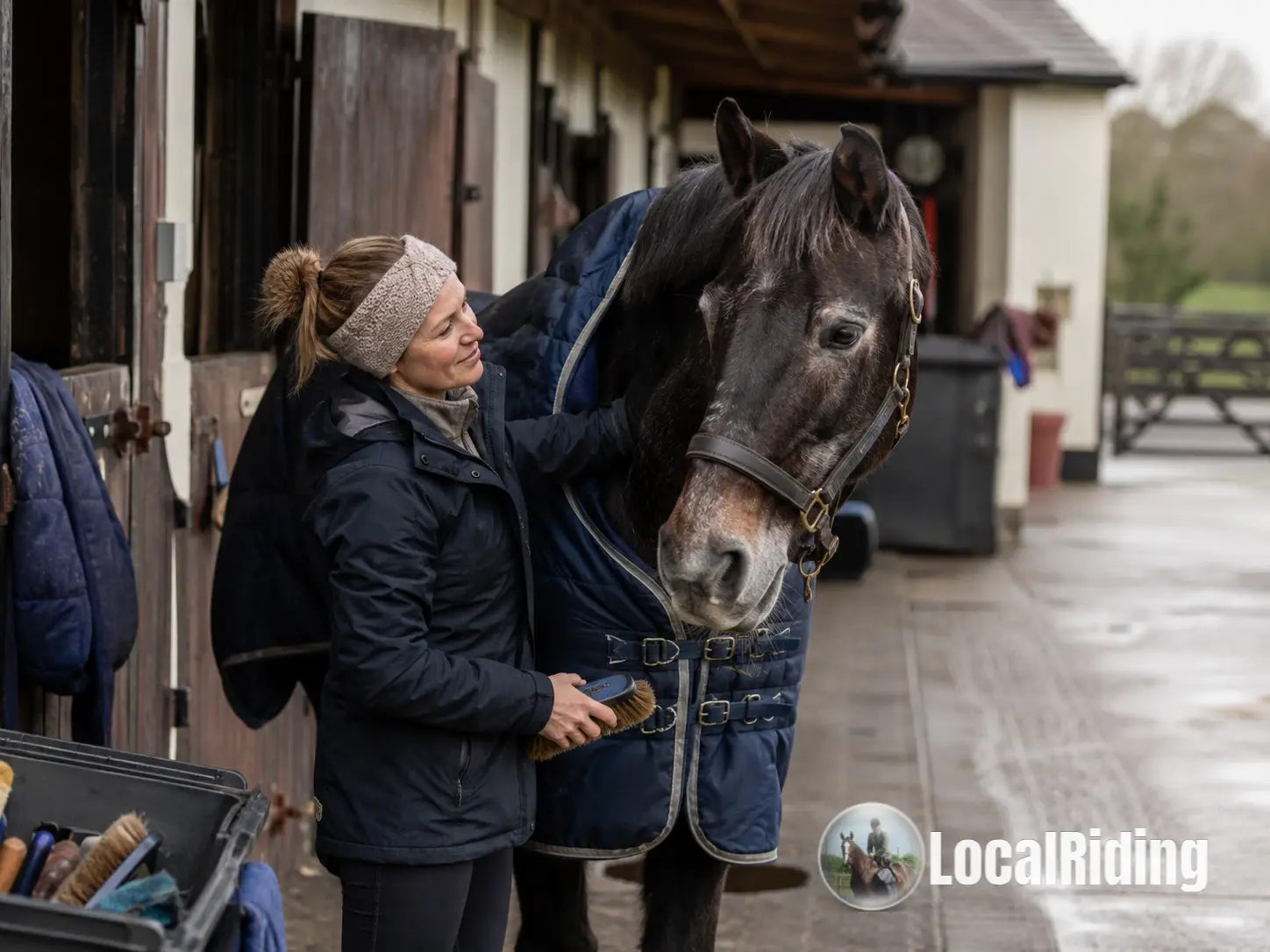 An owner grooming a rugged-up veteran horse outside UK stables on a wet winter day
Veteran horses still need social contact, movement and mental stimulation. Turnout is important, but the setup may need adapting. Older horses may be pushed away from hay, water or shelter by younger or more dominant companions.
Where needed, provide separate hay piles, additional water points and quiet companions. Some older horses do best in a small, stable group. Others prefer individual turnout beside companions if they are vulnerable, stiff or easily bullied.
Turnout Considerations
- Check that the horse can access shelter.
- Use multiple forage stations in winter.
- Avoid very slippery gateways and deep mud.
- Provide rugs if appropriate for condition, coat and weather.
- Monitor whether the horse lies down and can get up comfortably.
- Consider track systems or smaller paddocks for controlled movement.
Winter Care for Veteran Horses in the UK
British winters can be difficult for older horses. Wet ground, cold wind, reduced grazing and long dark periods can increase the risk of weight loss, stiffness, mud fever and reduced water intake.
Winter Management Priorities
- Check body condition at least monthly, and more often for poor doers.
- Remove rugs regularly to check weight, skin and rubs.
- Provide adequate forage and shelter.
- Use well-fitting rugs where needed, especially for clipped, thin or poor-doing veterans.
- Keep water accessible and not frozen.
- Manage mud around gateways and field shelters.
- Maintain gentle movement to reduce stiffness.
- Review feed before weight loss becomes serious.
Older horses can lose condition quickly once winter sets in. Make changes early rather than waiting until spring.
Hoof Care and Farriery
Veteran horses still need regular hoof care, whether shod or barefoot. Poor hoof balance can worsen arthritis, affect movement and increase strain on joints and tendons. Horses with PPID may also be at increased risk of laminitis, so foot soreness should be taken seriously.
Keep farrier appointments consistent, and discuss any changes in stance, hoof growth, cracks, thrush or repeated abscesses. For older horses with arthritis, your farrier may need to adapt trimming or shoeing to support comfort.
Vaccinations, Worming and Preventive Care
Older horses still need preventive healthcare. Vaccinations, dental care, farriery, worm egg counts and targeted worming remain important. Veteran horses may have reduced immune resilience, especially if they have PPID or other underlying conditions.
Work with your vet to create an appropriate preventive health plan. This may include routine blood tests, PPID monitoring, dental reviews, faecal worm egg counts and tapeworm testing where appropriate.
Quality of Life: Knowing What Matters
Quality of life is central to veteran horse care. The goal is not simply to keep a horse alive for as long as possible, but to ensure they remain comfortable, content and able to enjoy normal horse behaviours.
Quality-of-Life Questions
- Is the horse eating and drinking comfortably?
- Can they move around without significant pain?
- Can they lie down and get up?
- Do they still interact with people and companions?
- Are they maintaining condition?
- Are bad days becoming more frequent than good days?
- Can pain be managed effectively and safely?
- Are they coping with winter, turnout and herd life?
It can be helpful to keep a simple calendar marking good days, average days and bad days. Patterns are easier to see over time. Discuss concerns early with your vet rather than waiting until a crisis.
Planning Ahead
Planning ahead is part of responsible veteran horse ownership. This includes financial planning, winter preparation, emergency transport arrangements and difficult end-of-life decisions. Blue Cross notes that many horses do not die naturally, and owners should consider what they will do when the time comes.
These conversations are hard, but they are kinder when made before an emergency. Speak to your vet about options, costs and what is most appropriate for your horse.
Final Thoughts
Caring for a veteran horse is a privilege. Older horses often have enormous wisdom, trust and character, and many continue to give their owners years of companionship, gentle riding and joy. With regular dental care, suitable nutrition, thoughtful exercise, careful winter management and honest quality-of-life monitoring, a veteran horse can remain comfortable and fulfilled well into later life.
The most important rule is to treat the horse as an individual. Age matters, but comfort, behaviour, appetite, mobility and happiness matter more. Listen to your horse, work closely with your vet and celebrate the older horse for everything they have given — and everything they still have to offer.
Debbie Irwin
Livery Yard Manager & Equestrian Professional
Debbie has run professional showing yards and mixed livery yards in Lincolnshire and Essex for over 30 years. She has competed and taught at various levels. She writes about practical horse health, yard life, livery and everyday horse health and management.