
Horse health
Mud Fever in UK Horses: Prevention, Treatment and Best Products
Mud fever affects thousands of UK horses every winter. This guide explains what it is, how to recognise it early, how to prevent it, how to treat mild cases safely and when to call the vet.
By Debbie Irwin · 15 April 2026 · 13 min read
Mud fever is one of the most common winter skin problems affecting horses in the UK. Wet fields, muddy gateways, constant leg washing, damaged skin and long periods of dampness can all contribute to sore, scabby lower legs.
This guide explains what mud fever is, how to recognise the early signs, how to reduce the risk, what owners can do safely at home, which products may help, and when veterinary advice is needed.
What is mud fever?
Mud fever is a common name for inflammation and infection of the skin on the lower legs. It is also known as pastern dermatitis, cracked heels, greasy heel or equine pastern dermatitis.
Although it is often linked with wet and muddy winter conditions, mud fever is not always caused by one single organism. It is better understood as a skin reaction or disease complex that may involve bacteria, damaged skin, prolonged moisture, mites, fungal infection, photosensitivity, poor circulation, feathering, immune response or other underlying conditions.
The bacteria Dermatophilus congolensis is often associated with classic mud fever, but not every sore, scabby pastern is the same. This is why cases that are severe, recurring or not improving should be assessed by a vet.
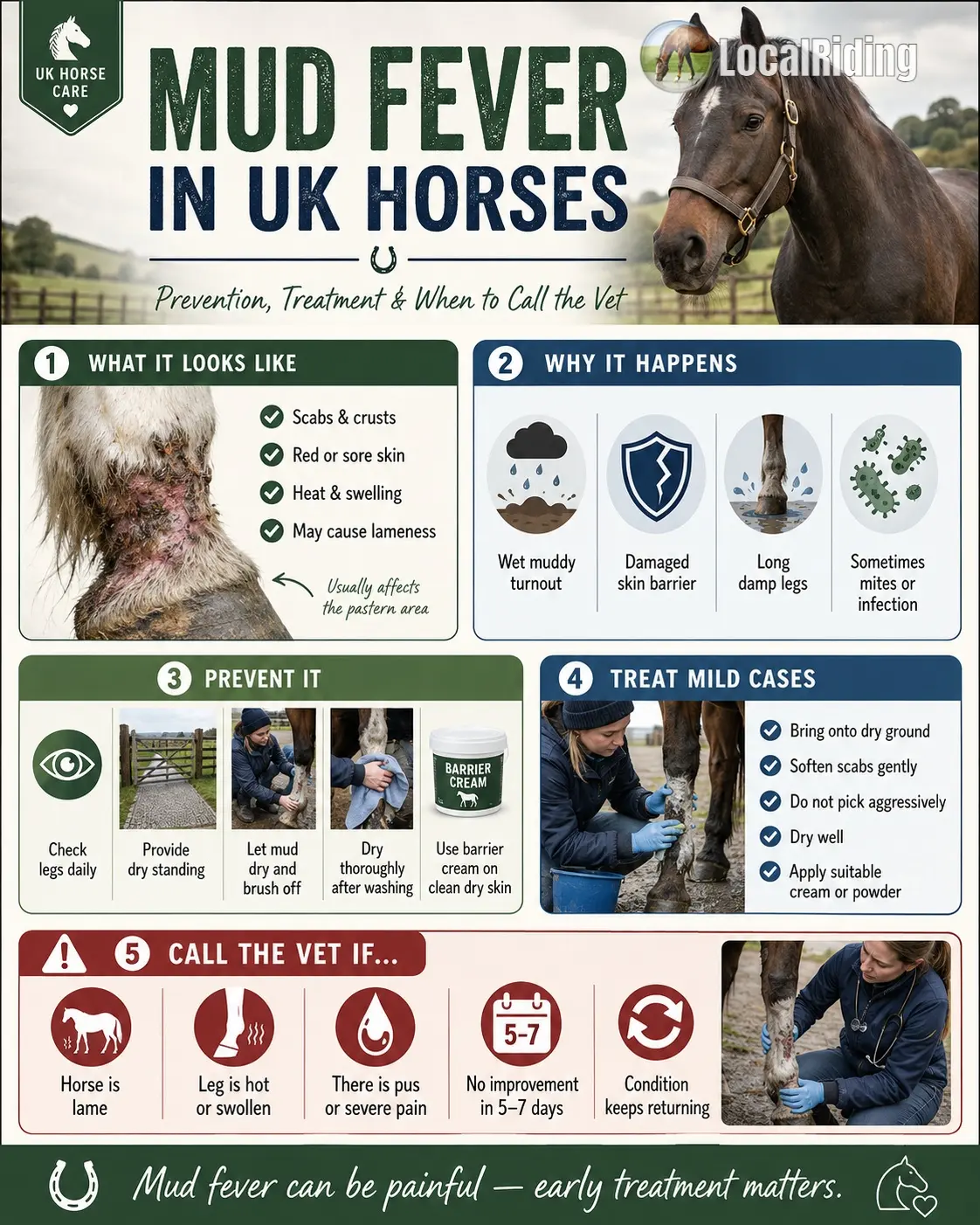 Mud fever in UK horses infographic: what it looks like, why it happens, how to prevent it, how to treat mild cases and when to call the vet
Mud fever in UK horses at a glance — what it looks like, why it happens, prevention, treating mild cases and when to call the vet.
Why is mud fever so common in the UK?
UK winters often create ideal conditions for mud fever: wet fields, poached gateways, standing water, cold weather, long coats, muddy legs and limited drying time. The lower legs are repeatedly exposed to moisture and abrasion, which can weaken the skin barrier.
Once the skin becomes softened, cracked or irritated, bacteria and other organisms can enter more easily. This can lead to inflammation, scabs, pain, swelling and, in more serious cases, infection spreading up the leg.
Which horses are most at risk?
Any horse or pony can develop mud fever, but some are more prone than others.
Risk factors include:
- Wet, muddy turnout
- Standing in deep mud around gateways or water troughs
- Repeated washing without thorough drying
- Small cuts, scratches or abrasions on the lower legs
- Long feathers that trap moisture
- White legs or pink skin
- Existing skin sensitivity
- Mites, especially in feathered breeds
- Poor stable hygiene or damp bedding
- Previous episodes of mud fever
- Compromised immune health or older age
Horses with white legs are often thought to be more vulnerable because pink skin may be more sensitive. However, dark legs can also be affected, so all legs should be checked regularly in wet weather.
Signs and symptoms of mud fever
Mud fever usually affects the lower limbs, particularly the heels, pasterns and backs of the fetlocks. It may affect one leg or several legs.
Early signs
- Matted hair around the heels or pasterns
- Small crusts or scabs
- Dry, flaky or cracked skin
- Mild heat or tenderness
- Slight swelling around the pastern or fetlock
- The horse objecting to the area being touched
More advanced signs
- Thick, painful scabs
- Raw, red or weeping skin under scabs
- Discharge or pus
- Hair loss
- Heat and swelling in the lower leg
- Lameness or stiffness
- Reluctance to move
- Cracks in the heel area
- Repeated flare-ups despite treatment
Important: lameness, marked swelling, spreading heat, discharge, severe pain or a horse that becomes dull or unwell should not be treated as a simple cosmetic skin issue. Contact your vet.
Conditions that can look like mud fever
Not every sore pastern is straightforward mud fever. Similar signs can be caused or complicated by other conditions.
Possible lookalikes or complicating factors include:
- Leg mites, especially in feathered horses and cobs
- Ringworm or fungal skin disease
- Photosensitisation
- Contact allergy or irritant dermatitis
- Cellulitis or lymphangitis
- Deep wounds or puncture injuries
- Vasculitis
- Chronic progressive lymphoedema in some heavy breeds
- Heel cracks caused by dry, damaged skin
If the condition is severe, unusual, spreading, recurring, affecting several legs, or not responding to sensible management, veterinary diagnosis is important. The wrong treatment can delay healing.
How to prevent mud fever
Prevention focuses on protecting the skin barrier, reducing prolonged wetness and mud exposure, and checking the legs before small problems become painful.
1. Manage muddy areas
Where possible, reduce deep mud in high-traffic areas. This may include:
- Using hardcore, grass mats or mud control mats in gateways
- Moving water troughs or hay stations
- Rotating fields
- Creating a dry standing area
- Using track systems or sacrifice paddocks where appropriate
- Avoiding overstocking during wet months
2. Avoid overwashing
Repeated washing can remove natural oils, soften the skin and make legs slower to dry. If legs are muddy but the skin is healthy, it is often better to let mud dry and brush it off gently rather than hosing every day.
If you do wash the legs, dry them thoroughly afterwards with clean towels. Do not leave legs damp under boots, bandages or rugs.
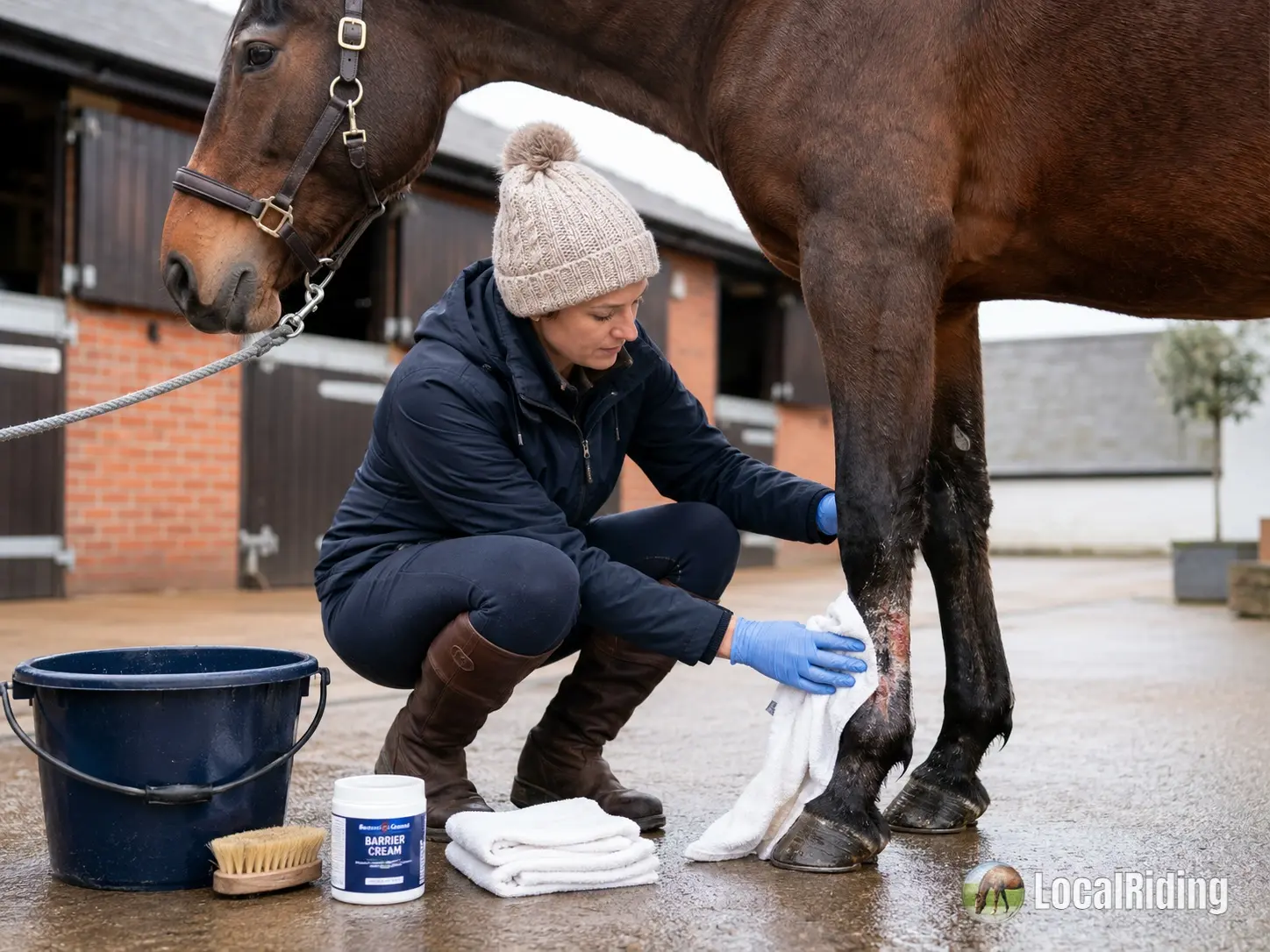 Owner in winter clothing crouching to dry a horse's lower leg thoroughly with a clean towel in a stable yard
Drying the lower legs thoroughly after wet turnout is one of the most effective ways to protect the skin barrier.
3. Check legs daily
During wet weather, check the heels, pasterns and backs of the fetlocks every day. Early crusting, tenderness or small scabs are much easier to manage than a painful, swollen leg.
4. Keep bedding clean and dry
A dry stable or shelter gives wet legs a chance to recover. Damp bedding can prolong skin irritation, especially for horses stabled overnight.
5. Use barrier products carefully
Barrier creams can help protect clean, dry skin before turnout, especially for horses prone to mud fever. They should not be slapped onto dirty, wet or already infected skin unless your vet has advised this.
6. Be careful with turnout boots
Turnout boots may help some horses by reducing direct mud contact, but they can also trap heat, sweat, grit and moisture. Poorly fitted or wet boots can rub and make skin problems worse. Remove and clean them daily, and check the skin underneath.
7. Manage feathers thoughtfully
Feathers can protect the skin in some horses, but they can also hold moisture and hide scabs or mites. Do not clip feathers automatically without considering the individual horse. If mites, chronic scabs or repeated infections are a problem, ask your vet or experienced professional for advice.
Should you wash muddy legs?
There is no single answer for every horse. The best approach depends on the horse's skin, the amount of mud, turnout conditions, bedding, weather and whether mud fever is already present.
When letting mud dry may be better
- The skin is healthy and unbroken.
- The mud is surface-level rather than packed into sore skin.
- The horse has time to dry in a stable or shelter.
- You can brush dried mud off gently with a soft brush.
When washing may be necessary
- Mud is thick, wet and packed around the heels.
- You need to inspect a suspected sore area.
- A vet has advised cleansing as part of treatment.
- There is discharge or contamination that needs careful cleaning.
If you wash, use lukewarm water, avoid harsh scrubbing, and dry the skin thoroughly. Leaving washed legs damp can make the problem worse.
Treating mild mud fever at home
Mild, early mud fever may improve with careful management, but treatment should be gentle. The aim is to clean the area where needed, soften scabs safely, keep the skin dry, reduce mud exposure and prevent further damage.
Step-by-step approach for mild cases
- Bring the horse onto dry ground. Keep the horse away from deep mud while the skin heals.
- Assess the leg. Check for swelling, heat, lameness, discharge or severe pain.
- Do not pick dry scabs aggressively. Pulling scabs off can be very painful and may create more broken skin.
- Soften scabs if appropriate. Use warm water or a vet-recommended product to soften crusts. Only remove scabs that lift easily.
- Clean gently if needed. If advised, use a very dilute antiseptic wash. Avoid repeated harsh washing.
- Dry thoroughly. Pat the area dry with a clean towel. The skin must be dry before barrier creams or powders are used.
- Apply an appropriate product. Use a barrier cream, antibacterial skin product or drying powder depending on the stage of the condition and professional advice.
- Monitor daily. Improvement should be visible within a few days. If not, call your vet.
Using Hibiscrub or chlorhexidine safely
Hibiscrub and other chlorhexidine washes are commonly used by horse owners, but they should be used carefully. Overuse or strong solutions can irritate skin and delay healing.
If your vet recommends an antiseptic wash, dilute it as instructed, use it for the recommended contact time, rinse if advised, and dry the leg thoroughly afterwards. Do not use strong antiseptic scrubs repeatedly without veterinary guidance.
Should you remove mud fever scabs?
Scab removal is a common source of debate. In some cases, removing softened scabs helps treatment reach the affected skin. In other cases, forceful removal causes pain, bleeding and further skin damage.
Safe scab-removal principles
- Do not rip or pick hard scabs.
- Soften scabs first with warm water or a suitable product.
- Only remove scabs that lift easily.
- Stop if the horse is painful or the skin bleeds.
- Seek veterinary advice for thick, extensive or very painful scabs.
Products that may help with mud fever
There are many mud fever creams, barrier products and powders sold in the UK through equestrian retailers. These products can be useful, but they should be matched to the stage of the condition.
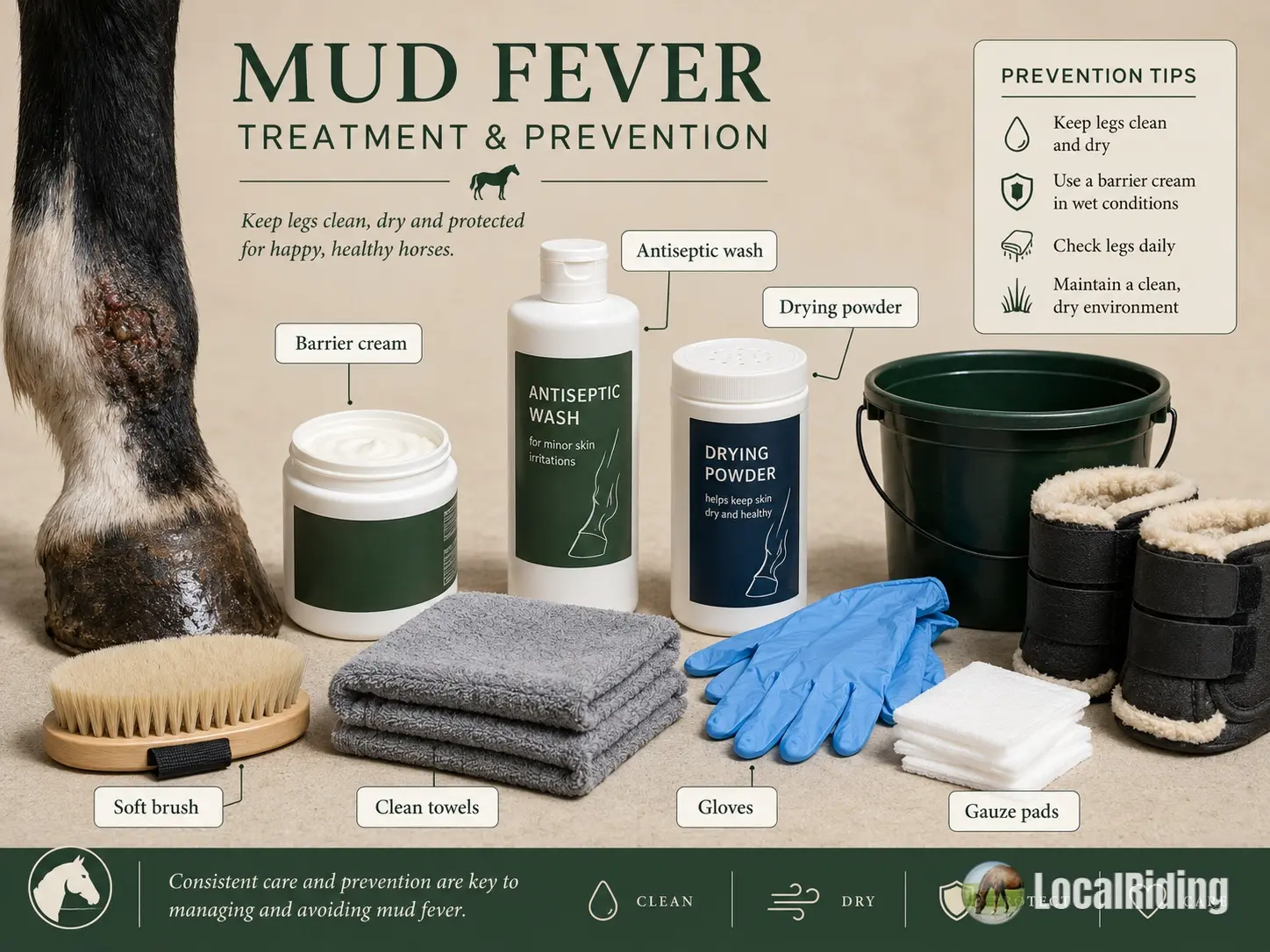 Mud fever treatment and prevention kit laid out: barrier cream, antiseptic wash, drying powder, soft brush, clean towels, gloves, gauze pads, bucket and turnout boots
A typical mud fever care kit — barrier cream, antiseptic wash, drying powder, soft brush, clean towels and gloves. Match the product to the stage of the condition.
Important: no over-the-counter product should replace veterinary treatment where there is lameness, swelling, heat, spreading infection, severe pain, pus, or no improvement.
Barrier creams
Barrier creams are usually most useful for prevention or for protecting clean, dry skin. They help reduce direct contact with mud and moisture.
Examples commonly searched for by UK owners include:
- NAF Love The Skin Mud Gard Barrier Cream
- Nettex Muddy Marvel Barrier Cream
- Biteback Mudbar Plus Equine Barrier Cream
- Carr & Day & Martin Protection Plus
Scab-softening products
Scab-softening products may help loosen crusts without force. They should be used gently and stopped if the skin becomes more painful or irritated.
Examples include:
- Nettex Muddy Marvel De-Scab
- Specialist equine skin-softening creams
- Vet-recommended emollient products
Drying powders and wound powders
Powders may help keep minor damp areas dry, but they are not suitable for every case. Do not pack powder into deep, infected, weeping or painful lesions without veterinary advice.
Examples include:
- Battles Veterinary Wound Powder
- Lincoln Muddy Buddy Magic Mud Kure Powder
- Other equine antibacterial or drying powders
Antiseptic washes
Antiseptic washes may be recommended for some cases, but they can irritate if used too strongly or too often. Use only as directed and dry the area thoroughly afterwards.
Examples include:
- Hibiscrub or chlorhexidine-based wash, when advised
- Vet-recommended skin cleansers
What not to do
- Do not ignore early scabs and wait for the leg to become swollen.
- Do not scrub sore skin harshly.
- Do not rip off painful scabs.
- Do not apply barrier cream over wet, dirty legs.
- Do not keep using turnout boots if they are rubbing or trapping moisture.
- Do not assume every scabby pastern is simple mud fever.
- Do not delay veterinary advice if the horse is lame or the leg is swollen.
When to call the vet
Veterinary advice is important when mud fever is painful, spreading, severe, recurring or not improving. Some horses need prescription treatment, anti-inflammatories, antibiotics, mite treatment, skin samples or investigation of underlying causes.
Call your vet if:
- The horse is lame.
- There is significant swelling above the pastern or fetlock.
- The leg is hot, painful or rapidly worsening.
- There is pus, discharge or a bad smell.
- The horse resents the leg being touched.
- The skin is raw, bleeding or extensively cracked.
- The condition is not improving after five to seven days of careful management.
- The problem keeps coming back.
- More than one leg is badly affected.
- You suspect mites, photosensitisation, cellulitis or lymphangitis.
Can mud fever cause lymphangitis?
Severe or untreated skin infection can sometimes be associated with marked swelling and inflammation of the limb. Lymphangitis is a serious condition involving inflammation or infection of the lymphatic vessels and can cause dramatic swelling, pain and lameness.
If your horse develops sudden swelling up the leg, severe pain, lameness, heat or a raised temperature, contact your vet urgently.
Managing horses prone to repeat mud fever
Some horses suffer every winter. For these horses, prevention needs to start before the first scabs appear.
Helpful long-term strategies
- Improve gateways and wet areas before winter.
- Check legs daily from autumn onwards.
- Use barrier cream only on clean, dry skin before turnout.
- Avoid repeated washing unless necessary.
- Dry legs thoroughly after wet turnout.
- Keep stable bedding dry and clean.
- Investigate mites in feathered horses.
- Consider clipping feathers only where appropriate.
- Keep separate towels, brushes and sponges for affected horses.
- Review diet, general health and immune support with your vet if cases are persistent.
Daily winter leg-care routine
A simple routine helps reduce risk without damaging the skin through overhandling.
- Bring the horse in from turnout.
- Check the heels, pasterns and fetlocks by sight and touch.
- If mud is not excessive, allow it to dry naturally.
- Brush off dried mud gently with a soft brush.
- If washing is necessary, rinse gently and dry thoroughly.
- Apply barrier protection only to clean, dry skin if your horse benefits from it.
- Record any scabs, heat, swelling or tenderness so changes are spotted early.
Frequently asked questions
Is mud fever contagious?
Mud fever itself is usually linked to skin damage and environmental conditions rather than simple horse-to-horse spread. However, bacteria, fungi or mites can be involved in some cases, so it is sensible not to share towels, boots, brushes or sponges between affected and unaffected horses.
Should I keep my horse in with mud fever?
Many affected horses benefit from time on dry standing or a clean, dry stable while the skin heals. Whether full box rest is needed depends on severity, turnout conditions and veterinary advice.
Can I ride a horse with mud fever?
If the horse is sound and the case is very mild, light work may be possible. Do not ride if the horse is lame, swollen, painful, bleeding, or if boots, sand, arena surface or exercise make the area worse.
Can mud fever affect the belly?
Similar wet-weather skin problems can affect the belly or other areas exposed to mud and water. If lesions are widespread or unusual, ask your vet to check the horse.
Are white legs more likely to get mud fever?
White legs and pink skin may be more sensitive in some horses, and owners often notice mud fever more quickly on white legs. However, any horse can develop mud fever.
Should I clip feathers to prevent mud fever?
It depends on the horse. Feathers may protect the skin in some cases but trap moisture and hide scabs or mites in others. If your feathered horse has repeated problems, ask your vet for advice before clipping.
How long does mud fever take to heal?
Mild cases may improve within days once the skin is clean, dry and protected from further mud. More severe or complicated cases can take weeks and may need prescription treatment.
Can I use human antiseptic products?
Only use products that are safe for horses and appropriate for the condition. Some products can irritate equine skin, especially if used too strongly or too often. Ask your vet if you are unsure.
Quick mud fever checklist
- Check lower legs daily in wet weather.
- Reduce standing in deep mud where possible.
- Avoid overwashing healthy legs.
- Dry legs thoroughly after washing.
- Use barrier products only on clean, dry skin.
- Do not pick painful scabs.
- Keep affected horses off wet, muddy ground while healing.
- Call the vet if there is lameness, swelling, severe pain or no improvement.
Final advice
Mud fever is common, but it should not be dismissed as a minor winter nuisance. It can be painful, persistent and expensive to treat if it becomes severe. The best approach is early detection, sensible field management, dry skin, gentle handling and prompt veterinary advice when signs are more than mild.
Protect the skin, avoid over-washing, keep legs dry where possible, and treat early scabs before they become swollen, painful legs.
Debbie Irwin
Livery Yard Manager & Equestrian Professional
Debbie has run professional showing yards and mixed livery yards in Lincolnshire and Essex for over 30 years. She has competed and taught at various levels. She writes about practical horse health, yard life, livery and everyday horse health and management.
Support Debbie on Ko-fi ☕Found this guide helpful? LocalRiding is run independently without ads. If you'd like to chip in towards the site's upkeep, you can buy Debbie a hot drink on a cold day on Ko-fi, she'll really appreciate it.