
Horse health
Horse Colic Symptoms: What UK Owners Should Do Immediately
A UK-focused emergency guide to horse colic — early warning signs, serious symptoms, exactly what to do while waiting for the vet, and how to reduce the risk.
By Debbie Irwin · 26 May 2026 · 9 min read
Suspected colic should always be treated as urgent. If your horse shows signs of abdominal pain, unusual behaviour, reduced appetite, reduced droppings, repeated lying down, rolling, sweating, or a raised heart rate, contact your vet immediately.
What is colic in horses?
Colic is not one single disease. It is the term used to describe abdominal pain in horses. The pain may come from the gut itself or from another problem inside the abdomen. Some cases are mild and respond to veterinary treatment, but others can become life-threatening very quickly.
Because owners cannot reliably tell the difference between mild gas colic, impaction, displacement, strangulation, or another serious cause without a veterinary examination, the safest rule is simple: if you suspect colic, call your vet straight away.
Horse colic symptoms: early signs to watch for
Colic can look different from horse to horse. Some horses show dramatic pain, while others are quiet, withdrawn, or unusually still. You know your horse's normal behaviour best, so take even subtle changes seriously.
Common early symptoms include:
- Restlessness or appearing unsettled
- Looking round at the flank or belly
- Pawing or scraping the ground
- Reduced appetite or refusing feed
- Eating more slowly than usual
- Fewer droppings than normal
- Smaller, drier, or harder droppings
- Lying down more than usual
- Getting up and lying down repeatedly
- Stretching out as if trying to urinate
- Kicking or biting at the abdomen
- Grinding the teeth
- Flehmen response or lip curling
- Being dull, quiet, or unusually withdrawn
Do not wait for every symptom to appear. A horse may have colic with only one or two signs, especially in the early stages.
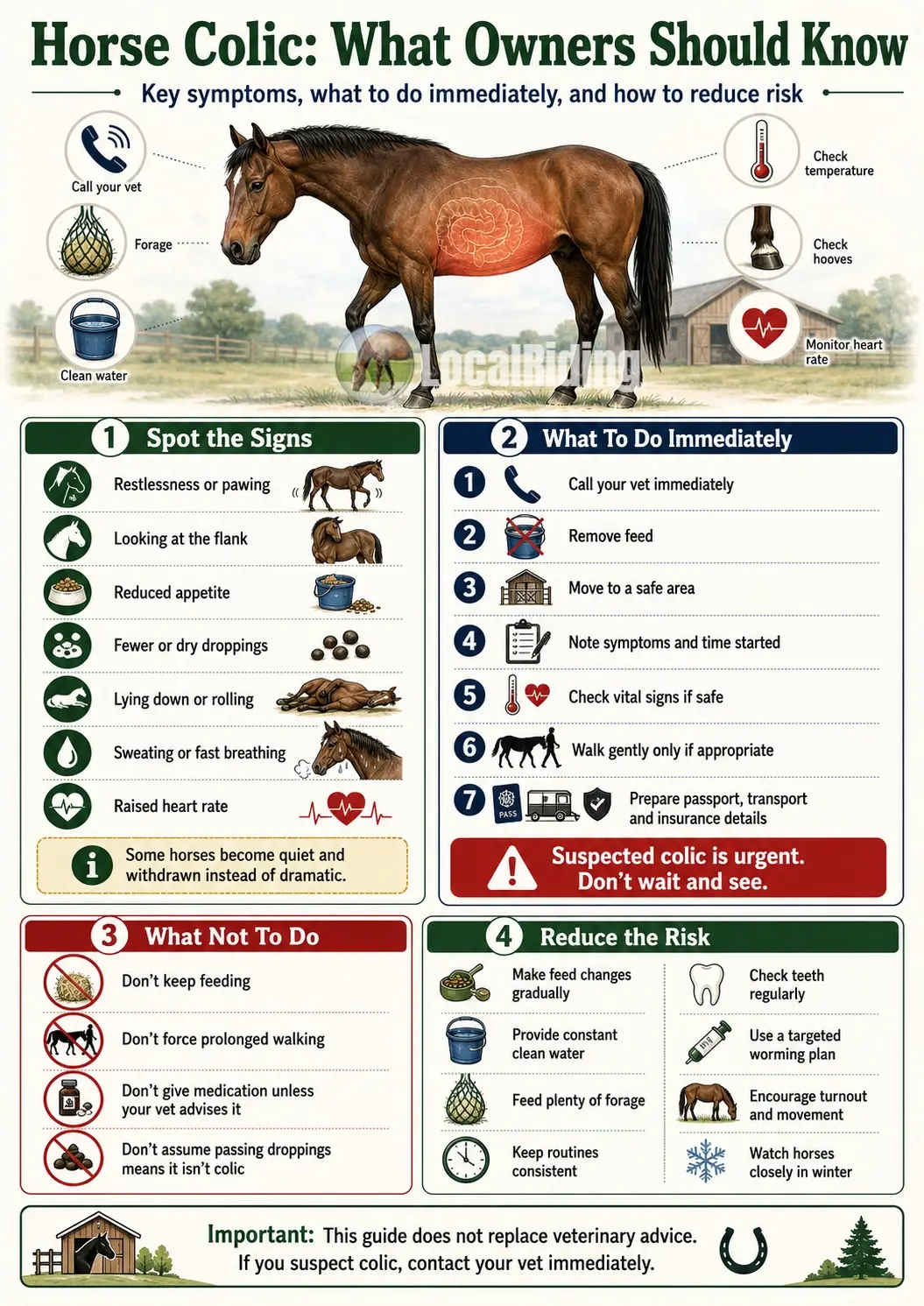 Horse colic infographic for UK owners: key symptoms, what to do immediately, and how to reduce risk
Horse colic at a glance — symptoms, action steps, what not to do and risk reduction.
Serious colic symptoms: call the vet immediately
Some signs suggest more severe pain or a potentially serious case. If you see any of the following, call your vet urgently and explain exactly what your horse is doing.
Emergency warning signs include:
- Repeated or violent rolling
- Throwing themselves down
- Profuse sweating
- Rapid breathing
- Raised heart rate
- Cold ears or extremities
- Pale, very red, blue, purple, or tacky gums
- Severe depression or weakness
- Repeated attempts to lie down
- Sitting like a dog
- Lying flat out and unwilling to rise
- No droppings for several hours, especially with pain signs
- Distended or bloated abdomen
- Signs of injury from rolling, such as cuts or abrasions
Important: A quiet horse is not always a comfortable horse. Some very painful or seriously unwell horses become subdued rather than dramatic.
What UK owners should do immediately
1. Call your vet first
Do not "wait and see" if your horse is showing signs of colic. Phone your vet, describe the symptoms clearly and follow their instructions. If you are on a yard, ask someone else to help while you make the call.
2. Move the horse to a safe area
If it is safe to do so, place your horse in a stable, arena, or small enclosed area away from hazards. Remove objects they could injure themselves on if they roll or go down.
3. Remove feed
Take away hard feed, hay, haylage and grazing unless your vet tells you otherwise. Access to clean water is usually important, but follow your vet's advice for your horse's specific situation.
4. Observe and record symptoms
While waiting for the vet, note what you see. Useful information includes:
- When symptoms started
- Whether the horse has eaten
- When they last passed droppings
- Whether droppings looked normal
- Whether they have urinated
- Any recent changes in feed, grazing, exercise, travel, routine, or medication
- Worming history and dental history
- Any previous colic episodes or surgery
5. Check vital signs if safe
If you are confident and it is safe, check your horse's temperature, pulse, respiration, gum colour and gut sounds. Do not put yourself at risk. A painful horse can react unpredictably.
6. Walk only if advised or safe
Gentle walking may sometimes help a mildly uncomfortable horse, but it is not always appropriate. Do not exhaust the horse, force them to walk, or try to keep walking a horse that wants to go down. If the horse is violently painful, your safety comes first.
7. Do not give medication unless your vet tells you to
Do not give pain relief, sedatives, oral drenches, or leftover medication without veterinary instruction. Medication can mask symptoms, complicate diagnosis, or be unsafe in some cases.
8. Prepare for possible referral
In serious cases, your vet may recommend referral to an equine hospital. While waiting, check whether transport is available, locate your horse's passport and make sure insurance details are accessible if relevant.
What not to do if your horse may have colic
- Do not wait for the symptoms to become severe before calling the vet.
- Do not allow the horse to continue eating.
- Do not force the horse to walk for long periods.
- Do not try to stop a large, painful horse from rolling if it puts you in danger.
- Do not give bute, flunixin, sedatives, oil, or other treatments unless directed by your vet.
- Do not turn the horse out and hope they improve without veterinary advice.
- Do not assume passing droppings means colic is impossible.
Can a horse poo and still have colic?
Yes. Passing droppings does not rule out colic. A horse may still pass manure in the early stages of colic, with some types of abdominal pain, or when droppings already in the lower gut are moving through. Reduced droppings, dry droppings, diarrhoea, or abnormal manure are all useful clues, but they should be considered alongside the horse's behaviour, appetite, heart rate, gum colour and pain signs.
Why colic can become serious quickly
Some forms of colic are painful but relatively straightforward to treat. Others may involve a blockage, twist, displacement, trapped gas, inflammation, or compromised blood supply to the gut. These cases can deteriorate quickly and may require intensive treatment or surgery.
Early veterinary assessment gives your horse the best chance of a good outcome. It also helps your vet decide whether the horse can be treated at the yard or whether referral is needed.
Risk factors for colic in horses
Colic can affect any horse or pony, but some management and health factors can increase risk. These include:
- Sudden changes in feed
- Sudden changes in turnout or grazing
- Low water intake
- Poor dental health
- High concentrate diets
- Limited forage
- Box rest or reduced movement
- Recent travel or competition
- Stress or major routine changes
- Heavy parasite burdens
- Previous colic episodes
- Previous abdominal surgery
- Older age in some types of colic
How to reduce the risk of colic
Not every case of colic can be prevented, but good routine management can lower the risk.
Make feed changes gradually
Introduce new hard feed, forage, haylage, or grazing slowly over several days or weeks. Sudden diet changes can upset gut function.
Provide constant access to clean water
Check troughs, buckets and automatic drinkers daily. In winter, break ice and encourage drinking. Reduced water intake can contribute to impaction colic.
Feed plenty of forage
Horses are designed to eat fibre for much of the day. Avoid long periods without forage unless your vet has advised a specific management plan.
Keep a consistent routine
Major changes in stabling, turnout, travel, competition, or workload can affect some horses. Make changes gradually where possible.
Maintain dental care
Poor teeth can prevent proper chewing, increasing the risk of poorly processed feed entering the gut. Arrange routine dental checks with a qualified professional.
Use a targeted worming programme
Work with your vet or suitably qualified adviser on faecal egg counts, tapeworm testing and appropriate worming. Avoid unnecessary worming, but do not ignore parasite control.
Encourage movement
Regular turnout and exercise support normal gut motility. Horses on box rest or restricted movement may need extra monitoring.
Monitor higher-risk horses closely
If your horse has had colic before, has undergone colic surgery, is elderly, has dental problems, or is prone to impactions, discuss a prevention plan with your vet.
Winter colic: extra checks for UK owners
Colic risk can increase during colder months when horses drink less, move less, spend more time stabled, or change from grass to conserved forage. During winter, pay close attention to:
- Frozen water buckets or troughs
- Reduced drinking
- Sudden increases in hay or haylage
- Reduced turnout
- Less exercise
- Changes in droppings
- Older horses or those with poor teeth struggling with forage
Adding warm water to feeds, offering soaked forage where appropriate, checking water several times daily and encouraging movement can help support gut health.
Information to keep ready for your vet
In an emergency, it helps to have key details ready. Keep the following information somewhere easy to access at your yard:
- Your vet's emergency number
- Your horse's normal temperature, pulse and respiration
- Passport location
- Insurance policy details
- Transport contacts
- Nearest equine referral hospital details
- Current medication and supplements
- Worming and dental history
- Previous colic history
When should you call the vet?
Call your vet immediately if you suspect colic. Do not wait for severe rolling, sweating, or collapse. Early signs such as reduced appetite, restlessness, flank watching, pawing, or fewer droppings are enough reason to seek veterinary advice.
You should treat the situation as especially urgent if your horse has severe pain, repeated rolling, a raised heart rate, abnormal gum colour, rapid breathing, weakness, bloating, or a previous history of serious colic.
Quick colic action checklist
- Call the vet immediately.
- Remove feed.
- Move the horse to a safe area if possible.
- Observe symptoms and note when they started.
- Check vital signs only if safe.
- Walk gently only if safe and appropriate.
- Do not medicate unless your vet instructs you.
- Prepare passport, insurance details and transport options.
Frequently asked questions
Should I walk a horse with colic?
Only if it is safe and your vet agrees it is appropriate. Gentle walking may help some mildly uncomfortable horses, but forced or prolonged walking can exhaust the horse and put handlers at risk.
Can colic go away on its own?
Some mild cases may improve, but owners cannot safely know which cases are mild without veterinary assessment. Always call your vet for advice.
Can a horse eat with colic?
Some horses with mild or early colic may still pick at food, but many eat less or stop eating. Remove feed and speak to your vet.
Is rolling always a sign of colic?
Not always. Horses may roll for normal reasons, but repeated rolling, violent rolling, rolling with sweating, or rolling alongside other pain signs should be treated as possible colic.
What does flank watching mean?
Flank watching is when a horse repeatedly turns its head to look at its side or abdomen. It can be a sign of abdominal discomfort.
How quickly can colic become fatal?
Some severe forms of colic can deteriorate rapidly. This is why early veterinary attention is essential.
Can stress cause colic?
Stress, travel, competition, changes in routine and reduced turnout may contribute to colic risk in some horses, especially when combined with diet or hydration changes.
What should I tell the vet on the phone?
Tell the vet your horse's symptoms, when they started, whether the horse has eaten, whether droppings have passed, any vital signs you can safely check, recent management changes and any previous colic history.
Final advice for UK horse owners
Colic is one of the most important emergencies for horse owners to recognise. The signs can be subtle or severe and no online guide can diagnose the cause. If something seems wrong, trust your judgement and call your vet.
Fast action saves time, reduces suffering and can save lives.
Sources and further reading
- Blue Cross guidance describes colic as abdominal pain that can vary from mild to severe and highlights early detection and management.
- The British Horse Society REACT guidance explains that colic is a major equine emergency and that horses may show both obvious and subtle signs.
- The Royal Veterinary College lists common signs including restlessness, appetite loss, pawing, rolling, flank watching, sweating, stretching and raised heart rate.
This guide is for general information only and does not replace veterinary advice. If you suspect your horse has colic, contact your vet immediately.
Debbie Irwin
Livery Yard Manager & Equestrian Professional
Debbie has run professional showing yards and mixed livery yards in Lincolnshire and Essex for over 30 years. She has competed and taught at various levels. She writes about practical horse health, yard life, livery and everyday horse health and management.
Support Debbie on Ko-fi ☕Found this guide helpful? LocalRiding is run independently without ads. If you'd like to chip in towards the site's upkeep, you can buy Debbie a hot drink on a cold day on Ko-fi, she'll really appreciate it.