
Riding
How to Choose a Riding Helmet: UK Safety Standards Explained
Your riding helmet is the most important piece of safety equipment you own. This guide explains UK and international safety standards, how to choose the right helmet, and our top Amazon UK recommendations.
By Debbie Irwin · 5 May 2026 · 4 min read
Your riding helmet is the single most important piece of safety equipment you own. It is the last line of defence between your brain and the ground. Yet, with so many styles, brands, and confusing safety labels, choosing the right one can feel overwhelming.
This guide explains the critical UK and international safety standards, how to ensure a perfect fit, and our top recommendations for riders across the UK.
Why Helmet Safety Standards Matter
Not all riding helmets offer the same level of protection. A helmet that looks stylish may not meet the rigorous testing required to protect you in a fall. In the UK, governing bodies and insurance companies strictly enforce specific standards. Wearing a non-compliant helmet can void your insurance and disqualify you from competitions.
Always look for the SEAL (Safety Equipment Accreditation Label) or the specific standard sticker inside the helmet before purchasing.
Understanding UK and International Helmet Standards
Confusion often arises because multiple standards exist. Here is what you need to know to stay compliant and safe:
PAS 015:2011
This is the British Standard recognised by the British Horse Society (BHS), The Pony Club, and most UK insurers. It focuses on impact absorption and retention system strength. If you ride in the UK, this is often the minimum requirement.
VG1 01.040 2014-12
The European Standard (VGC). It is accepted across the EU and is increasingly the default standard in the UK. It includes stricter testing for electrical conductivity (important for lightning strikes) and chemical resistance. Many modern helmets carry both PAS 015 and VG1.
ASTM F1163
The American Standard. While accepted by some UK bodies (like the British Eventing for certain phases), it is not universally recognised by all UK clubs. Always check with your specific discipline's rulebook.
SNELL E2016
A voluntary, high-performance standard often favoured by cross-country riders and eventers. SNELL helmets undergo more rigorous impact testing than PAS or VG1, offering higher protection levels for high-speed falls. However, they can be heavier and less ventilated.
Pro Tip: Many premium helmets, such as the Charles Owen range, carry multiple certifications (e.g., PAS 015 + VG1 + ASTM). This ensures maximum acceptance across all disciplines and borders.
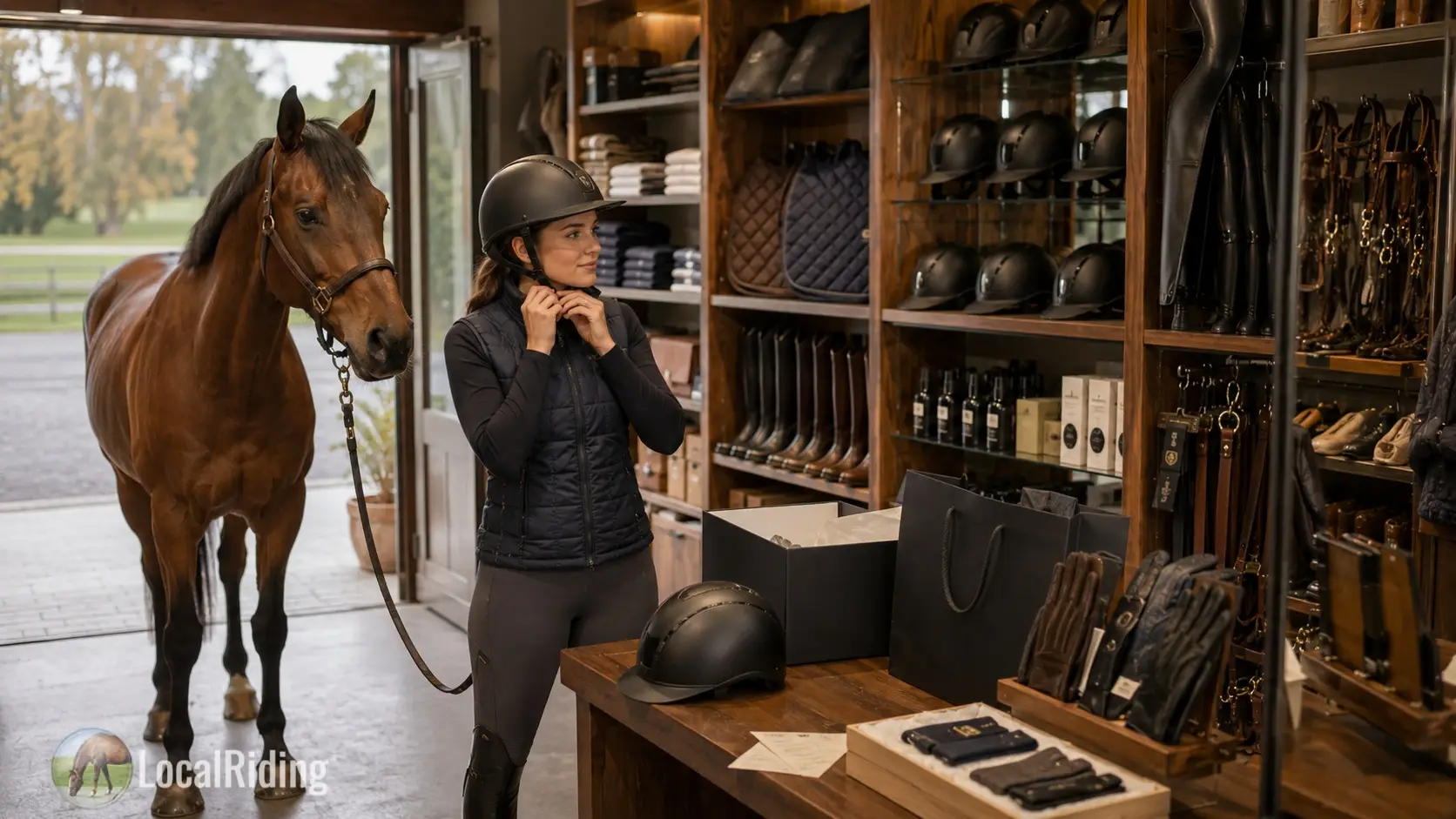 Horse rider trying on a safety helmet in an equestrian tack shop
The Golden Rule: Never Buy Second-Hand
This cannot be stressed enough: Never buy a second-hand helmet.
Helmets are designed to absorb a single impact. Even if a helmet looks pristine on the outside, it may have suffered micro-fractures in the inner foam from a previous fall. These cracks are invisible to the naked eye but compromise the helmet's ability to protect you in a future accident. Your safety is not worth the risk of a bargain.
How to Fit Your Helmet Perfectly
A helmet that doesn't fit correctly is useless. Follow these steps for a secure fit:
- Position: The helmet should sit level on your head, covering the forehead. The front rim should be approximately two finger widths above your eyebrows.
- Stability Test: With the straps unfastened, try to push the helmet forward and backward. It should not slide over your eyes or down the back of your head. If it moves, try a smaller size or different shape.
- The Shake Test: Fasten the chin strap snugly. Open your mouth wide; you should feel the helmet pull down slightly on your head. Shake your head vigorously side-to-side and up-and-down. The helmet should stay firmly in place without rocking.
- Comfort: It should feel snug but not painful. There should be no pressure points. If it hurts after 10 minutes, it will hurt all day.
Note: Head shapes vary (round, oval, intermediate). A brand that fits one person perfectly may not fit another. Try on multiple brands before buying.
When to Replace Your Helmet
Helmets have a lifespan. Even without a crash, materials degrade over time due to UV exposure, sweat, and temperature fluctuations.
- After an Impact: Replace immediately after any significant fall or hit, even if there is no visible damage.
- Timeframe: Manufacturers generally recommend replacing your helmet every 3 to 5 years. Check the manufacturer's guidelines (often stamped inside).
- Damage: Replace if the shell is cracked, the foam is crumbling, or the straps are frayed.
Keep your receipt! Note the purchase date on a calendar or in your phone. This helps you track when it's time for an upgrade.
Top UK Helmet Recommendations
Based on safety ratings, comfort, and popularity among UK riders, here are our top picks:
Best All-Rounder: Charles Owen My PS
This helmet carries both PAS 015 and VG1 certification. It is renowned for its excellent ventilation, making it perfect for hot summer hacks, and its comfortable fit for long hours in the saddle. It is a staple in UK show rings.
Best for Eventing: Gatehouse Conquest MKII
A favourite among eventers and cross-country riders. It combines high-impact protection with a sleek, aerodynamic design. It often meets SNELL standards, offering peace of mind for high-speed phases.
Best Value for Children: Caldene Kite
Kids grow fast, and helmets need frequent replacement. The Caldene Kite offers PAS 015 certification at an affordable price point without compromising on safety. It comes in fun colours to encourage young riders to wear it proudly.
Other Notable Mentions
- Kask: Italian design with high-end aesthetics and advanced ventilation.
- Samshield: Premium leather-covered helmets known for exceptional comfort and style.
Final Thoughts
Choosing a helmet is an investment in your life. Don't let style or price be the only factors; prioritise safety standards and fit above all else. A well-fitted, certified helmet gives you the confidence to ride harder, jump higher, and enjoy the sport safely.
What helmet do you currently ride in? Have you ever had a close call that highlighted the importance of good gear? Share your stories using our feedback button below.
Debbie Irwin
Livery Yard Manager & Equestrian Professional
Debbie has run professional showing yards and mixed livery yards in Lincolnshire and Essex for over 30 years. She has competed and taught at various levels. She writes about practical horse health, yard life, livery and everyday horse health and management.
Support Debbie on Ko-fi ☕Found this guide helpful? LocalRiding is run independently without ads. If you'd like to chip in towards the site's upkeep, you can buy Debbie a hot drink on a cold day on Ko-fi, she'll really appreciate it.