
Riding
The Best Riding Schools in the UK: How to Choose the Right One
How to choose a safe, professional UK riding school: licensing, BHS and ABRS+ approval, instructor qualifications, welfare and safety checks, and the questions to ask before booking lessons.
By Debbie Irwin · 23 July 2026 · 12 min read
Updated UK guide: How to find a safe, professional and suitable riding school, what qualifications to look for, and how to check instructor details before booking lessons.
Introduction: The Right Riding School Shapes Your Whole Equestrian Journey
Whether you are a complete beginner, a nervous adult learner, a returning rider or a parent choosing lessons for a child, selecting the right riding school is one of the most important decisions you will make. A good riding school does far more than put you on a horse and teach you to rise to the trot. It builds confidence, teaches safe horse handling, develops correct riding habits and introduces you to horse welfare from the start.
The best riding school for you is not necessarily the nearest, cheapest or most polished-looking yard. It is the one that offers safe instruction, suitable horses, good welfare standards, properly maintained equipment and a learning environment where riders are supported rather than rushed.
In the UK, there are excellent riding schools across the country, from small family-run centres to large professional equestrian centres. The challenge is knowing how to identify the good ones.
What Makes a Riding School “Good”?
A good riding school should combine four things: horse welfare, rider safety, quality instruction and honest progression. Beautiful facilities are a bonus, but they are not enough on their own.
Look for a school where horses appear calm, healthy and well matched to their work; instructors explain clearly and patiently; tack fits properly; lessons are structured; and staff are happy to answer reasonable questions.
A good school should also be honest about what it can and cannot offer. Some centres are excellent for children and beginners. Others specialise in dressage, jumping, hacking, exam training, riding for disabled people, confidence rebuilding or career pathways. The best choice depends on your needs.
Check That the Riding School Is Properly Licensed
In the UK, a riding school or business that hires out horses for riding or riding instruction should have the appropriate local authority licence. This is a legal baseline, not an optional extra.
The licence system is designed to help protect horse welfare and rider safety. Licensing inspections consider issues such as the suitability and condition of horses, safety of premises, supervision, staffing and veterinary involvement. A licence does not automatically mean the school is perfect, but an unlicensed riding school should be treated as a serious red flag.
How to Check Licensing
- Ask the riding school directly whether it is licensed by the local authority.
- Look for the licence displayed at the premises or mentioned on the school’s website.
- Check the local council website, as many councils publish licensed animal activity businesses.
- If in doubt, contact the council’s licensing department.
If a business is offering riding lessons on its own horses but avoids questions about licensing, proceed with caution.
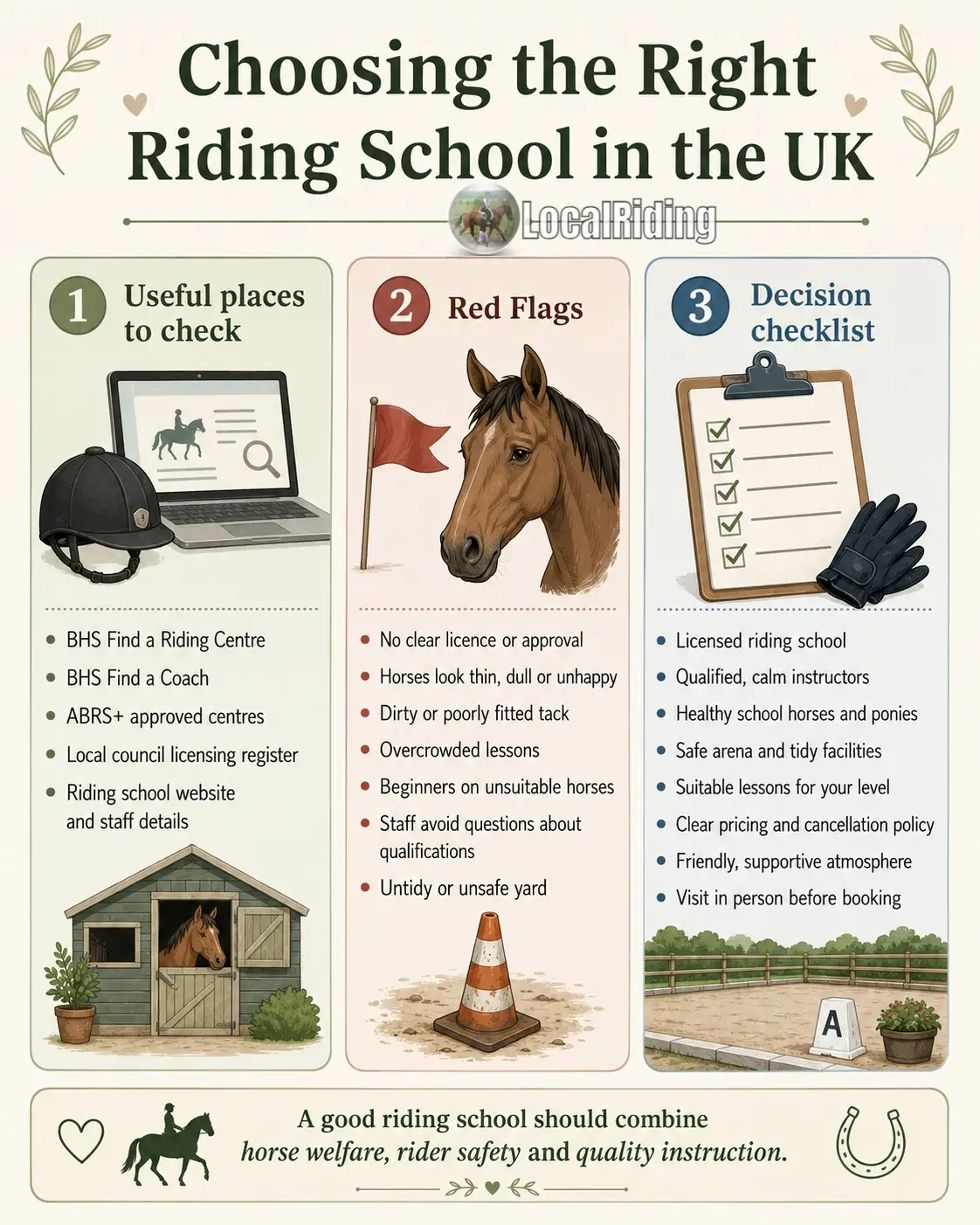 Choosing the right riding school in the UK infographic covering licensing, BHS and ABRS+ approval, instructor qualifications, welfare signs, safety checks and questions to ask before booking
BHS Approval: A Strong Quality Indicator
The British Horse Society, commonly known as the BHS, approves riding centres that meet its standards for horse welfare, safety, instruction, facilities and management. BHS approval is one of the most recognised quality marks in UK equestrianism.
A BHS-approved riding centre should be listed on the BHS website. You can search by location and type of centre to find riding schools, training centres and other approved establishments. Choosing a BHS-approved centre can provide reassurance that the premises have been assessed against recognised standards.
However, approval should not replace your own judgement. Visit the yard, watch how horses are handled, meet the instructors and ask questions. The best decision combines external approval with what you see in person.
ABRS+ Approved Riding Schools
The Association of British Riding Schools, Livery Yards and Equestrian Centres, now commonly referred to as ABRS+, also operates an approval scheme for riding schools and equestrian establishments. ABRS+ approval is another useful sign that a centre is engaging with professional standards around instruction, welfare and management.
ABRS+ schools may also offer structured rider awards and progressive training schemes, which can be particularly useful for children, adult beginners and riders who want a clear sense of progress.
When comparing schools, BHS approval and ABRS+ approval are both positive signs. A school does not need to have every badge available, but it should be licensed, transparent, welfare-focused and able to explain the qualifications and experience of its instructors.
Instructor Qualifications: What Should You Look For?
Instructor quality matters enormously. A good instructor keeps you safe, explains clearly, builds confidence and teaches correct technique from the start. A poor instructor may leave riders confused, frightened or developing bad habits that are difficult to undo later.
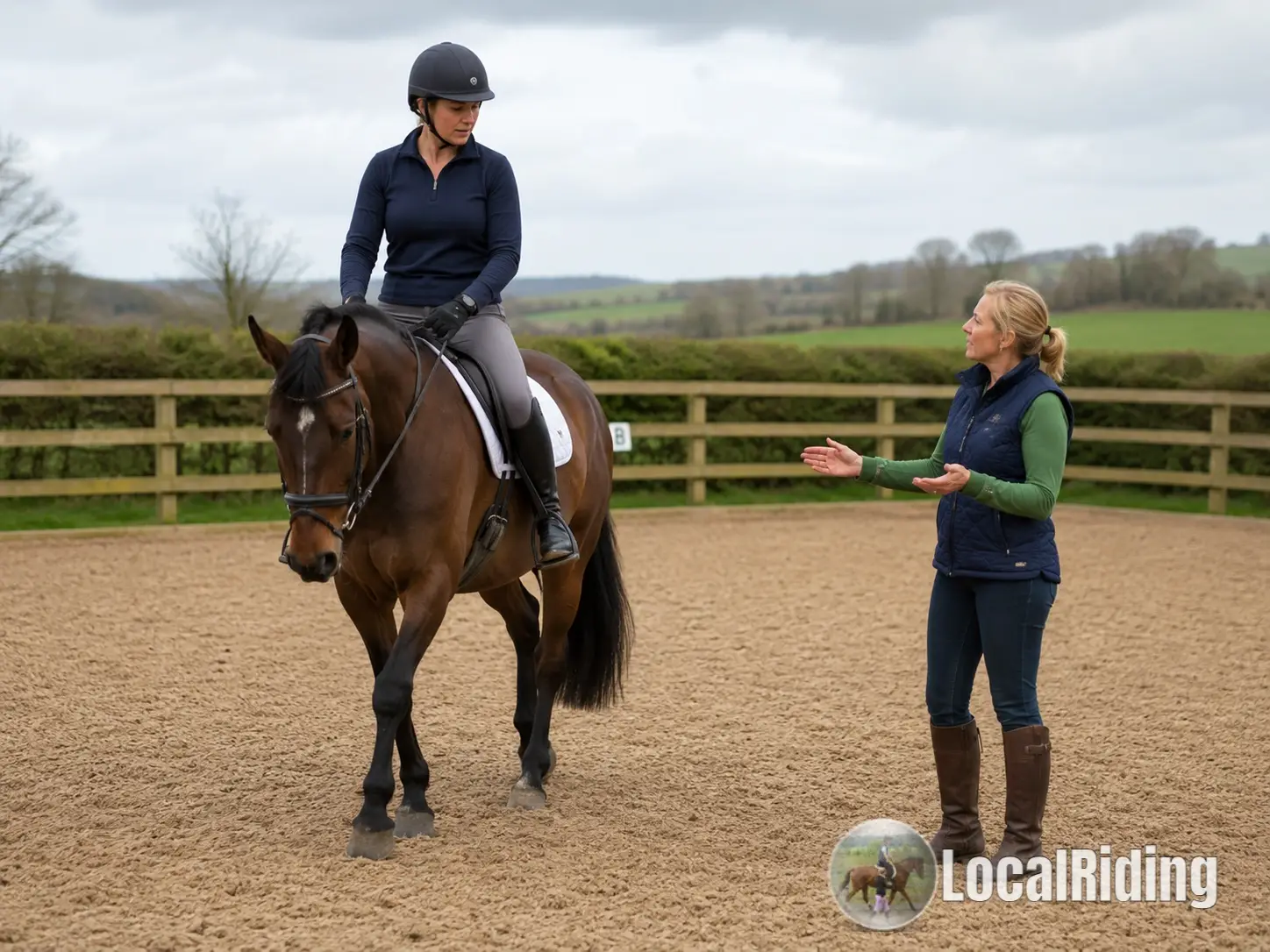 Qualified UK riding instructor teaching a rider on a bay horse in an outdoor arena
In the UK, recognised instructor and coaching qualifications may include BHS qualifications, ABRS+ or 1st4Sport equestrian coaching qualifications, Pony Club coaching qualifications, Riding for the Disabled Association coaching qualifications, discipline-specific qualifications from bodies such as British Dressage, British Showjumping or British Eventing, and older UKCC-endorsed coaching qualifications.
BHS Coaching Qualifications
The BHS coaching pathway is widely recognised in the UK. You may see instructors described as holding qualifications such as BHS Stage 3 Coach in Complete Horsemanship, BHS Stage 4 Senior Coach, BHS Stage 5 Performance Coach or Fellow of the British Horse Society. These indicate different levels of training, assessment and experience.
For a beginner or returning rider, the most important point is not simply the title but whether the instructor is appropriately qualified and experienced for the lesson being taught. A coach teaching a nervous beginner needs patience, communication skills and suitable school horses, not just technical riding knowledge.
BHS Accredited Professional Coaches
BHS Accredited Professional Coaches are listed on the BHS coach register. This register allows riders to search for qualified, accredited professionals and view information such as location, contact details, coaching role and qualifications.
If you are booking private lessons, clinics or lessons on your own horse, the BHS coach register is a useful place to verify whether a coach is currently accredited.
ABRS+ and 1st4Sport Coaching Qualifications
ABRS+ is involved in equestrian education and coaching pathways. Some instructors may hold Certificate in Equestrian Coaching qualifications, including levels that identify whether the person is qualified as a coaching assistant or able to coach independently.
When a school refers to ABRS+, 1st4Sport, UKCC or other coaching qualifications, ask what level the qualification is, what it qualifies the instructor to teach, and whether the instructor has current first aid, safeguarding and insurance arrangements where relevant.
Safeguarding, First Aid and Insurance
Where children, vulnerable riders or group lessons are involved, qualifications alone are not enough. A responsible riding school should have safeguarding policies, appropriate supervision, first aid arrangements, insurance and emergency procedures.
For children’s lessons, ask whether instructors and staff have appropriate safeguarding training and background checks. A professional school should not be offended by this question.
Where to Find Instructor Details
Do not rely only on social media claims or word of mouth. Instructor details can often be checked through recognised organisations and direct questions to the school.
Useful Places to Check
- BHS Find a Coach or Groom: Search for BHS Accredited Professional Coaches by location, role and qualification level.
- BHS Find a Riding Centre: Search for BHS-approved riding centres and training establishments.
- ABRS+ website: Check ABRS+ information on approved riding schools and education pathways.
- Riding school website: Look for named instructors, qualifications, experience and approval status.
- Local authority licensing register: Check whether the riding establishment is licensed.
- Direct enquiry: Ask the school which instructor will teach you and what qualifications they hold.
A transparent riding school should be willing to tell you who teaches lessons, what qualifications they have, and whether they are supervised if still training.
What to Look for When Visiting a Riding School
Always visit before committing to a block of lessons if possible. A short walk around the yard can tell you a great deal.
Horse Welfare Signs
- Horses look healthy, calm and appropriately fed.
- Hooves are trimmed or shod regularly and do not look neglected.
- Horses have access to clean water.
- Stables, fields and yards are reasonably clean and safe.
- Tack appears clean, correctly fitted and in good repair.
- Horses are not overworked or used in back-to-back lessons without suitable breaks.
- Staff handle horses quietly and respectfully.
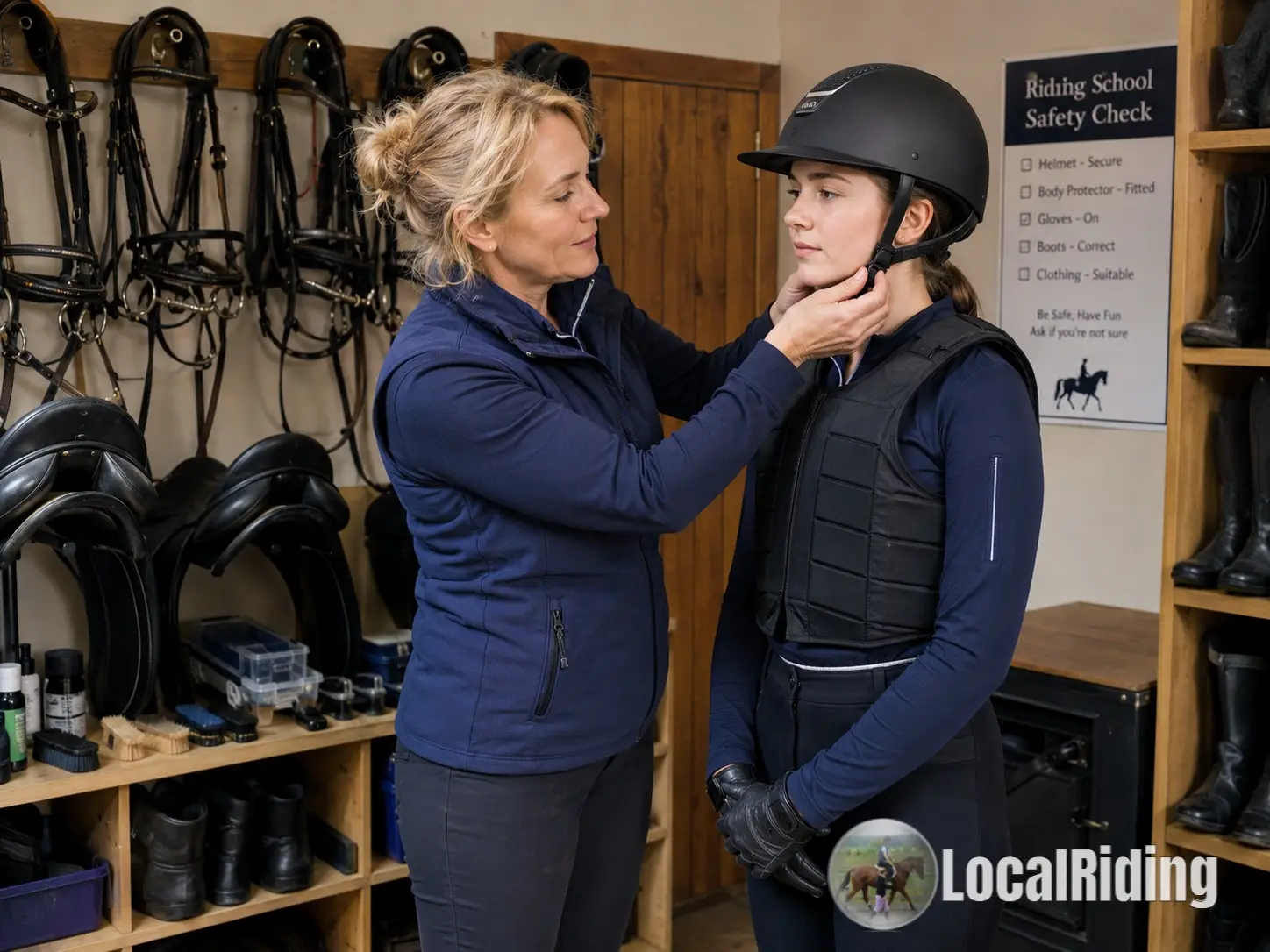 Riding school instructor checking a young rider's helmet and body protector fit against a safety checklist
Rider Safety Signs
- Riders are matched to suitable horses or ponies.
- Hats are checked and meet current safety standards.
- Beginners are supervised closely when mounting, dismounting and handling horses.
- Instructors explain arena rules and basic safety clearly.
- The school asks about height, weight, experience, confidence and any medical issues relevant to riding.
- Children are appropriately supervised.
A school that asks careful questions before booking is usually taking horse welfare and rider safety seriously. Weight limits, for example, are not about embarrassment; they are part of matching riders to suitable horses and protecting equine welfare.
Questions to Ask Before Booking
A good riding school will expect questions from new clients. Ask politely but directly.
- Are you licensed by the local authority?
- Are you BHS-approved, ABRS+ approved, or affiliated with another recognised organisation?
- Who will teach my lesson, and what qualifications do they hold?
- Do you offer beginner, returning rider or nervous rider lessons?
- What is the maximum group size?
- Will I ride the same horse each week or different horses?
- How do you match horses to riders?
- What safety equipment do I need?
- Do you teach horse care and stable management as well as riding?
- Can I progress to hacking, jumping, dressage, exams or competitions?
- What is your cancellation policy?
- Do you have rider weight limits, age limits or medical declaration requirements?
The answers should feel clear and professional. Vague, dismissive or defensive answers are not encouraging.
Group Lessons vs Private Lessons
Both group and private lessons can be valuable. The right choice depends on your confidence, budget, goals and experience level.
Group Lessons
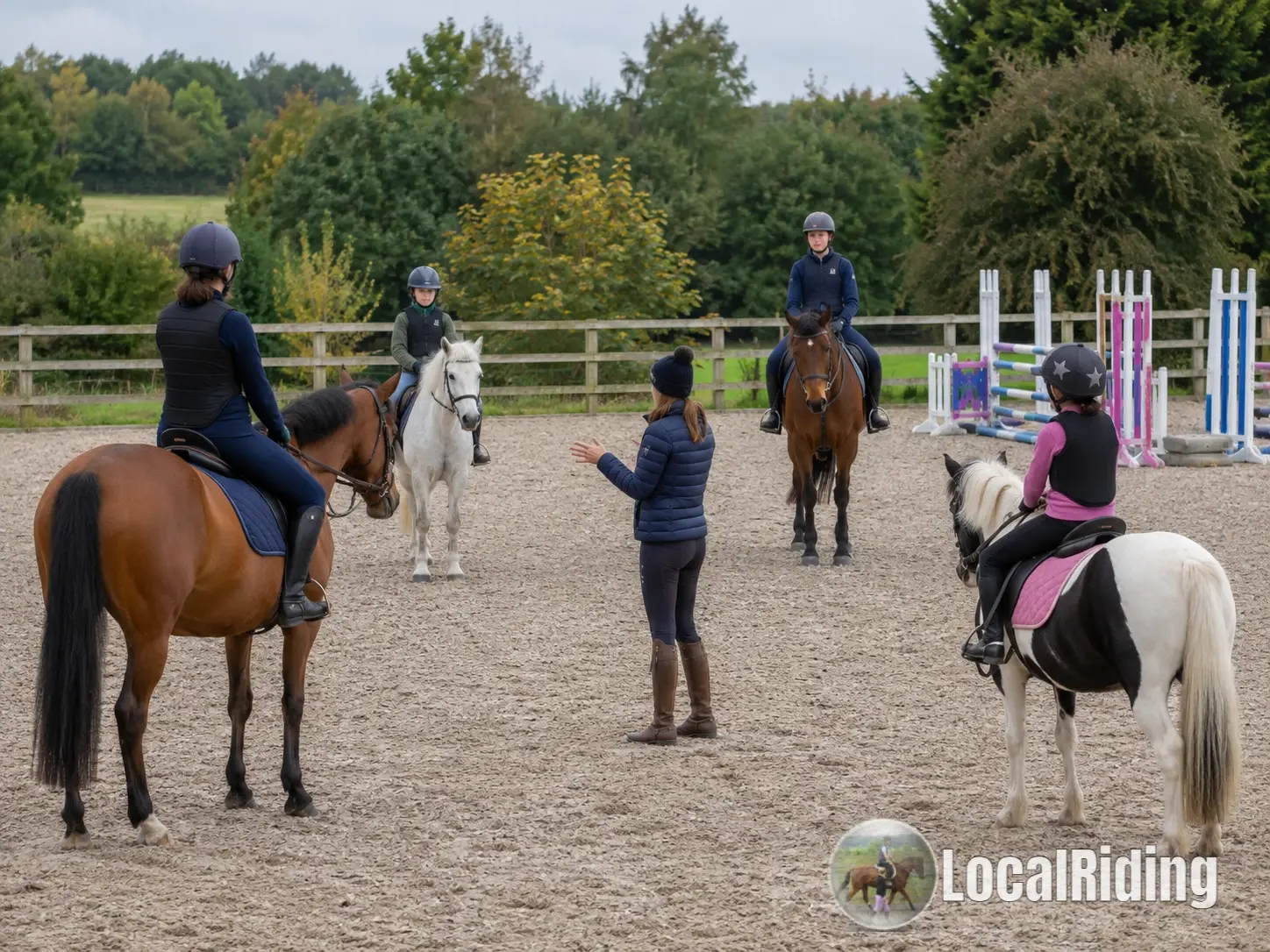 Group riding lesson at a UK riding school with an instructor teaching several riders and ponies in an outdoor arena
Group lessons are usually more affordable and can be enjoyable because riders learn alongside others. They also teach useful skills such as spacing, arena awareness and riding with other horses. Watching other riders can help you understand corrections and exercises.
However, group lessons are only effective when the group is well matched. A complete beginner should not be placed in a fast-moving lesson with experienced riders. The instructor should be able to give individual feedback even within a group setting.
Private Lessons
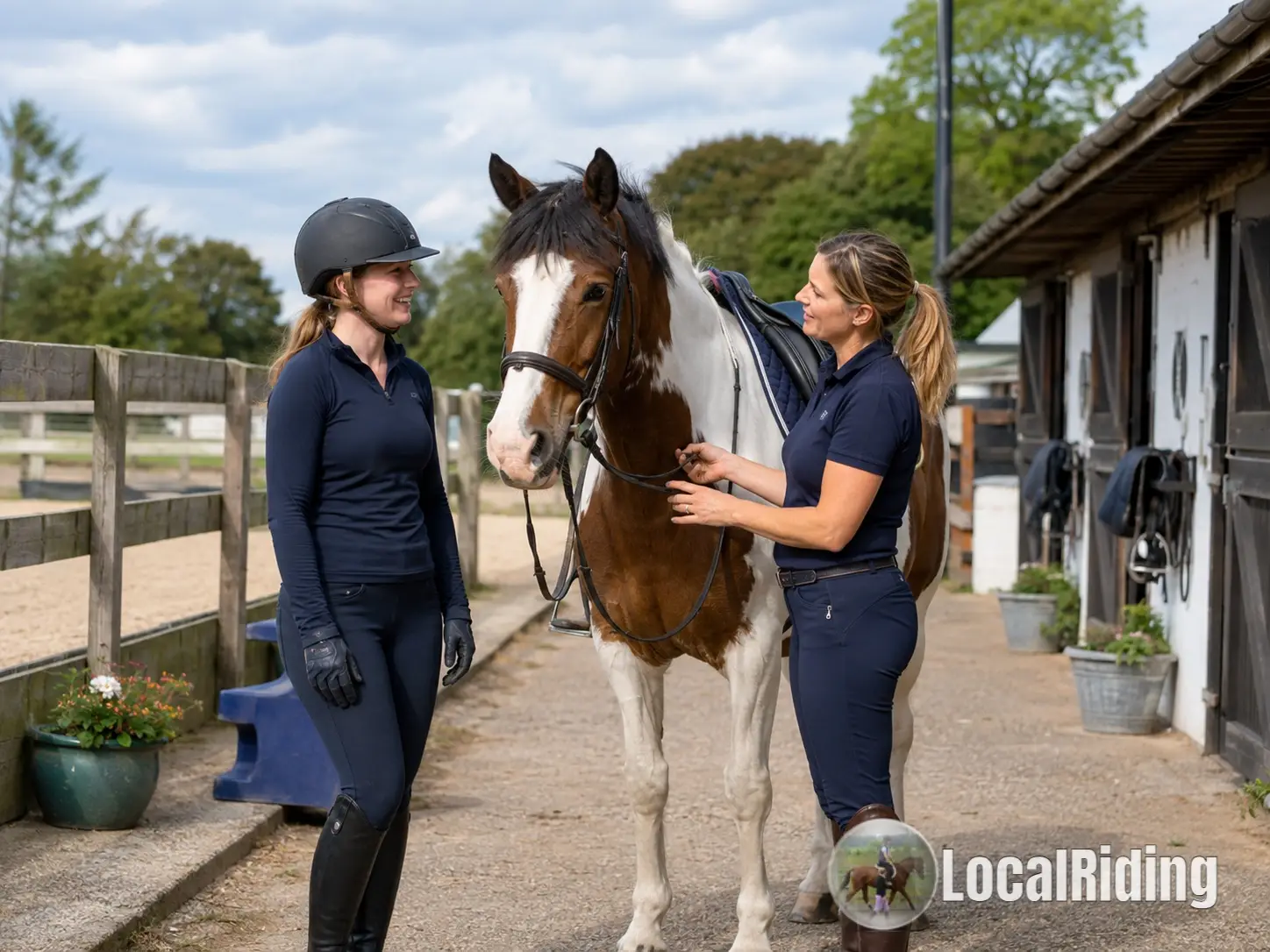 One-to-one riding instruction at a UK yard with an instructor helping a rider prepare a horse for a private lesson
Private lessons provide more individual attention. They are ideal for nervous riders, beginners learning the basics, riders returning after a long break, people working through confidence issues, or anyone preparing for a specific goal.
Private lessons are more expensive, but progress is often faster because the instructor can focus entirely on you. Many riders benefit from a mix of private lessons for technical progress and group lessons for confidence and experience.
Choosing a Riding School for Children
Children need patient instruction, suitable ponies and a structured environment. A good children’s riding school should teach safety and horse care, not simply riding technique.
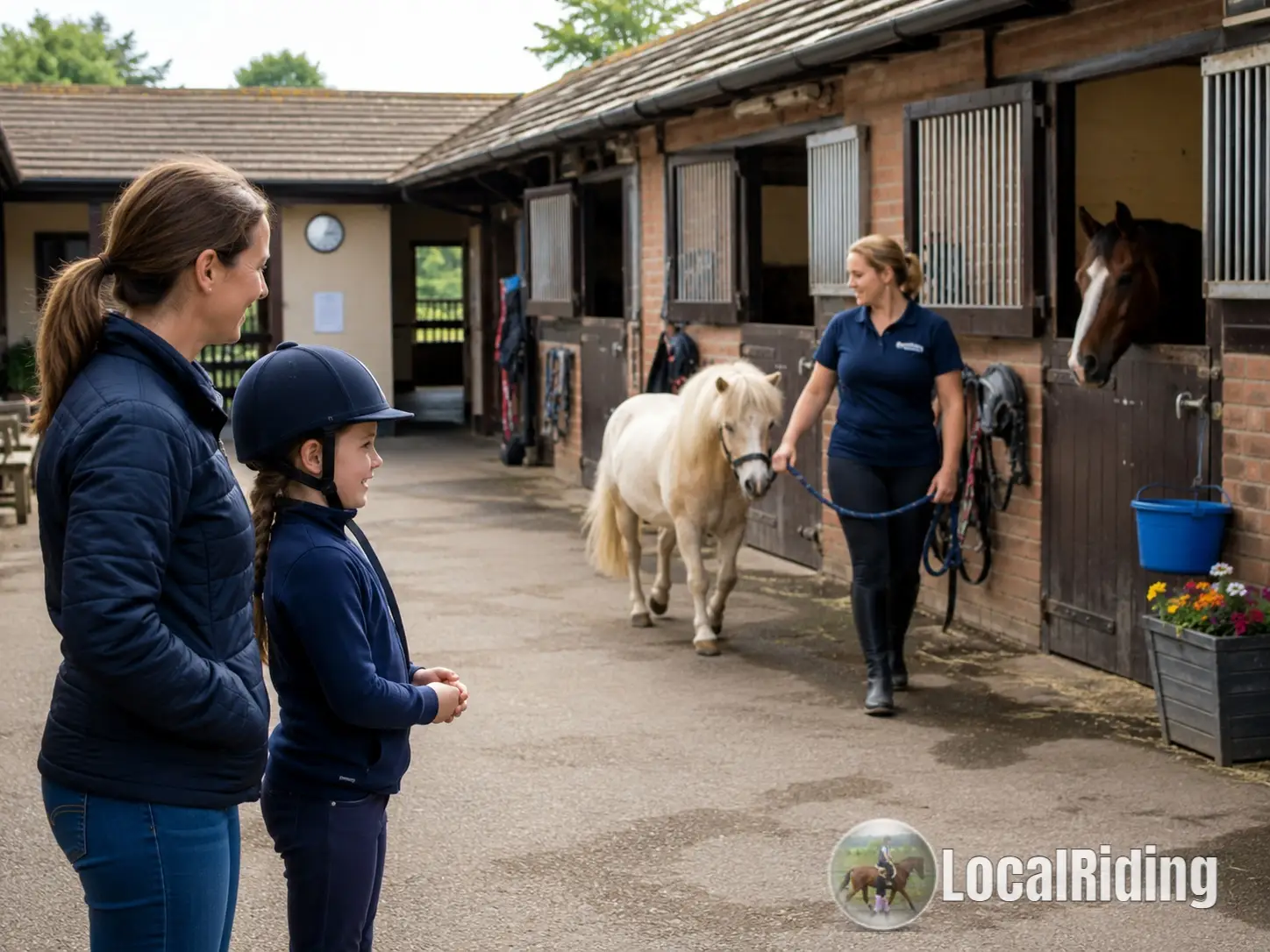 Riding school staff leading a calm pony to a young child and parent, matching the right pony to the rider
Look for calm ponies, properly fitted tack, clear supervision, safe mounting procedures and instructors who speak to children with kindness and authority. Children should be taught how to approach ponies, lead safely, groom gently and understand that horses are living animals, not equipment.
Ask whether the school offers pony days, stable-management sessions, progressive awards, Pony Club Centre activities or beginner horsemanship classes. These can help children become more rounded and responsible riders.
Choosing a Riding School as an Adult Beginner or Returning Rider
Adult beginners and returning riders often need a slightly different approach. Many adults are more aware of risk, more self-critical and more nervous than children. The right school should understand this and offer suitable horses, clear explanations and steady progression.
If you are returning after years away from riding, avoid assuming you can immediately restart at your old level. Your balance, strength, confidence and reaction time may need rebuilding. A good instructor will help you regain skill safely.
Ask whether the school has specific adult beginner lessons, confidence-building sessions or private lessons for returning riders. A supportive atmosphere matters.
Livery Yard Instructor vs Independent Riding School
Some riders learn at an independent riding school on school horses. Others have lessons at a livery yard, often on their own horse or a shared horse. Both can be useful, but they serve different needs.
Independent Riding Schools
Independent riding schools are usually best for beginners because they provide horses, tack, facilities and structured lessons. Riders can learn on suitable schoolmasters before taking on the responsibility of sharing, loaning or buying.
Livery Yard Instructors
Lessons at a livery yard are useful for riders who already have access to a horse. A resident or visiting instructor can help with schooling, confidence, competition preparation and horse-specific issues. However, if you are a beginner without your own horse, a licensed riding school is usually the safer and more practical starting point.
How to Judge the First Lesson
Your first lesson should feel organised and safe. You may be asked to complete a rider registration form, provide height and weight, describe your experience and disclose relevant medical information. This is normal.
The instructor should explain what will happen, help you mount safely, check stirrup length and girth, and give clear instructions. For beginners, the first lesson may focus on position, balance, stopping, starting, steering and basic confidence rather than dramatic progress.
Good Signs After the Lesson
- You understood what the instructor was asking.
- You felt appropriately challenged but not unsafe.
- The horse or pony seemed suitable for your level.
- You received constructive feedback.
- The instructor noticed tension, confusion or loss of balance.
- You know what the next step in your learning will be.
If you felt frightened, ignored, rushed or over-horsed, discuss it with the school before booking again. Sometimes a different horse or instructor solves the issue. Sometimes another school is a better fit.
Red Flags to Avoid
Not every riding school is well run. Be prepared to walk away if something feels wrong.
- The school cannot or will not confirm licensing.
- Horses look thin, lame, dull, overworked or poorly cared for.
- Tack is dirty, cracked, badly fitted or unsafe.
- Instructors shout, shame riders or seem distracted.
- Beginners are placed on unsuitable horses.
- Lessons feel chaotic or overcrowded.
- Staff dismiss concerns about fear, pain or safety.
- Children appear poorly supervised.
- The yard is unsafe, cluttered or poorly maintained.
- The school refuses reasonable questions about qualifications or insurance.
How to Decide Which Riding School Is Best for You
Once you have visited a few options, compare them calmly. The right school should fit your practical needs and your learning style.
Decision Checklist
- Is the school licensed?
- Is it BHS-approved, ABRS+ approved or otherwise professionally recognised?
- Are the instructors qualified and approachable?
- Are the horses healthy, calm and suitable?
- Are lessons structured and progressive?
- Does the school offer the type of riding you want?
- Can you travel there consistently?
- Are lesson times realistic for your routine?
- Do you feel safe and respected?
- Would you be happy for a child, friend or nervous beginner to learn there?
If the answer to most of these questions is yes, you have probably found a good starting point.
Final Thoughts
The best riding school in the UK is not the same for every rider. A nervous adult beginner, a confident teenager, a disabled rider, a young child and a returning competition rider may all need different environments.
Start with the essentials: licensing, welfare, safety and qualified instruction. Then look for the school that suits your goals, confidence level and personality. Use recognised directories, ask about instructor qualifications and visit in person before committing to a block of lessons.
A good riding school will teach you more than how to ride. It will help you understand horses, respect their welfare, build confidence and develop skills that can last a lifetime.
Debbie Irwin
Livery Yard Manager & Equestrian Professional
Debbie has run professional showing yards and mixed livery yards in Lincolnshire and Essex for over 30 years. She has competed and taught at various levels. She writes about practical horse health, yard life, livery and everyday horse health and management.
Support Debbie on Ko-fi ☕Found this guide helpful? LocalRiding is run independently without ads. If you'd like to chip in towards the site's upkeep, you can buy Debbie a hot drink on a cold day on Ko-fi, she'll really appreciate it.