
Horse health
Horse Health Emergencies: First Aid Essentials Every UK Horse Owner Should Know
A UK first aid guide for horse owners — vital signs, spotting colic, safe wound management, building a yard first aid kit and working with your vet.
By Debbie Irwin · 23 April 2026 · 6 min read
Knowing what to do in a horse health emergency can make the difference between a manageable incident and a life-threatening situation. Horses can deteriorate quickly, and owners are often the first people on the scene. Being prepared, staying calm and knowing when to call the vet are essential skills for every UK horse owner, rider and yard manager.
This guide covers the key first aid essentials: recognising abnormal vital signs, spotting colic, managing wounds safely, preparing a yard first aid kit and building a strong relationship with your equine vet.
Important note: This is not health care or veterinary advice. This article is for general information only and does not replace professional veterinary diagnosis, treatment or emergency care. If your horse is unwell, injured, in pain, distressed or behaving unusually, contact your vet immediately.
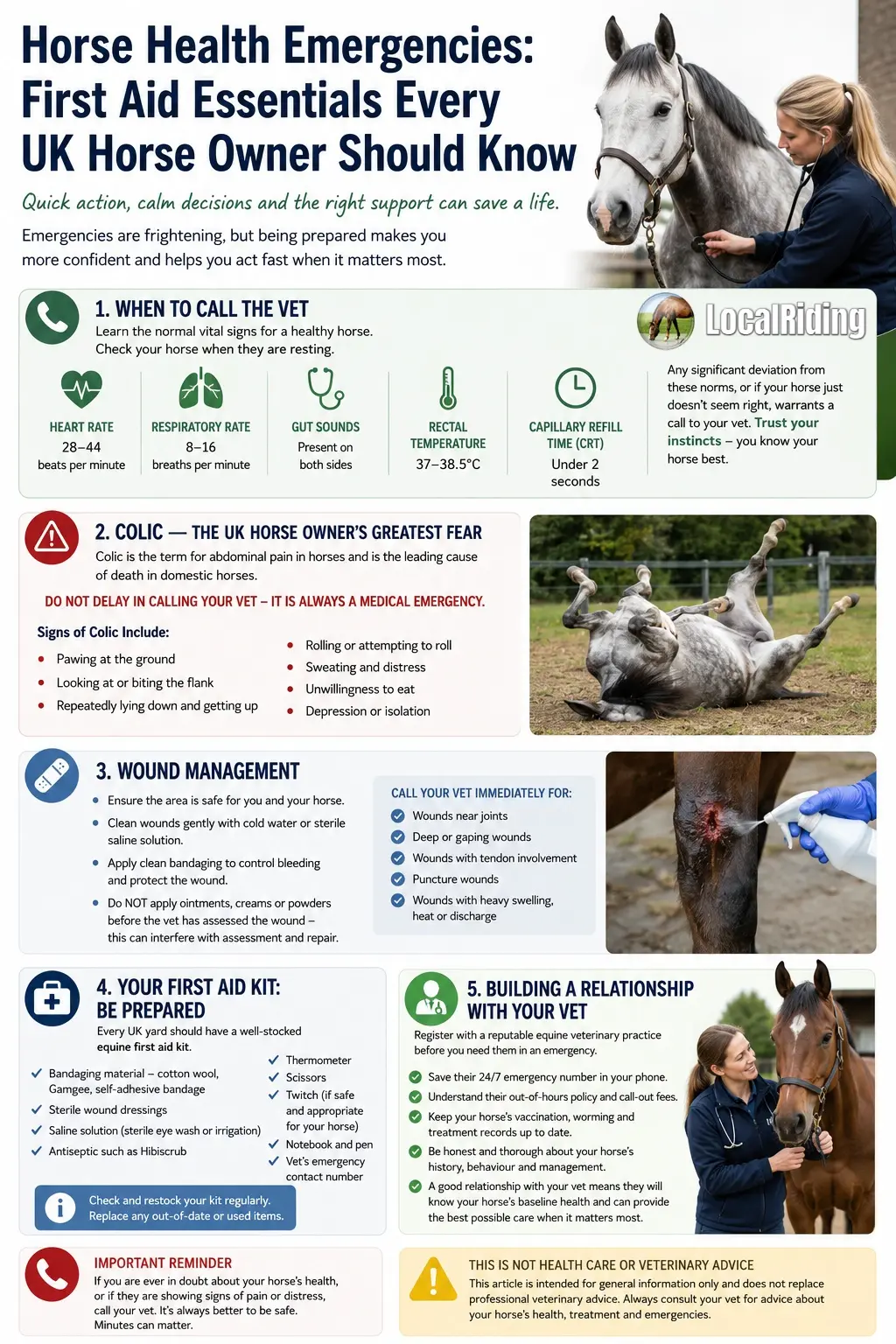 Horse health emergencies infographic — first aid essentials for UK horse owners: vital signs, colic signs, wound management, first aid kit and vet relationship
Horse health emergencies at a glance — vital signs, colic, wounds, first aid kit and working with your vet.
When to Call the Vet
One of the most useful things you can do before an emergency is learn what is normal for your own horse. Vital signs vary slightly between individuals, but a healthy adult horse at rest will usually have a heart rate of around 28–44 beats per minute, a respiratory rate of around 8–16 breaths per minute, a rectal temperature of approximately 37–38.5°C, healthy pink gums and a capillary refill time of two seconds or less. Gut sounds should be present on both sides.
Call your vet if there is a significant change from your horse's normal baseline, or if your horse simply does not seem right. Owners often notice subtle changes before obvious symptoms appear. A horse that is unusually quiet, off its food, sweating, restless, very lame, struggling to breathe, bleeding heavily or showing signs of pain should be treated seriously.
Useful Information to Give Your Vet
When phoning the vet, be ready to explain what has happened, when you first noticed the problem, your horse's age and medical history, their current vital signs, whether they have eaten, drunk, passed droppings or urinated, and whether they are insured. If there is a wound, describe its location, size, depth and whether bleeding is controlled. Clear information helps your vet judge how urgent the call-out is and what equipment may be needed.
Colic: A True Equine Emergency
Colic is a general term for abdominal pain in horses. It can range from mild discomfort to a life-threatening emergency requiring hospital treatment or surgery. Because it is impossible to tell how serious a case is without veterinary assessment, suspected colic should always be taken seriously.
Common signs of colic include pawing at the ground, looking at or biting the flank, repeatedly lying down and getting up, rolling, sweating, stretching as if to urinate, loss of appetite, reduced droppings, depression, restlessness and an elevated heart rate. Some horses show dramatic signs, while others are simply dull, withdrawn or "not themselves".
Do not delay calling your vet if you suspect colic. While waiting for the vet, remove feed, keep the horse somewhere safe and quiet, and monitor behaviour closely. Gentle walking may be useful if the horse is restless and it is safe to do so, but do not exhaust the horse. Never give medication unless instructed by your vet, as pain relief can mask symptoms and affect assessment.
Wound Management
Wounds are common around horses, especially in the field, stable and during transport. The first priority is safety. A painful or frightened horse may kick, strike or pull away suddenly, so make sure you and anyone helping are not in danger.
If the wound is bleeding heavily, apply firm, even pressure with a clean dressing or towel and call the vet. For minor wounds, gently rinse away visible dirt using clean cold water or sterile saline. Avoid scrubbing, cutting hair away aggressively or applying strong chemicals. Do not apply ointments, powders or creams before the vet has assessed the wound, as these can interfere with examination, cleaning, stitching or dressing.
Some wounds require urgent veterinary attention even if they look small. These include wounds near joints, tendons, eyes, the chest or abdomen; deep or gaping wounds; puncture wounds; wounds with heavy swelling, heat or discharge; wounds causing lameness; and any injury where you suspect a foreign body may be present.
Lameness, Laminitis and Sudden Pain
Sudden severe lameness should be treated as urgent. Causes may include hoof abscesses, fractures, tendon injuries, laminitis, wounds or joint infection. If your horse is reluctant to move, shifting weight from foot to foot, leaning back, has strong digital pulses or appears very painful in the feet, contact your vet promptly.
While waiting for advice, keep the horse calm and restrict movement. Do not force a very lame horse to walk unless your vet tells you to. If laminitis is suspected, bring the horse off grass, provide a deep supportive bed and contact your vet immediately.
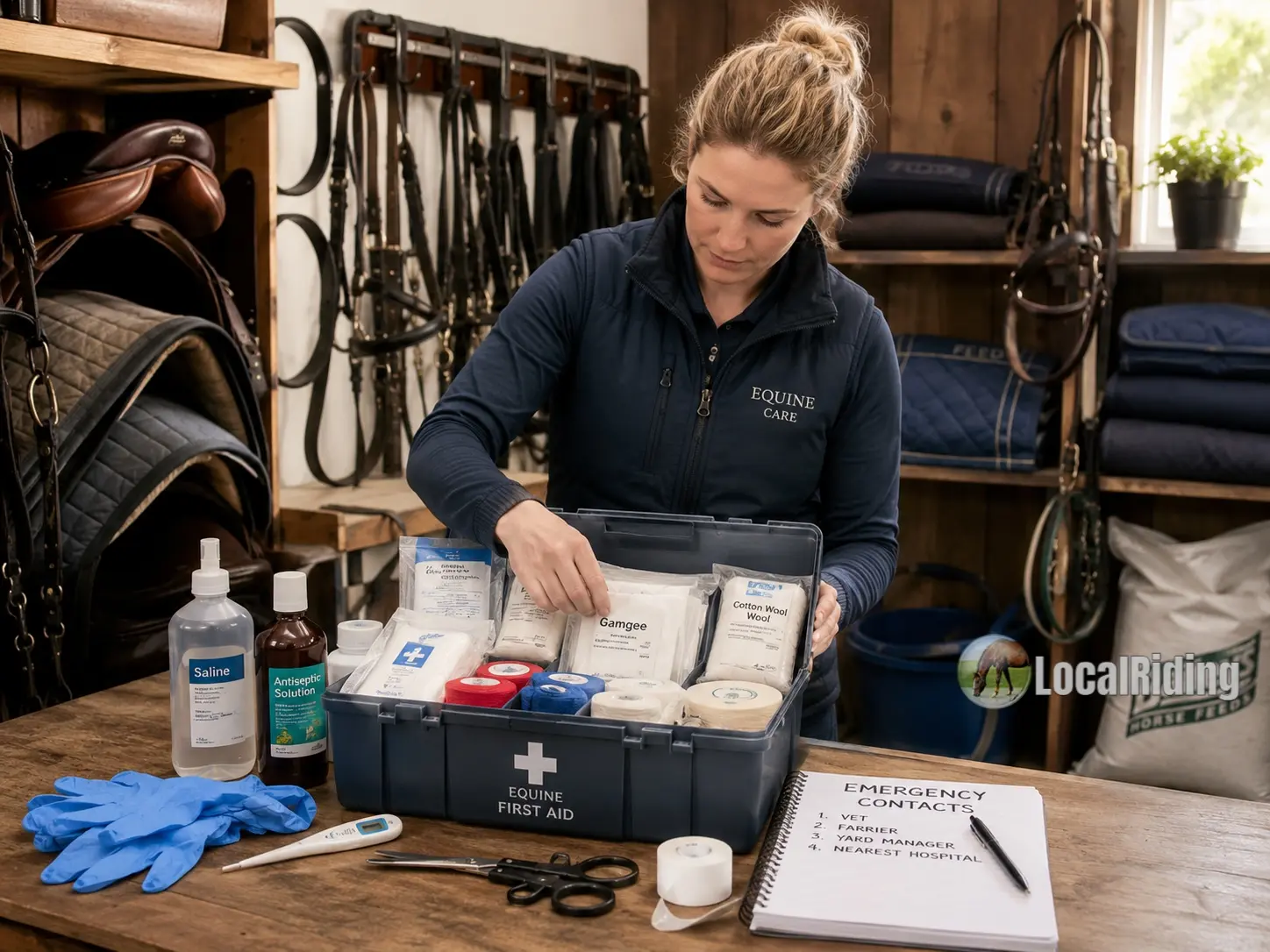 UK horse owner organising an equine first aid kit on a tack room table with saline, antiseptic, gloves, bandages, scissors, thermometer and emergency contacts
A well-stocked equine first aid kit kept somewhere clean, dry and easy to find on the yard.
Your Equine First Aid Kit
Every UK yard should have a clearly labelled, well-stocked equine first aid kit stored somewhere clean, dry and easy to access. Check it regularly and replace used or out-of-date items.
- Digital thermometer suitable for rectal use
- Sterile saline or saline pods for wound cleaning
- Clean wound dressings and non-stick pads
- Gamgee or cotton wool roll
- Self-adhesive bandage and stable bandages
- Clean towels
- Blunt-ended scissors
- Disposable gloves
- Antiseptic wash such as chlorhexidine, used only as directed
- Hoof pick and poultice materials
- Torch or head torch
- Notebook and pen for recording symptoms and timings
- Your vet's emergency number and your horse's insurance details
It is also sensible to keep a spare headcollar and lead rope near the kit, along with a clean bucket and access to fresh water. Larger yards should make sure all staff and regular helpers know where the first aid kit is kept.
Emergency Preparation on the Yard
Good preparation reduces panic. Keep your horse's passport, vaccination record, insurance details and veterinary history accessible. Make sure your yard has clear access for a vet's vehicle, especially out of hours or in bad weather. If your horse may need referral to an equine hospital, know where your nearest referral centre is and whether transport is available at short notice.
It is also worth practising basic checks when your horse is healthy. Learn how to take a temperature, check gums, count breathing rate, feel for a pulse and listen for gut sounds. These simple skills are much easier to use calmly in an emergency if you have practised them before.
Building a Relationship with Your Vet
Register with a reputable equine veterinary practice before an emergency happens. Know their out-of-hours procedure, emergency number and call-out area. A vet who already knows your horse's history, temperament and normal health can make quicker, better-informed decisions when something goes wrong.
Routine care also supports emergency readiness. Regular vaccinations, dental checks, worming plans, weight monitoring and soundness assessments all help your vet build a complete picture of your horse's health.
Final Thoughts
Horse health emergencies are frightening, but preparation makes a real difference. Learn your horse's normal vital signs, keep a stocked first aid kit, take colic and wounds seriously, and call your vet early if you are unsure. In equine emergencies, it is always better to ask for professional guidance too soon than too late.
This guide is for general information only and does not replace veterinary advice. Always consult your vet for advice about your horse's health, treatment and emergencies.
Debbie Irwin
Livery Yard Manager & Equestrian Professional
Debbie has run professional showing yards and mixed livery yards in Lincolnshire and Essex for over 30 years. She has competed and taught at various levels. She writes about practical horse health, yard life, livery and everyday horse health and management.
Support Debbie on Ko-fi ☕Found this guide helpful? LocalRiding is run independently without ads. If you'd like to chip in towards the site's upkeep, you can buy Debbie a hot drink on a cold day on Ko-fi, she'll really appreciate it.