
Horse health
What Is Equine Physiotherapy? A UK Horse Owner's Guide to Physio, Bodywork and Rehabilitation
What equine physiotherapy involves, when your horse may benefit, the difference between physio, massage and chiropractic, how to choose a qualified UK practitioner and what to expect from a session.
By Debbie Irwin · 25 July 2026 · 14 min read
Updated UK guide: What equine physiotherapy involves, when your horse may benefit, how it differs from massage, chiropractic and osteopathy and how to choose a suitably qualified practitioner.
Introduction
Equine physiotherapy and bodywork are now widely used across the UK to support horse comfort, movement, performance and rehabilitation. From leisure horses and veterans to competition horses, racehorses and horses returning from injury, physiotherapy can play an important role alongside veterinary care, farriery, dentistry, saddle fitting and good day-to-day management.
However, the area can be confusing for owners. Terms such as physiotherapist, bodyworker, massage therapist, chiropractor, osteopath, rehabilitation practitioner and musculoskeletal therapist are often used in similar conversations, but they do not all mean the same thing. Training, regulation, insurance and scope of practice can vary significantly.
This guide explains what equine physiotherapy is, when it may be useful, what a treatment session may involve, how to choose a practitioner in the UK and what owners can safely do at home under professional guidance.
Important Note: This Is Not Veterinary Advice
This article is for general information only and does not replace veterinary advice, diagnosis or treatment. If your horse is lame, in pain, recovering from injury, showing behavioural changes, struggling under saddle or displaying signs of illness, speak to your vet first. Physiotherapy and bodywork should support veterinary care, not replace it.
What Is Equine Physiotherapy?
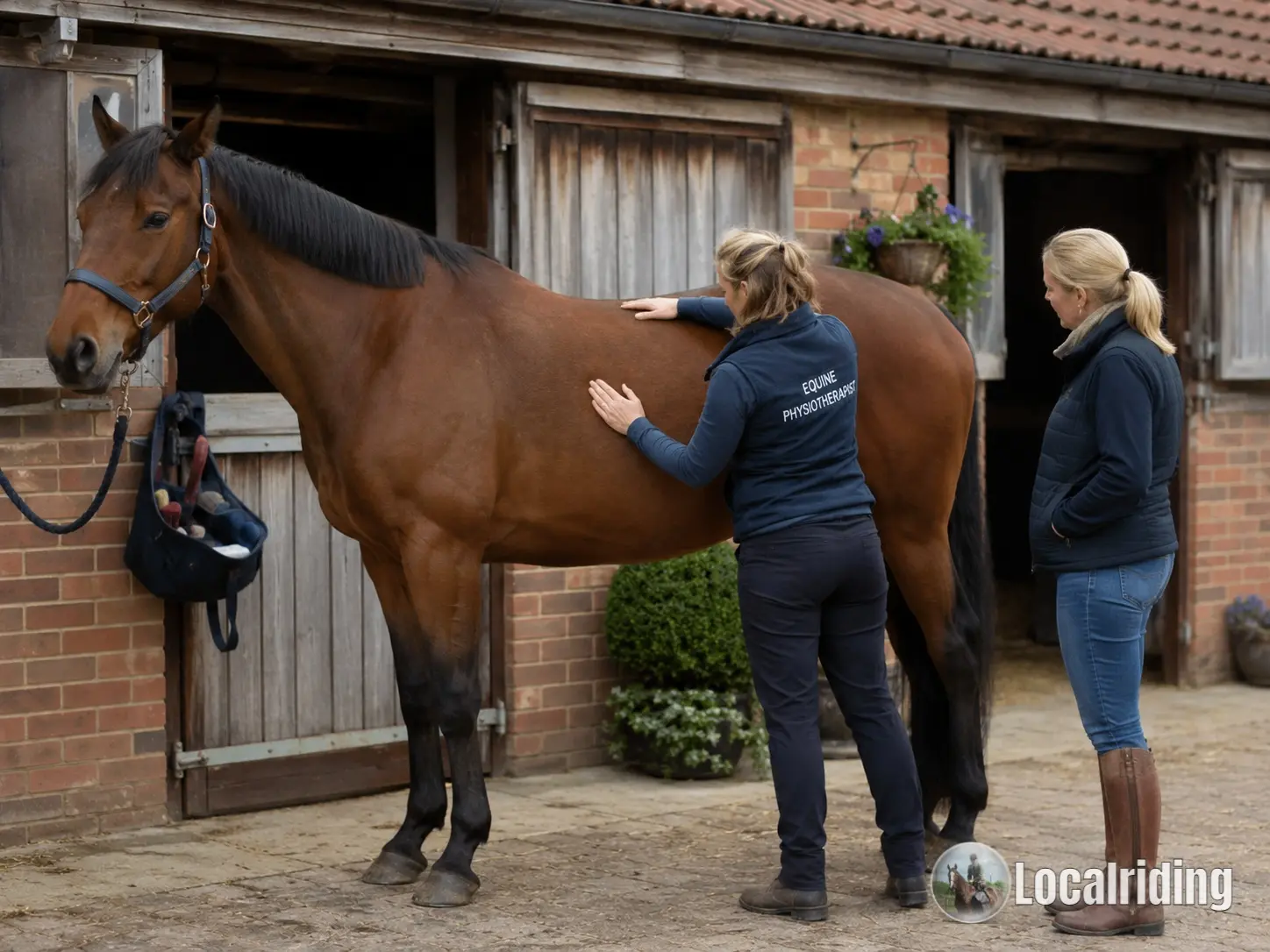 Equine physiotherapist assessing a horse's back and soft tissues at a UK yard while the owner looks on
Equine physiotherapy involves the assessment and treatment of movement dysfunction, pain, weakness, stiffness, injury and altered performance in horses. A suitably qualified equine physiotherapist looks at how the horse moves, how the muscles and joints are functioning and how issues in one part of the body may be affecting the horse as a whole.
Treatment may include manual therapy, soft tissue techniques, joint mobilisation, stretching, exercise prescription, rehabilitation planning and physical therapies such as therapeutic ultrasound, laser therapy, neuromuscular electrical stimulation or TENS, depending on the practitioner’s qualifications and equipment.
The aim is not simply to “loosen tight muscles”. Good equine physiotherapy should consider the horse’s workload, conformation, age, veterinary history, shoeing, saddle fit, rider influence, training routine, turnout, surfaces and management. A sore back, for example, may be linked to hock pain, poor saddle fit, asymmetrical riding, dental discomfort, hoof imbalance or a previous injury.
How Equine Physiotherapy Fits Into the Vet-Led Team
In the UK, horses receiving remedial musculoskeletal treatment should be managed as part of a vet-led approach. If the horse has pain, lameness, injury, disease or a suspected clinical problem, the vet should be involved before physiotherapy treatment begins.
This matters because physiotherapists and bodyworkers should not be used as a substitute for diagnosis. A horse that is bucking, refusing jumps, struggling to canter, showing back pain, dragging toes or becoming difficult to tack up may have an underlying veterinary issue. Treating the muscles without identifying the cause can delay proper care.
For maintenance care in a healthy horse, the requirements may be different, but the horse should still be registered with a veterinary practice and any concerns identified by the practitioner should be referred back to the vet. A responsible practitioner will be comfortable working with your vet, farrier, saddle fitter and other professionals.
Is Equine Physiotherapy Regulated in the UK?
This is an important area for owners to understand. In the UK, the title “equine physiotherapist” or “veterinary physiotherapist” is not protected in the same way as “veterinary surgeon”. This means that training backgrounds can vary. Some practitioners have extensive university-level training, professional membership, insurance and clinical experience; others may have completed shorter courses.
Because of this, owners should check qualifications carefully. Do not choose a practitioner purely because they are popular locally, active on social media or recommended casually on a yard group. Ask what qualification they hold, where they trained, whether they are insured, whether they complete continuing professional development and whether they are listed on a recognised professional register.
Recognised UK Registers and Professional Bodies
There are several professional organisations and registers that UK horse owners may encounter. Each has its own membership criteria, so it is worth checking the details rather than assuming all memberships are identical.
ACPAT
The Association of Chartered Physiotherapists in Animal Therapy represents chartered physiotherapists who have undertaken additional training in animal physiotherapy. ACPAT members usually have a human physiotherapy background before specialising in animals.
RAMP
The Register of Animal Musculoskeletal Practitioners is a voluntary register for professionals working in animal physiotherapy, osteopathy and chiropractic techniques. It exists to help owners and veterinary surgeons identify practitioners working to defined standards.
NAVP and IRVAP
The National Association of Veterinary Physiotherapists and the Institute of Registered Veterinary and Animal Physiotherapists are also professional bodies associated with veterinary physiotherapy and animal therapy. Members may have completed veterinary physiotherapy qualifications through different education pathways.
When choosing a practitioner, ask them to explain their qualification route and professional registration clearly. A good practitioner should welcome questions and be able to explain what they are qualified to do.
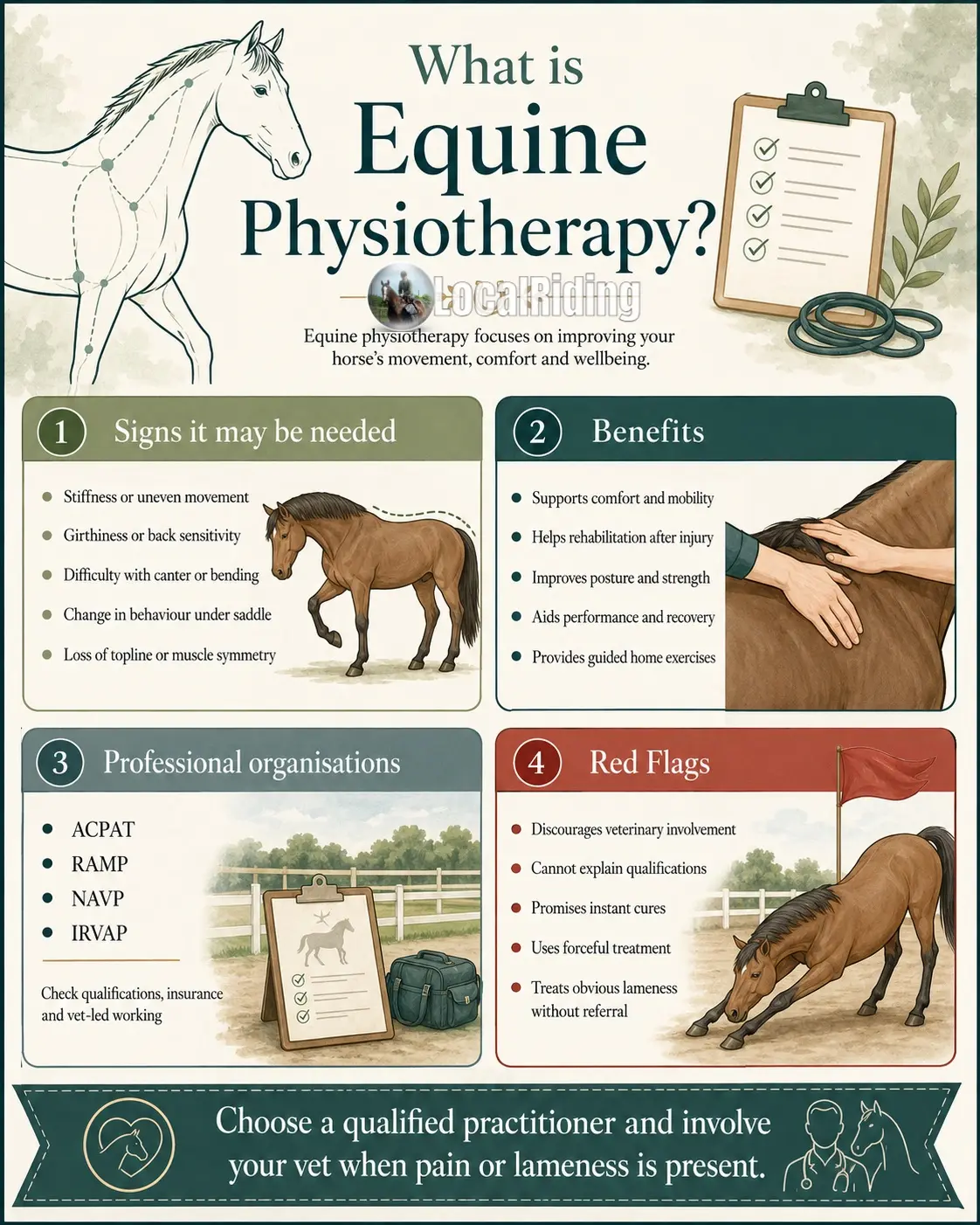 Equine physiotherapy infographic covering signs your horse may need physio, benefits, professional organisations including ACPAT, RAMP, NAVP and IRVAP, and red flags to watch for when choosing a practitioner
When Might a Horse Benefit from Physiotherapy?
Equine physiotherapy may be useful in a wide range of situations. Some horses are referred after a clear veterinary diagnosis, while others are assessed because of stiffness, loss of performance or subtle changes in behaviour.
Common Reasons for Referral
- Returning to work after box rest or field rest.
- Rehabilitation after tendon, ligament, joint or muscle injury.
- Recovery following orthopaedic surgery or other veterinary treatment.
- Back pain, sacroiliac discomfort or reduced spinal mobility.
- Arthritis or age-related stiffness.
- Reduced performance without an obvious training explanation.
- Difficulty bending one way.
- Problems picking up or maintaining canter.
- Disunited canter, toe dragging or uneven stride length.
- Resistance to being saddled, mounted or ridden.
- Rearing, bucking, napping or refusing fences where pain may be involved.
- Maintenance support for competition horses.
- Support for veterans in gentle work.
Physiotherapy can be particularly valuable when it is part of a wider plan. For example, a horse recovering from a suspensory injury may need veterinary diagnosis, controlled exercise, farriery support, careful footing, progressive strengthening work and regular reassessment. The physiotherapist’s role is one part of that process.
Signs Your Horse May Need Assessment
Horses often show discomfort through subtle behavioural or performance changes before obvious lameness appears. Owners should pay attention to patterns rather than isolated moments.
- Reluctance to go forward.
- Shortened stride or stiffness when warming up.
- Difficulty bending or working equally on both reins.
- Head tossing, tail swishing or ear pinning during ridden work.
- Reduced ability to work over the back.
- Loss of topline despite suitable feeding and work.
- Hollowing, rushing or resisting contact.
- New girthiness or reluctance to be tacked up.
- Repeated saddle slipping.
- Uneven muscle development.
- Change in jumping technique or refusal behaviour.
- Difficulty with transitions, especially canter transitions.
- Stumbling, toe dragging or tripping.
- Uncharacteristic behaviour under saddle or on the ground.
If these signs are new, worsening or associated with lameness, call your vet before booking bodywork. Pain-related behaviour should not be dismissed as naughtiness.
What Happens During an Equine Physiotherapy Session?
A professional session should usually begin with history-taking. The practitioner may ask about the horse’s age, workload, discipline, veterinary history, injuries, medications, farriery, saddle fit, dental care, turnout, stable routine and current concerns.
Assessment at Rest
The practitioner may look at posture, muscle development, symmetry, limb placement, topline, pelvis position and general condition. They may gently palpate the horse’s muscles, back, neck and limbs to assess tension, sensitivity, heat, swelling or restriction.
Dynamic Assessment
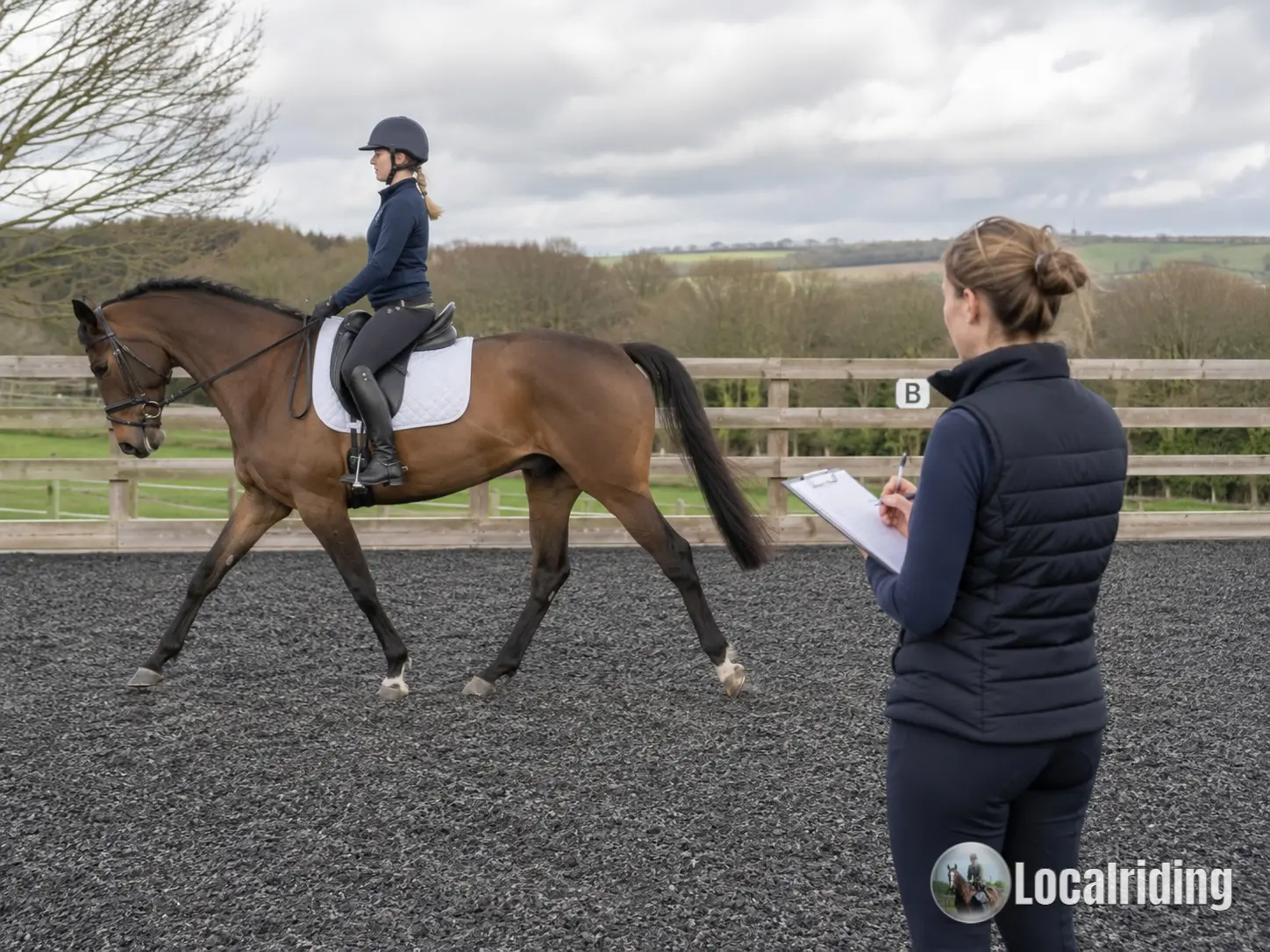 Equine physiotherapist observing and assessing a horse being ridden in an outdoor arena, noting movement quality and symmetry
The horse may be assessed in walk and trot in-hand, on a straight line and sometimes on circles. For ridden issues, the practitioner may ask to see the horse under saddle or may liaise with the vet, instructor or saddle fitter. They may observe transitions, bend, rhythm, stride length and how the horse uses its back.
Treatment
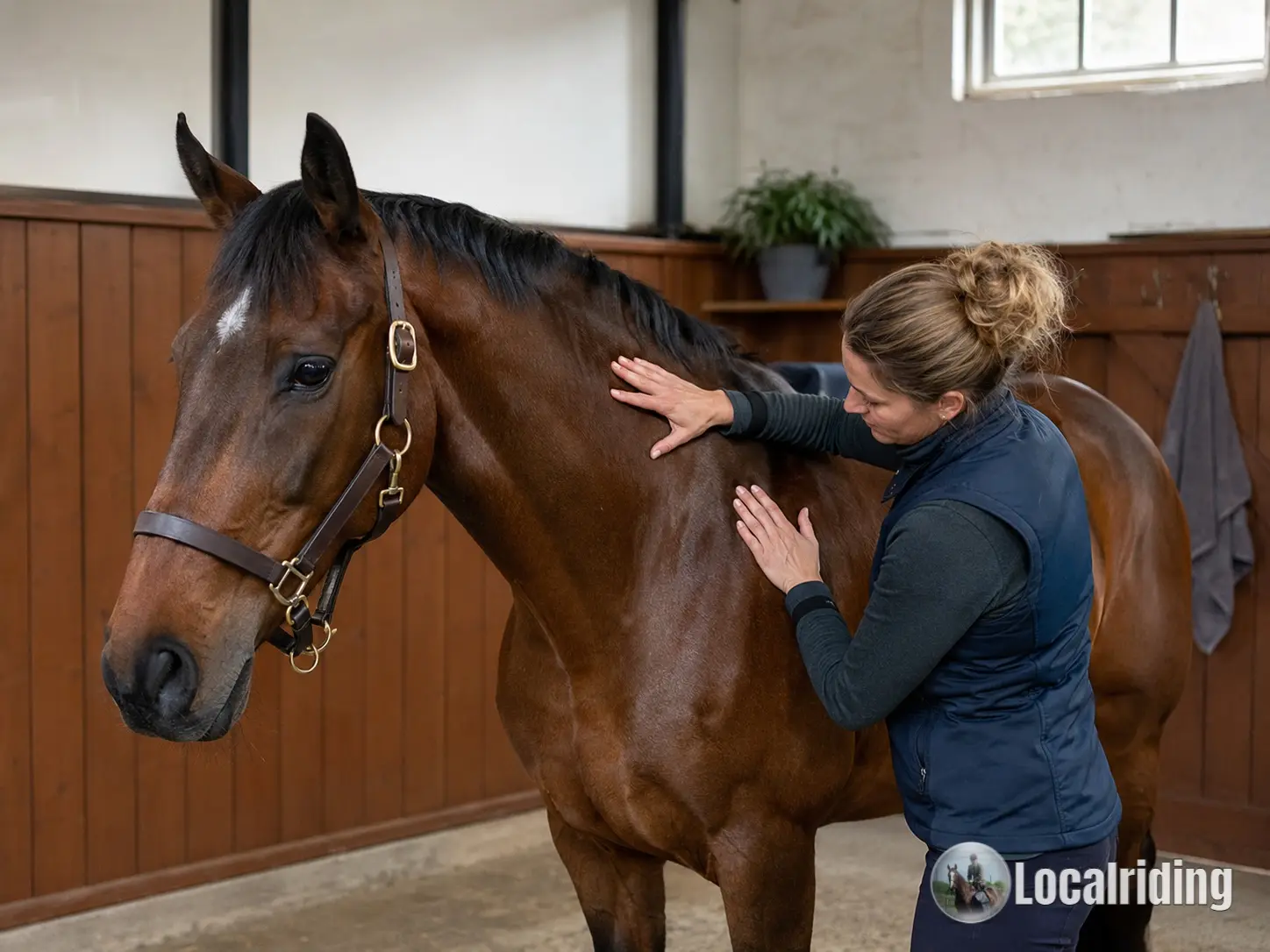 Equine physiotherapist applying hands-on soft tissue treatment to a horse's back and hindquarter muscles
Treatment will vary depending on the findings, the horse’s tolerance and the practitioner’s training. It may include soft tissue release, massage, myofascial techniques, joint mobilisation, stretching, activation exercises, electrotherapy or other modalities. The horse should not be forced or frightened and treatment should be adjusted if the horse shows discomfort.
Aftercare and Exercise Plan
A good session should end with clear aftercare advice. This might include a rest day, gentle turnout, in-hand walking, ridden work modifications, strengthening exercises, carrot stretches or pole work. The practitioner should explain what they found, what they treated, what the owner should monitor and whether veterinary follow-up is needed.
Physiotherapy for Rehabilitation
Rehabilitation is one of the most valuable uses of equine physiotherapy. After injury, horses often need a gradual return to movement and strength. Too little exercise can lead to stiffness and loss of muscle; too much too soon can risk re-injury.
A rehabilitation plan may include controlled walking, progressive ridden work, in-hand exercises, long-reining, pole work, hill work, backing-up exercises, core activation and carefully managed turnout. The plan should be specific to the horse’s diagnosis, tissue healing stage, temperament and facilities.
Examples of Rehabilitation Goals
- Restore comfortable range of movement.
- Rebuild muscle after box rest.
- Improve straightness and symmetry.
- Support correct posture and core stability.
- Reduce compensatory muscle tension.
- Help the horse return gradually to ridden work.
- Reduce recurrence risk through appropriate conditioning.
Rehabilitation should be measured and reviewed. If the horse becomes more lame, more resistant or less comfortable, the plan should be paused and veterinary advice sought.
Physiotherapy for Competition and Performance Horses
Competition horses often place repeated strain on their bodies. Dressage horses may develop asymmetries through collection and lateral work. Jumpers may experience shoulder, back, pelvic or hindlimb strain. Eventers, hunters and endurance horses may need support for strength, recovery and mobility.
Regular physiotherapy can help identify small areas of restriction before they become major performance issues. However, maintenance treatment should not be used to keep a sore horse working without addressing the cause. Performance problems should always be considered in the context of saddle fit, training load, surfaces, fitness, shoeing, veterinary health and rider balance.
Physiotherapy for Veteran Horses
Older horses may benefit from physiotherapy to help maintain mobility, comfort and muscle tone. Arthritis, reduced flexibility, muscle loss and compensatory stiffness are common in veterans, but many older horses remain happier and healthier with gentle movement.
A physiotherapist may suggest exercises to support range of motion, core strength and comfortable movement. This can be particularly useful for horses in light hacking, horses returning from time off, or retired horses that are becoming stiff in the field.
For veteran horses, physiotherapy should be gentle, realistic and coordinated with veterinary care. Pain relief, joint medication, farriery, dentistry, rugging, turnout and nutrition may all affect comfort.
Equine Massage Therapy
Equine massage focuses mainly on the soft tissues, particularly muscles and fascia. It may help promote relaxation, improve circulation, reduce muscle tension and support recovery after work. Many horses enjoy massage and it can be useful as part of routine care for horses in regular work.
Massage is not the same as veterinary diagnosis or physiotherapy rehabilitation. For a healthy horse, maintenance massage may be appropriate, but if the horse is lame, injured, painful or showing significant behavioural change, veterinary assessment should come first.
When Massage May Be Helpful
- General muscle tightness after work.
- Relaxation for tense horses.
- Support between physiotherapy sessions.
- Maintenance for horses in regular training.
- Body awareness and owner-horse bonding, when taught safely.
Chiropractic and Osteopathy
Equine chiropractic and osteopathy are also used in the UK to address musculoskeletal function. These approaches often focus on mobility, alignment, joint restrictions, spinal function and whole-body movement patterns.
Because manual adjustments can be powerful and because spinal or pelvic pain may have serious underlying causes, owners should be careful when choosing a practitioner. Look for someone who is appropriately trained, insured, professionally registered and willing to work with your vet.
A practitioner should not make dramatic claims, diagnose conditions outside their scope or promise to “put the horse back in alignment” without considering veterinary causes of pain. If lameness, neurological signs, severe pain or trauma are present, the vet should be the first call.
At-Home Exercises: What Owners Can Do Safely
Owners can often help their horse with simple exercises, but these should be introduced under professional guidance. An exercise that is helpful for one horse may be unsuitable for another, especially if there is injury, arthritis, weakness or poor balance.
Carrot Stretches
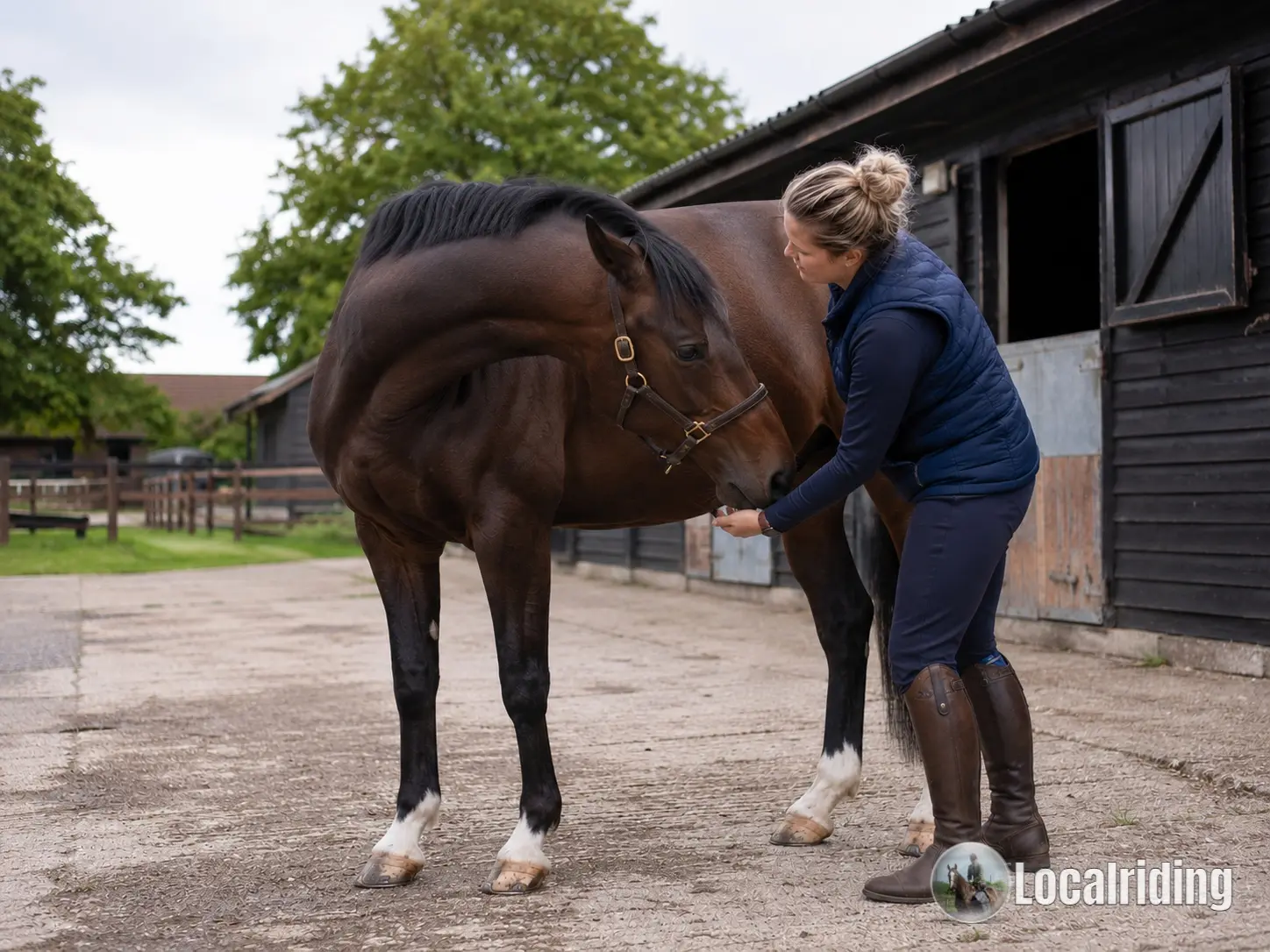 Physiotherapist demonstrating carrot neck-bend stretch exercises with a horse to improve lateral mobility and body awareness
Carrot stretches encourage the horse to move its neck and body in a controlled way. Common examples include asking the horse to reach towards the girth, flank, hock or between the front legs. These exercises can help mobility and body awareness when done correctly.
Backing Up
Controlled backing up can help activate core and hindquarter muscles. It should be slow, straight and calm. Pulling the horse backwards or rushing the movement is not helpful.
Pole Work
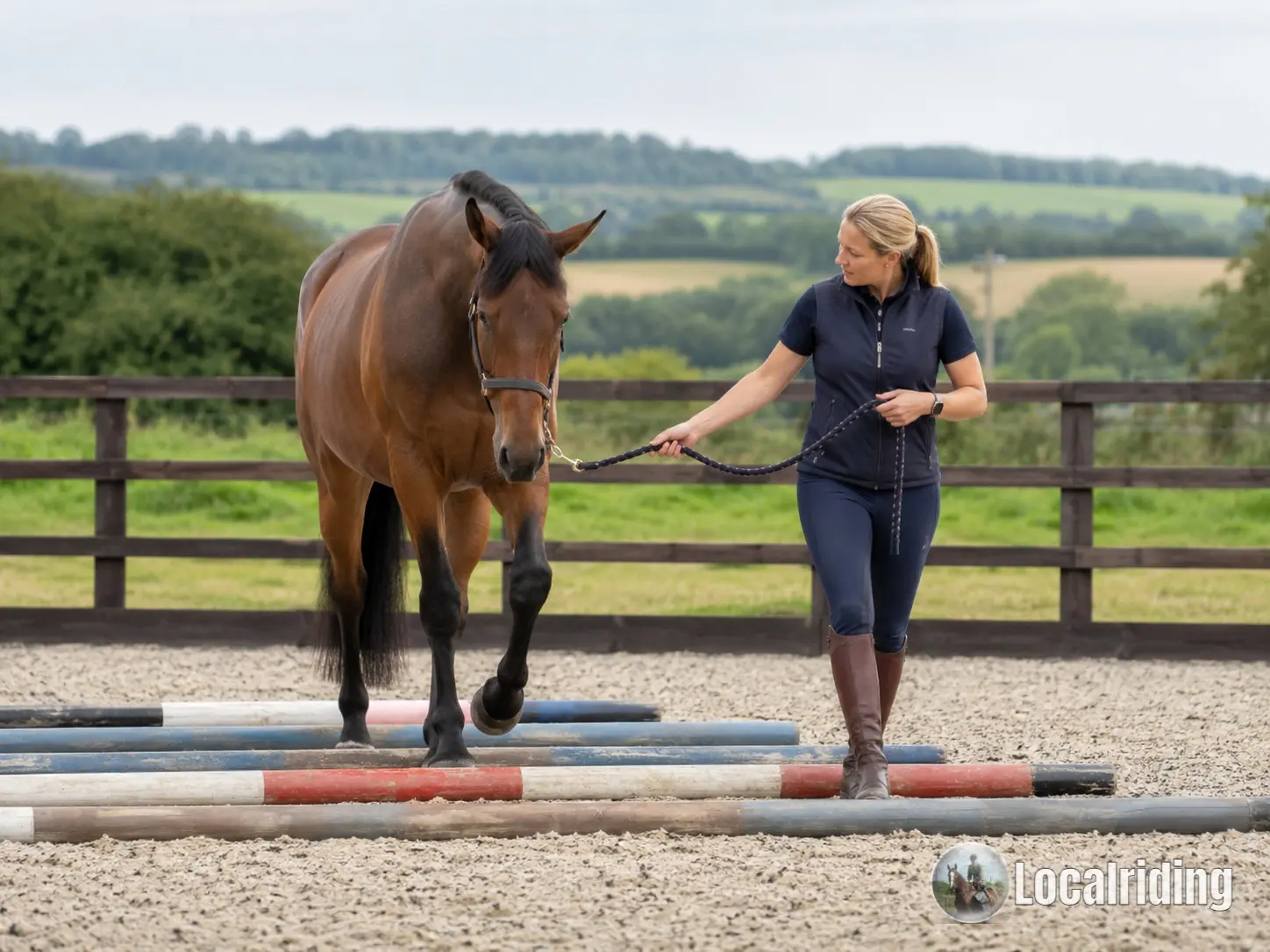 Horse being assessed walking over ground poles in-hand to evaluate movement quality, joint flexion and stride regularity
Walk poles can encourage rhythm, core use, joint flexion and coordination. Pole work should be introduced gradually, with appropriate distances and good footing.
In-Hand Walking and Hill Work
Walking in-hand or under saddle, especially on gentle slopes, can help build strength and fitness. Avoid steep, slippery or uneven ground for horses that are weak, lame or unbalanced.
Tail Pulls and Mobilisations
Some owners are taught gentle tail pulls or mobilisation exercises, but these should only be performed after instruction from a qualified professional. Incorrect technique can be uncomfortable or unsafe.
How Saddle Fit, Teeth and Feet Affect the Body
Equine physiotherapy should not be viewed in isolation. A horse’s body is affected by many connected factors.
Saddle Fit
A poorly fitting saddle can cause back soreness, muscle wastage, reluctance to go forward, hollowing, girthiness and behavioural problems. If back pain keeps returning, saddle fit should be checked by a qualified saddle fitter.
Dental Health
Dental pain can affect contact, head carriage, relaxation and willingness to work. Horses should have regular dental checks from a vet or suitably qualified equine dental technician.
Hoof Balance
Foot balance affects the whole body. Long toes, underrun heels, uneven feet or poor shoeing can alter movement and increase strain through the limbs, shoulders, back and pelvis. Good communication between vet, farrier and physiotherapist is valuable.
How to Choose an Equine Physiotherapist or Bodyworker in the UK
Choosing the right practitioner is crucial. A skilled professional will work within their scope, recognise when veterinary input is needed, explain their findings clearly and avoid making unrealistic promises.
Questions to Ask Before Booking
- What qualifications do you hold?
- Are you registered with ACPAT, RAMP, NAVP, IRVAP or another recognised professional body?
- Do you have professional indemnity and public liability insurance?
- Do you work under veterinary referral where required?
- Do you provide written reports or communicate with the vet?
- What types of horses and cases do you regularly work with?
- Do you complete continuing professional development?
- What should I do before and after treatment?
- What are your fees and travel charges?
Good Signs
- The practitioner asks for veterinary history.
- They are clear about their qualifications and scope.
- They do not promise instant cures.
- They are calm and patient with the horse.
- They explain findings in understandable language.
- They give realistic aftercare and exercises.
- They refer back to the vet when needed.
Red Flags
- They discourage veterinary involvement.
- They claim they can diagnose all problems without a vet.
- They use forceful techniques on a frightened or painful horse.
- They promise to fix complex issues in one session.
- They cannot explain their qualifications or insurance.
- They blame every problem on one simple cause.
- They advise continuing work despite obvious pain or lameness.
Preparing Your Horse for a Physiotherapy Visit
To get the most from a session, prepare the horse and environment properly.
- Have the horse clean, dry and safely handled.
- Avoid heavy exercise immediately before the appointment unless instructed.
- Provide a flat, safe area for assessment in walk and trot.
- Have tack available if the practitioner needs to assess the horse ridden or tacked up.
- Gather veterinary, farrier, dental and saddle fitting history.
- Be honest about behaviour, injuries and workload.
- Allow time for the appointment and avoid rushing the horse.
After treatment, follow the practitioner’s aftercare advice carefully. Some horses may need light work, turnout, rest or specific exercises. Others may require veterinary follow-up if the practitioner finds something concerning.
How Often Should a Horse Have Physiotherapy?
There is no one-size-fits-all answer. Frequency depends on the horse’s age, workload, health history, competition schedule and current issues.
- Healthy leisure horse: Occasional checks may be enough, especially if no problems are present.
- Competition horse: Regular maintenance may be useful as part of a wider performance plan.
- Horse in rehabilitation: More frequent visits may be needed initially, guided by the vet and physiotherapist.
- Veteran horse: Periodic checks may help monitor stiffness, muscle loss and comfort.
- Horse with recurring problems: The cause should be investigated rather than simply treating symptoms repeatedly.
If a horse needs constant treatment to stay rideable, that is a sign that the underlying cause has not been fully addressed.
Common Myths About Equine Physiotherapy
“Physio Is Only for Injured Horses”
Physiotherapy is often used after injury, but it can also support mobility, strength, performance and comfort in healthy horses.
“One Treatment Will Fix Everything”
Some horses improve quickly, but long-standing issues usually require management changes, exercises and follow-up.
“Bad Behaviour Is Always Training”
Behavioural changes can be caused by pain. Bucking, napping, rearing, refusing fences or girthiness should be assessed carefully.
“If the Horse Feels Better, the Problem Is Solved”
Short-term improvement is useful, but recurring soreness suggests a deeper issue such as saddle fit, lameness, hoof balance, workload or rider asymmetry.
Final Thoughts
Equine physiotherapy can be a valuable part of modern horse care in the UK. Used well, it can support comfort, movement, recovery, performance and long-term wellbeing. The best results come when physiotherapy is properly integrated with veterinary care, farriery, saddle fitting, dentistry, training and sensible management.
For owners, the key is to choose a suitably qualified and insured practitioner, involve your vet when required, follow aftercare advice and treat the horse as a whole. A good physiotherapist will not just work on the horse for an hour; they will help you understand how to support your horse every day.
Debbie Irwin
Livery Yard Manager & Equestrian Professional
Debbie has run professional showing yards and mixed livery yards in Lincolnshire and Essex for over 30 years. She has competed and taught at various levels. She writes about practical horse health, yard life, livery and everyday horse health and management.
Support Debbie on Ko-fi ☕Found this guide helpful? LocalRiding is run independently without ads. If you'd like to chip in towards the site's upkeep, you can buy Debbie a hot drink on a cold day on Ko-fi, she'll really appreciate it.