
Breeds
Horse Breed Types: From Cobs and Hunters to Britain's Forgotten Horses
Discover different horse types, including cobs, hunters, hacks and polo ponies, plus Britain's extinct horse breeds, their history, uses and rider suitability.
By LocalRiding Team · 23 October 2026 · 14 min read
Why is one horse described as a cob, another as a hunter, and another as a hack? What makes a polo pony different from a riding pony? And what happened to the Irish Hobby, Norfolk Trotter and Yorkshire Coach Horse?
The British Isles have a remarkable equestrian history, shaped by centuries of farming, transport, military service, sport and recreation. Long before horses were bred mainly for competition and leisure riding, they were selected for the work they needed to do.
This guide explores seven traditional and modern horse types, followed by six extinct or historically recognised horse populations. For each, we look at its origins, size, characteristics, uses and suitability for riders or handlers.
What's the difference between a horse breed and a horse type?
A breed is generally a recognised breeding population, often with a studbook and defined characteristics. A type describes an animal's build, movement, temperament or intended job. An Irish Draught may be a hunter; a Thoroughbred may be a polo pony; and a Welsh Cob belongs to a recognised breed while also having cob-type characteristics. For the breeds themselves, see our guide to native British horse and pony breeds.
Historical names need extra caution. Before modern studbooks, a name might identify a regional population or working category without the consistent pedigree definition we expect today. Heights are given in hands (hh): one hand equals four inches or 10.16cm. British Showing explains how different types are distinguished in contemporary showing classes.
Part One: Traditional and modern horse types
1. The Cob — strong, substantial and versatile
Type, not one breed
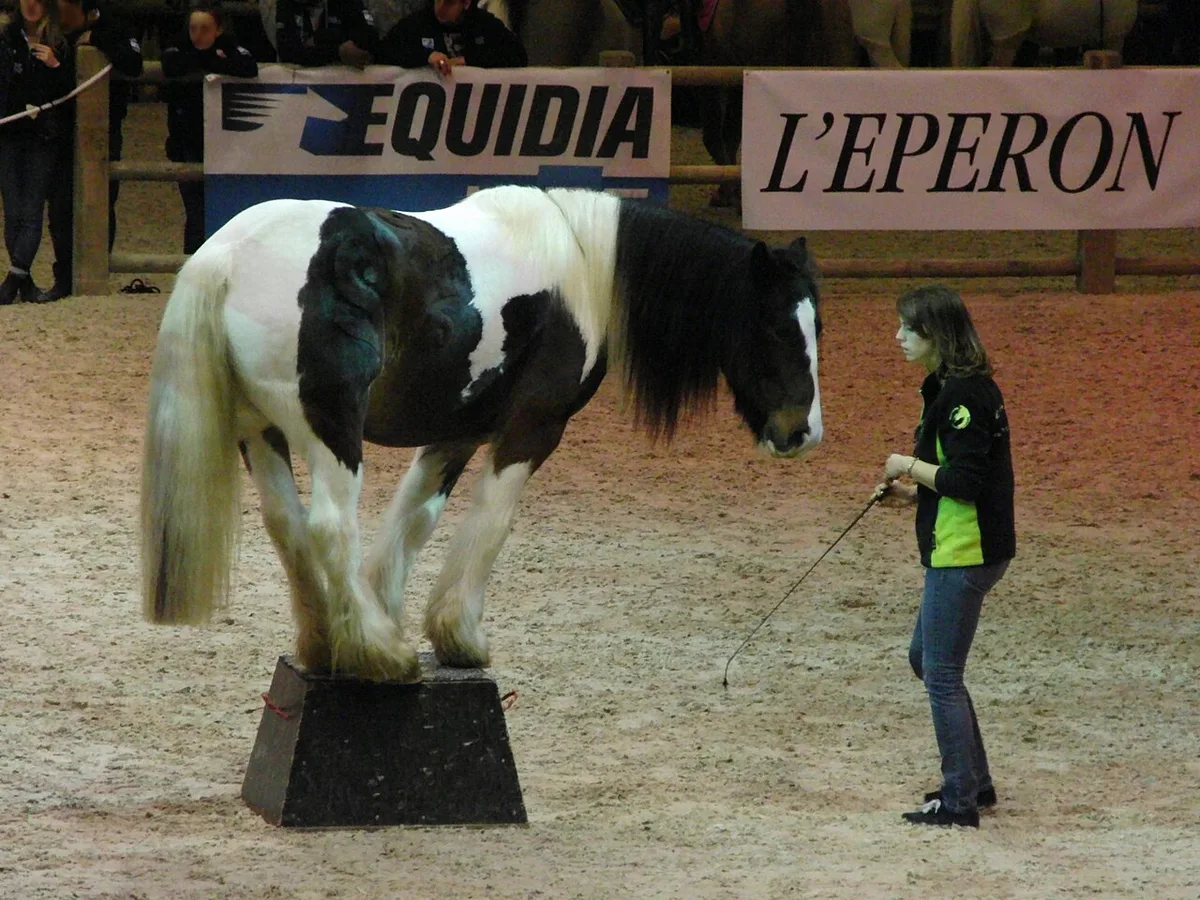 Irish cob demonstrating a substantial cob-type build
Irish Cob as an illustration of cob conformation. Photograph: Eponimm, via Wikimedia Commons; see linked file for licence.
- Origin: Britain and Ireland, from everyday riding, driving and working stock.
- Height: Often around 14–16hh; formal show-cob classes have narrower limits.
- Uses: Traditionally transport, agriculture and hunting; now hacking, leisure riding, showing and driving.
A cob is defined by substance rather than one pedigree: a deep body, strong bone, powerful hindquarters and compact proportions. Some traditional cobs carry abundant feather; show cobs are commonly presented with hogged manes and clipped legs.
Why this type?
People wanted a practical animal strong enough to carry riders and work reliably, yet convenient for daily riding and transport. Cob build can feel secure to riders and offers strength for varied work. It does not guarantee a quiet temperament: some cobs are sharp, energetic athletes.
Who suits a cob?
A proven, well-schooled cob can suit a novice, returning adult or confident teenager. A powerful or inexperienced example may need an experienced rider. Match the individual animal's training, soundness and carrying capacity to the rider.
2. The Garron — Scotland's Highland workhorse
Traditional working type
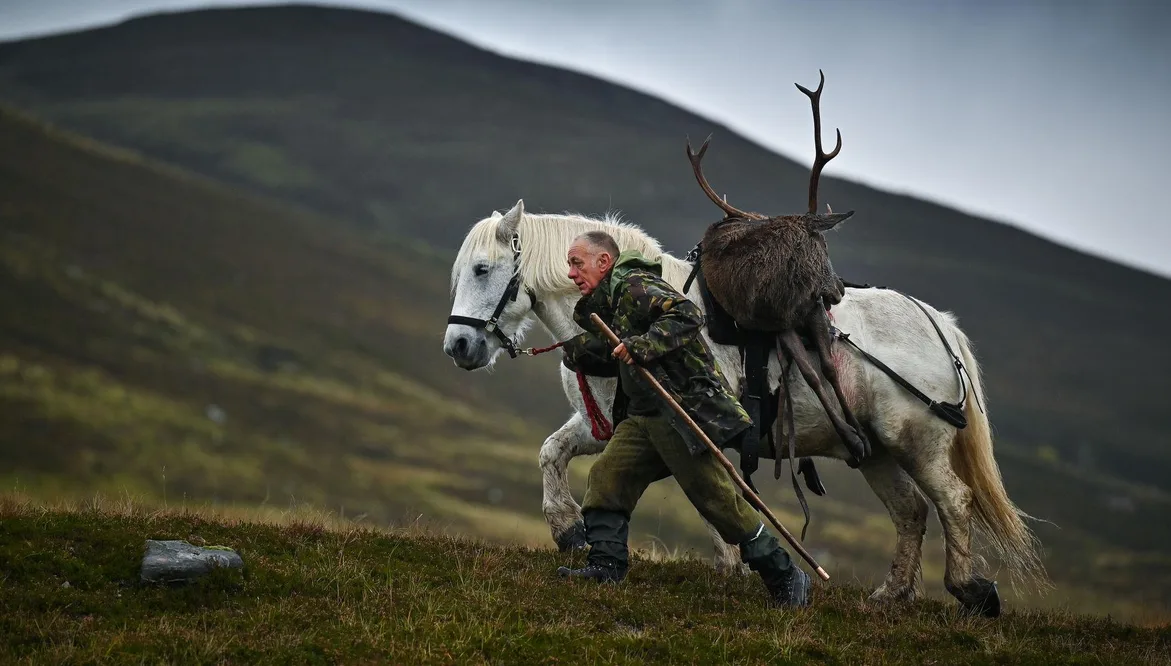 Highland working pony carrying a stag across Scottish hillside terrain
- Origin: Scottish Highlands and Islands.
- Height: Historically variable, often substantial Highland pony size, around 13–14.2hh.
- Uses: Peat and goods transport, croft work, deer extraction; now hill and estate work, trekking and hacking.
Garron is a traditional name for a sturdy Highland working pony or small horse, not a separate modern registered breed. Garrons were needed to carry loads where carts and vehicles struggled, sometimes retrieving deer from remote sporting-estate hillsides.
Why this type?
Sure-footedness, strong limbs, stamina and composure over difficult ground mattered more than speed. The Dictionaries of the Scots Language preserve references to crofting and estate work.
Who suits a garron?
A properly trained example could suit a confident teenager or adult who enjoys trekking and rural hacking. Check ridden schooling individually: experience carrying packs does not necessarily mean experience carrying a rider.
3. The Hack — the elegant riding horse
Saddle and showing type
- Origin: Britain, from quality saddle horses.
- Height: Show hacks generally over 14.2hh and up to about 15.3hh.
- Uses: Traditionally everyday pleasure riding and travel; now showing, dressage and refined leisure riding.
The word hack once referred to a useful saddle horse. Modern hacking means riding away from the arena, but the British show hack is a more specific refined type, frequently influenced by Thoroughbred or Anglo-Arab blood.
Why this type?
Elegance, balance, comfortable movement and excellent manners distinguish the show hack. It should offer graceful, pleasurable riding rather than the greater substance expected of a hunter.
Who suits a hack?
Generally an intermediate or experienced rider who appreciates sensitive, responsive movement; a particularly settled and well-trained hack may suit a less experienced rider.
4. The Hunter — strength, stamina and cross-country ability
Working and showing type
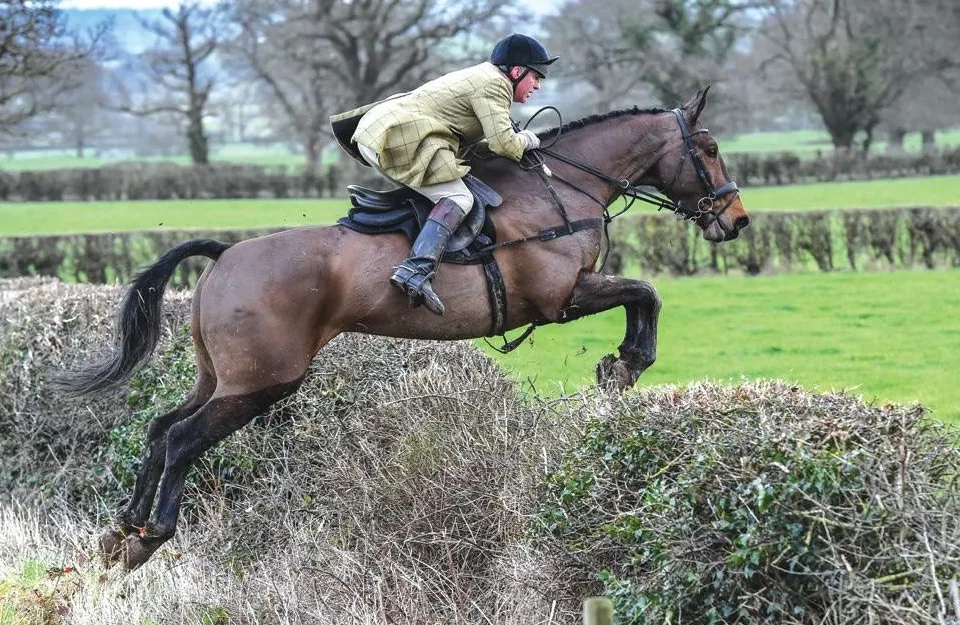 Bay hunter and rider jumping a cross country hedge: https://gb.readly.com/magazines/horse-and-hound/2024-03-21/65fafa1c4be11feae786f465
- Origin: Britain and Ireland.
- Height: Often around 15.2–17hh, with showing categories and individual variation.
- Uses: Historically hunting across country; now working hunter, jumping, eventing and recreational riding.
Hunters were selected to carry riders across open country, negotiate natural obstacles and keep going over demanding days. Irish Draught, Thoroughbred and Irish Sport Horse bloodlines have all contributed to hunter types.
Why this type?
A capable hunter needs soundness, adequate bone, athletic jumping ability, stamina, courage and manners among other horses. Lightweight, middleweight and heavyweight distinctions reflect differences in substance and the riders these horses are expected to carry.
Who suits a hunter?
Typically confident adults and experienced teenagers, especially those interested in working hunter, jumping or eventing and showing. A quiet schoolmaster can be an excellent all-round horse, but powerful and bold individuals need appropriate experience.
5. The Polo Pony — the agile athlete
Sporting type; often technically a horse
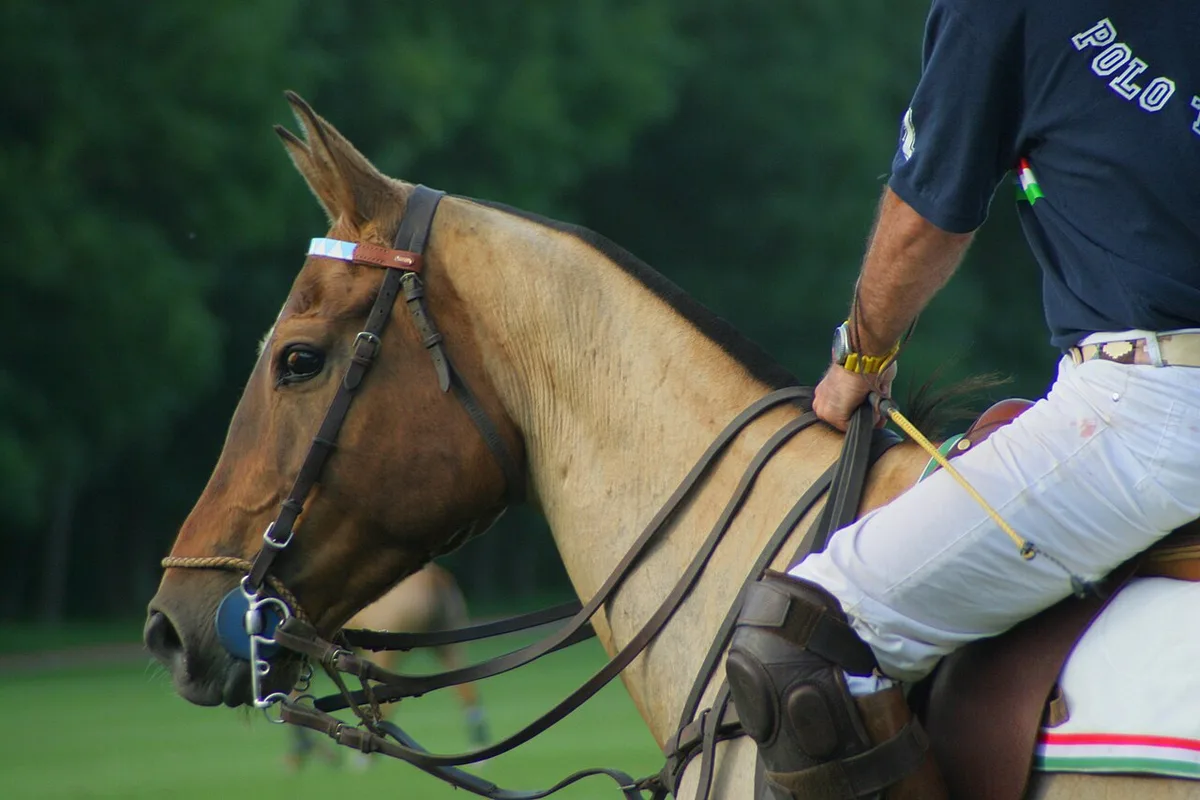 Athletic horse trained for polo, clipped and in working condition
Polo horse photograph: Dee.lite, CC0/public domain dedication, via Wikimedia Commons.
- Origin: International polo traditions, including British, Argentine and Thoroughbred influences.
- Height: Commonly around 14.2–16hh.
- Uses: Polo; some retired and retrained polo ponies become leisure mounts.
The name survives from polo's historical use of smaller mounts, but modern polo ponies often exceed pony height. The term describes training and sporting suitability, not a breed.
Why this type?
Polo rewards rapid acceleration, balanced stops, close turns, responsiveness to weight and leg aids, and confidence near other horses. The athlete must stay attentive through rapid changes of pace and direction.
Who suits a polo pony?
Usually intermediate to experienced riders with an independent seat. A well-retrained former polo pony may make an excellent hack, but its established responses can surprise riders unfamiliar with polo. Hurlingham Polo's introductory guide describes typical polo pony size and attributes.
6. The Riding Pony — the refined young rider's mount
General type and registered British Riding Pony breed
- Origin: Britain; British Riding Pony breeding includes Thoroughbred, Arab, polo pony and native pony ancestry.
- Height: Generally up to 14.2hh, with different showing height divisions.
- Uses: Children's riding, showing, Pony Club, jumping and dressage.
A riding pony may simply be a pony suitable for ridden work, but the British Riding Pony is also an established studbook breed. Its development aimed to combine the quality and movement of a refined saddle horse with useful pony size and characteristics.
Why this type?
Show ponies, show hunter ponies and sport or competition ponies differ in substance and purpose. Desired traits include balance, movement, soundness, athleticism and appropriate trainability. See the National Pony Society.
Who suits a riding pony?
Children, teenagers and appropriately sized smaller riders, according to the pony's height, build and temperament. A seasoned pony may suit a learner, while a talented young competition pony needs an experienced rider. If you're planning a first pony, try the First Pony Budget Calculator.
7. The Windsor Grey — Britain's ceremonial carriage horse
Royal designation, not a breed
- Origin: Britain's royal carriage-horse tradition and the Royal Mews.
- Height: Large carriage horses, commonly around 16.1hh and above; not a universal breed standard.
- Uses: Royal processions, state coaches and ceremonial driving.
Windsor Greys are selected for grey colouring, imposing appearance, temperament and suitability for royal ceremonial harness work. They do not belong to a separate Windsor Grey breed. Substantial horses, including those with Irish Draught ancestry, have fulfilled the role.
Why this type?
Working in matched teams amid cheering crowds, bands, traffic and unexpected noises demands exceptional composure and extensive schooling. Appearance alone cannot qualify a horse for the work.
Who suits a Windsor Grey?
The designation concerns specialist driving rather than an ordinary leisure-riding market. Such large horses need experienced handling and professional harness training. The Windsor Local History Group explains their work and preparation.
Part Two: Extinct and forgotten British horses
Historical evidence note: These populations are not all documented to the same standard. Heights often cannot be verified, and some names were working or regional descriptions rather than strictly registered breeds. The profiles below deliberately avoid invented measurements and temperament claims.
8. What does an extinct horse breed mean?
A breed or historical population may disappear as a distinct breeding group even while some of its ancestry survives in later horses. Changing demand for agricultural work, road transport, war horses and carriage driving often led breeders to cross existing populations or abandon specialised breeding. Reproducing a similar appearance today is not the same as recovering an extinct genetic population.
9. The Galloway Pony — Scotland's lost saddle horse
Extinct historical population
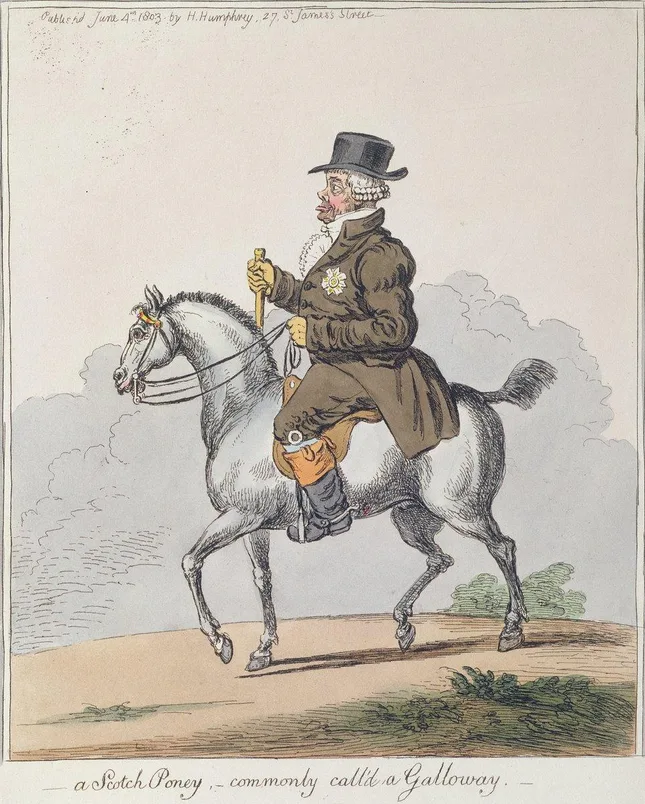 Historical illustration labelled a Scotch pony, commonly called a Galloway : https://www.meisterdrucke.us/fine-art-prints/James-Gillray/180097/A-Scotch-Poney%2C-commonly-called-a-Galloway%2C-published-by-Hannah-Humphrey-in-1803.html
- Origin: Galloway, south-west Scotland.
- Height: Small saddle-horse or substantial pony type; no reliable universal modern standard.
- Uses: Riding, travel, carrying goods and general transport.
The Galloway was admired as a compact, useful riding horse suited to journeys in the era before motorised travel. Its practical size, endurance and saddle-horse qualities made it valuable. Historically, however, the name was also used for northern ponies beyond Galloway, including horses later identified as Fell ponies.
Why this type?
Efficient, manageable travel and stamina were essential; claims about one universal gait or precise size need caution.
Historical rider suitability
Travellers and general-purpose riders seeking a compact, enduring saddle horse. This is inferred from documented use, not a modern temperament assessment. A 2020 genetic history study examines the Fell–Galloway naming overlap and relationships.
10. The Irish Hobby — medieval Ireland's agile mount
Extinct historical type
- Origin: Medieval Ireland.
- Height: Described as a small riding horse; no secure standardised range.
- Uses: Travel, scouting, general saddle work and light mounted military activity.
The Irish Hobby was known for practical mobility over difficult country. Compared with heavily equipped warhorses, a small, agile riding horse could travel efficiently and serve mounted messengers or lighter military roles.
Why this type?
Mobility, endurance and manageable size mattered. Historical descriptions discuss ambling or smooth gaits, but they do not prove every Hobby moved identically.
Historical rider suitability
Experienced travellers, couriers and light mounted troops. See research on alternative horse gaits in historical and medieval sources.
11. The Norfolk Trotter — the road horse behind the Hackney
Extinct as a distinct historical type
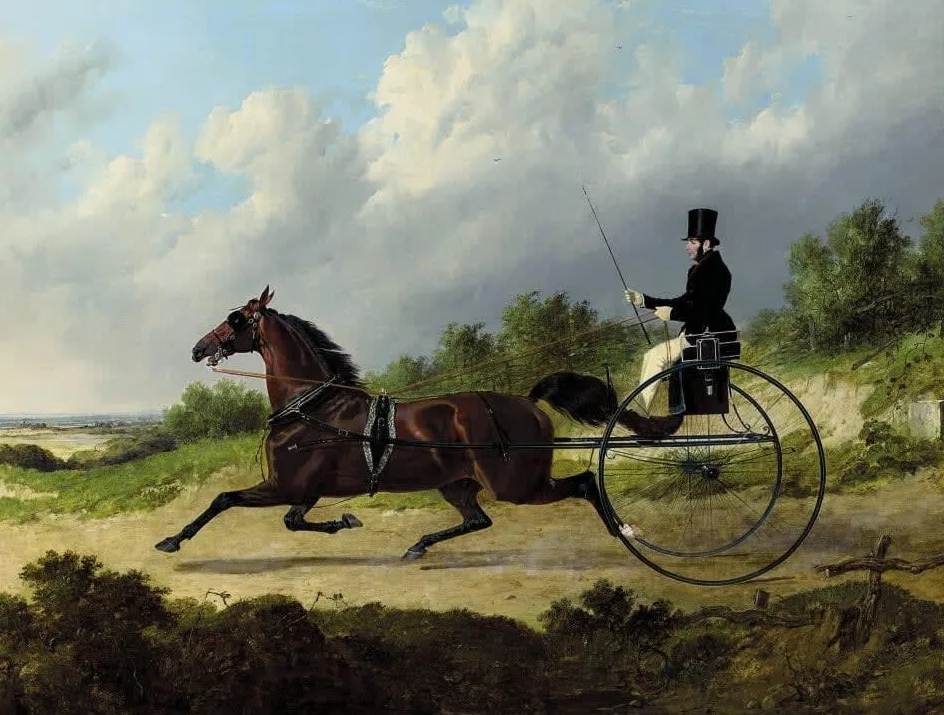 Historical painting of a trotting road horse pulling a light two-wheeled carriage
- Origin: Norfolk and eastern England.
- Height: Variable; no defensible single height range for the whole historical population.
- Uses: Fast road travel, riding and light harness work.
The Norfolk Trotter became famous during the eighteenth and nineteenth centuries, when a horse capable of sustaining an efficient trot provided valuable transport over improving roads.
Why this type?
Breeding favoured efficient trotting, sound limbs, stamina and energy. The Norfolk Trotter, alongside other British roadsters, helped establish the modern Hackney's movement and performance tradition.
Historical rider suitability
Experienced road riders and drivers who needed a forward-going, dependable travelling horse. The Hackney Horse Society documents this ancestry.
12. The Old English Black — ancestor of heavy draught horses
Historical heavy-horse population
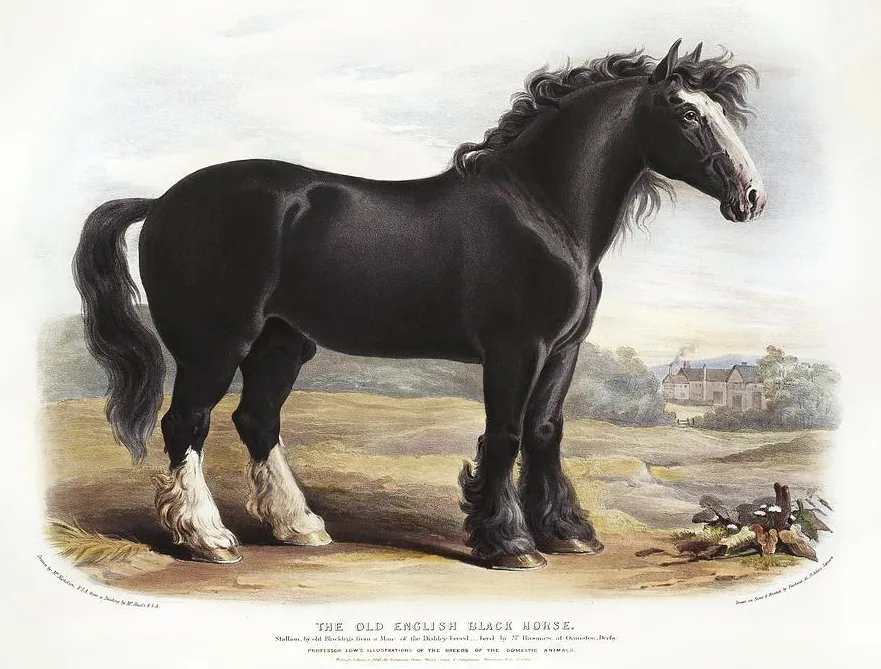 Historical illustration labelled The Old English Black Horse, showing a substantial black draught horse: https://sciencephotogallery.com/featured/old-english-black-horse-19th-century-science-photo-library.html
- Origin: England, particularly regions of early heavy cart-horse breeding.
- Height: Substantial for its era; no dependable universal standard.
- Uses: Agricultural pulling, carting and heavy haulage.
The Old English Black represents England's long development of powerful cart horses. It was selected for muscular strength, bone, pulling ability and practical endurance, rather than refined saddle movement.
Why this type?
Farms and towns needed horses able to move heavy loads. Dark colouring became associated with these early cart-horse populations, but the name does not establish that every ancestor was black.
Historical rider suitability
Primarily specialist teamsters and agricultural handlers rather than recreational riders. An 1882 history of the Shire Horse discusses the early black cart horse and its role in the Shire's emergence.
13. The Yorkshire Coach Horse — the fashionable carriage horse
Extinct historical breed or type
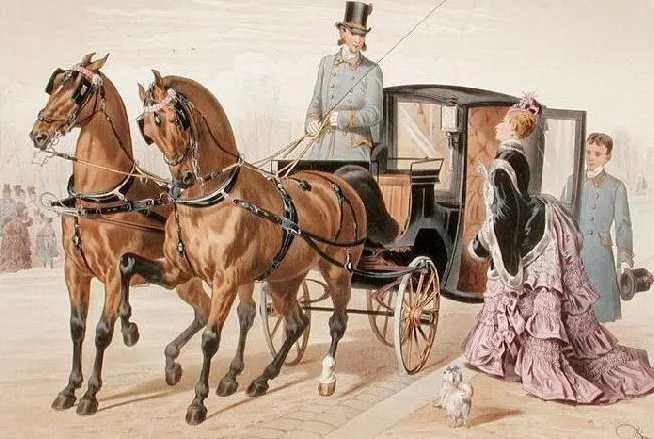 Historical carriage illustration showing a matched pair of bay coach horses
- Origin: Yorkshire, England.
- Height: Tall carriage-horse type; no single reliably established universal standard.
- Uses: Coaching, private carriage driving and road transport.
The Yorkshire Coach Horse developed from the combination of Cleveland Bay substance and Thoroughbred refinement. Improved roads created demand for matched carriage horses with speed, attractive movement and enough power for harness work.
Why this type?
Carriage owners valued refined, active movement without sacrificing strength. Historically, Yorkshire Coach Horses and Cleveland Bays were sometimes difficult to distinguish, and writers disputed how separate the populations truly were.
Historical rider suitability
Experienced coachmen and carriage drivers. Its principal role was harness work, although individual horses may also have been ridden. The Yorkshire Coach Horse eventually disappeared as a distinct registered population.
14. The Yorkshire Grey Horse — a name with uncertain history
Historical classification uncertain
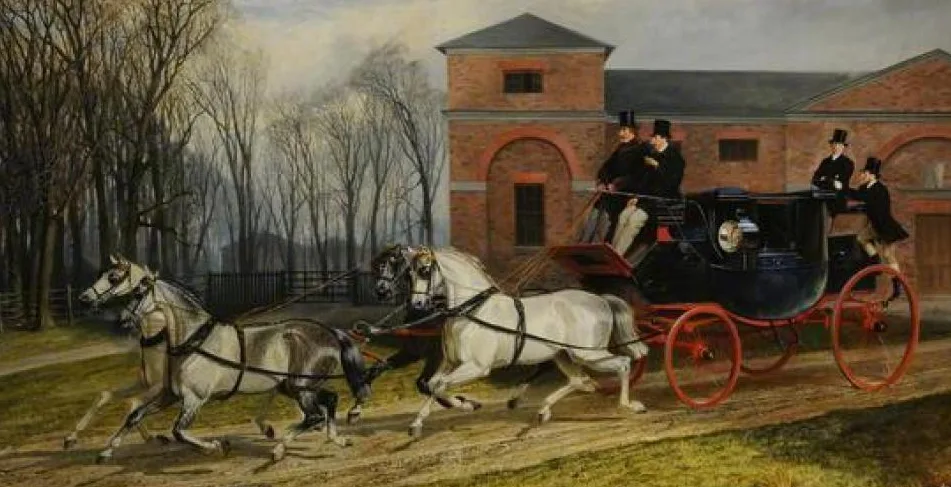 Historical painting of grey horses drawing a coach; an illustration of carriage work, not evidence of a distinct Yorkshire Grey breed
https://www.thecarriagefoundation.org.uk/item/gentleman-driving-team-horses-park-drag
- Association: Yorkshire and historical coaching culture.
- Height: Not established.
- Uses: Sometimes described as carriage or transport work, but not securely substantiated as a distinct breed.
The Yorkshire Grey appears in some modern lists of extinct British horses. Yet the documentary evidence for a separately defined, consistently bred Yorkshire Grey population is much weaker than for the Norfolk Trotter or Yorkshire Coach Horse.
Why this name?
Grey horses certainly worked in transport, and the name Yorkshire Grey also appears historically on inns and public houses. Those references alone cannot prove that a distinct breed existed.
Historical rider suitability
Unknown. If the name referred to grey carriage horses, experienced drivers would have needed strength, suitable movement and a trainable temperament. This is an inference about the work, not a verified breed profile. A historical account of the Great North Road records Yorkshire Grey inn signs.
Part Three: Understanding the differences
| Type | Key quality | Activities | Potential rider |
|---|---|---|---|
| Cob | Substance and versatility | Hacking, showing, driving | Novice to experienced, by individual |
| Garron | Sure-footed endurance | Hill work, trekking | Confident teenager or adult |
| Hack | Elegance and refined movement | Showing, dressage | Intermediate or experienced |
| Hunter | Athleticism and stamina | Jumping, cross-country, eventing | Confident or experienced |
| Polo pony | Agility and fast responses | Polo, retrained hacking | Intermediate or experienced |
| Riding pony | Refined athleticism | Pony Club, showing, jumping | Children and suitably sized riders |
| Windsor Grey | Composure and harness training | Ceremonial driving | Specialist drivers and handlers |
Why do types differ?
Strength: Cobs and draught types developed substantial bodies for carrying and pulling. Speed and athleticism: Polo and refined saddle types reward agility and responsive movement. Endurance: Garrons and historical travelling horses served work that demanded sustained effort. Temperament: Specialist carriage horses such as Windsor Greys must cope with noise, traffic, crowds and working in teams.
Choosing a suitable horse
For a novice or returning rider, a mature, quiet, experienced horse matters more than a fashionable type label. Hacking enthusiasts may value stamina and sensible behaviour outdoors; jumping riders need athleticism and suitable training; driving requires dedicated harness schooling. Before buying, assess the individual horse in situations relevant to the intended use, take knowledgeable help and arrange an independent veterinary pre-purchase examination. Our beginner's guide to buying a horse in the UK walks through each step.
A horse's type helps explain the job for which it was developed. Its individual temperament, training and soundness tell you much more about whether it is right for you.
Why Britain's lost horse types still matter
The Norfolk Trotter existed because people needed efficient road transport. The Yorkshire Coach Horse met the requirements of fashionable carriage travel. The Old English Black reflected an agricultural economy powered by horses. The Irish Hobby and Galloway belong to earlier saddle-horse traditions.
As roads, vehicles and agricultural machinery changed, maintaining these distinct working populations became less practical. But their influence survived through later breeding: the Hackney retains British trotting-horse heritage, the Shire reflects centuries of draught-horse selection, and the Cleveland Bay preserves an important part of Britain's carriage-horse history.
Frequently asked questions
Is a cob a breed or a type?
Primarily a conformation and working type, though Welsh Cob is also the name of a registered breed.
What is the difference between a hack and a hunter?
A show hack is typically lighter and more refined; a hunter is more substantial and developed for stamina and movement across varied countryside.
Is a polo pony really a pony?
Often not. Many modern polo ponies stand above 14.2hh, the conventional dividing line between ponies and horses.
What is a garron?
A traditional Highland working pony or small horse, especially associated with Scottish hill and estate work.
Are Windsor Greys a breed?
No. They are grey horses selected and trained for royal ceremonial carriage duties.
Which type is best for a beginner?
No single type guarantees suitability. Prioritise an established, well-trained, sound horse with a temperament and experience appropriate to the rider.
Conclusion
From strong cobs and elegant hacks to energetic polo ponies and Scotland's hardy garrons, horse types reflect generations of purposeful breeding and training. The extinct Norfolk Trotter, Irish Hobby and Yorkshire Coach Horse remind us just how closely horse development followed the changing needs of people.
Understanding these distinctions helps riders appreciate equestrian history and make better-informed decisions. Choose the individual horse for the work and rider — not simply the label attached to it.
Explore more practical advice in LocalRiding Guides & Tips.
Sources and further reading
- British Showing — Class Descriptions
- National Pony Society — British Riding Ponies
- Hackney Horse Society — Breed History
- Dictionaries of the Scots Language — Garron
- Windsor Local History Group — Windsor Greys
- Hurlingham Polo — Beginner's Guide
- Winton et al. (2020) — Genetic Diversity of British and Irish Native Ponies
- The History of the Shire Horse (1882)
- Research on Historical Horse Gaits (2023)
LocalRiding Team
LocalRiding.com
Helping horse owners make informed decisions about equine care, management and welfare.
Found this guide helpful? LocalRiding is run independently without ads. If you'd like to chip in towards the site's upkeep, you can buy Debbie a hot drink on a cold day on Ko-fi, she'll really appreciate it.