
Ownership
Buying a Horse in the UK: A Complete Beginner's Guide
Buying your first horse is one of the most exciting and daunting decisions you will make. This guide walks you through every step of the UK horse buying process.
By Debbie Irwin · 13 April 2026 · 18 min read
Updated UK guide: How to decide whether you are ready, what type of horse to look for, where to buy, what questions to ask, how equine vetting works, and what horse ownership really costs.
Introduction: Buying a Horse Is a Lifestyle Decision
Buying your first horse is exciting, emotional and often life-changing. It can also be expensive, time-consuming and overwhelming if you are not fully prepared. A horse is not simply a purchase; it is a long-term welfare commitment that affects your daily routine, your finances, your free time, holidays, family life and any future plans.
For many new owners, the biggest mistake is focusing too much on the purchase price and not enough on the ongoing responsibility. The right horse can bring years of enjoyment, confidence and partnership. The wrong horse can quickly become stressful, unsafe and costly. This guide is designed to help UK buyers make a calm, informed decision before committing to a purchase.
Before viewing any horse, remove the emotion, the desperate desire and take time to assess your riding ability, support network, budget, facilities and goals. A sensible, honest approach at the beginning is the best way to protect both you and your potential equine best friend.
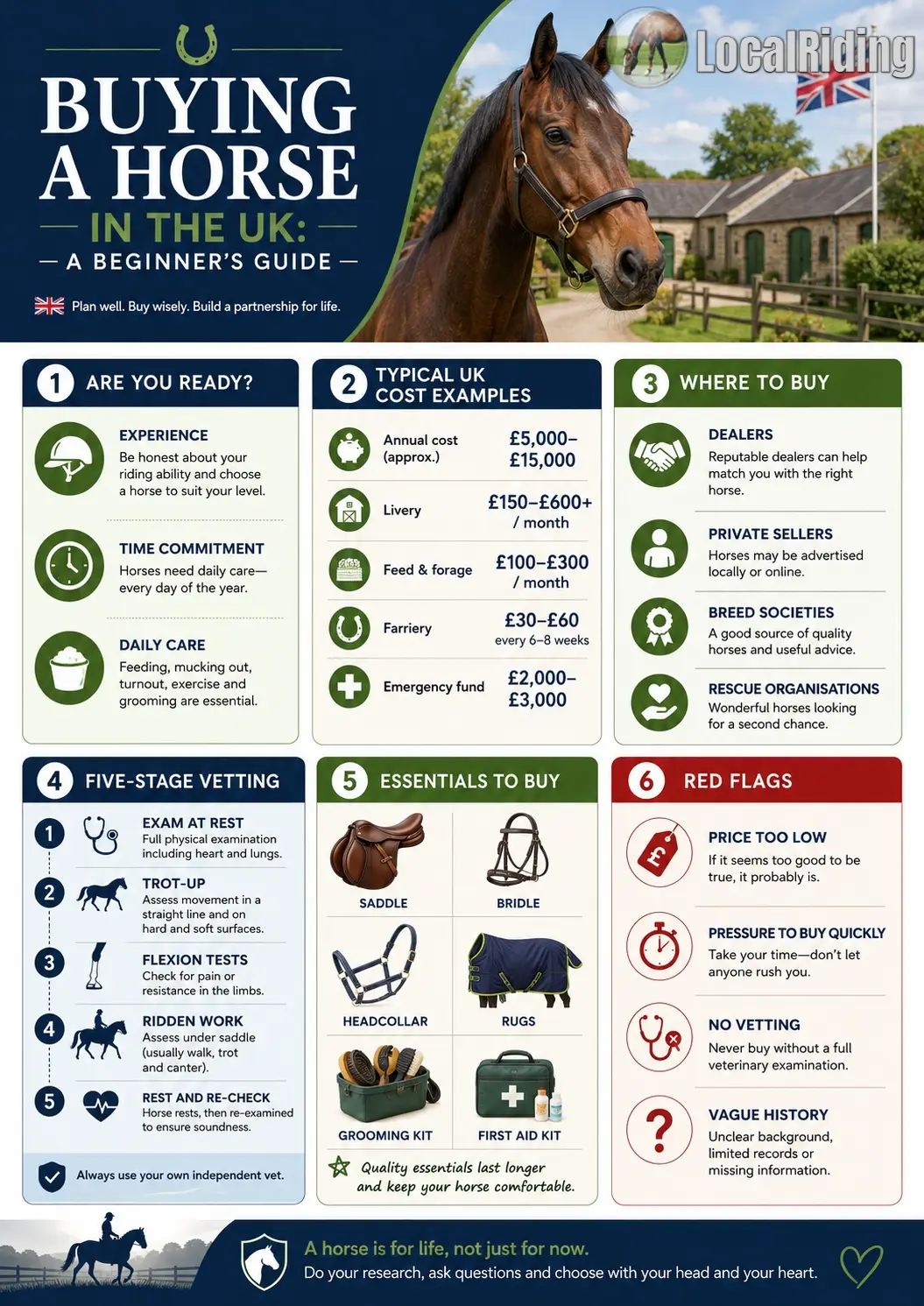 Buying a horse in the UK beginner's guide infographic: are you ready, typical UK cost examples, where to buy, five-stage vetting, essentials to buy and red flags
Buying a horse in the UK at a glance — readiness, typical costs, where to buy, the five-stage vetting, essential kit and red flags to avoid.
Are You Really Ready to Own a Horse?
Before you begin scrolling through adverts, ask yourself whether ownership is the right step at this stage. Many riders dream of owning their own horse, but a share, loan, riding school horse or part-loan arrangement may be a better stepping stone to start with.
Questions to Ask Yourself
- Can I confidently catch, lead, groom, tack up and handle a horse on the ground?
- Can I recognise basic signs of equine illness, lameness, colic or distress?
- Do I understand daily horse care, including feeding, watering, mucking out and turnout?
- Can I afford the ongoing monthly costs as well as any unexpected veterinary bills?
- Do I have enough time before or after work, in winter darkness and bad weather?
- Do I have experienced people around me who can help when things go wrong?
- Am I prepared to put the horse's welfare ahead of my own and my riding ambitions if needed?
If you are unsure, spend more time gaining practical experience first. Helping on a yard, sharing a horse, taking stable-management lessons or working towards BHS training can make you a more confident and capable future owner.
Be Honest About Your Riding Level
One of the most important buying decisions is matching the horse to your current ability, not the rider you hope to become in five years. A horse that is too sharp, too young, too strong or too green can quickly damage your confidence and create safety issues.
For many first-time owners, the safest choice is an experienced horse with a proven history. Terms such as "schoolmaster", "confidence-giver", "riding club type" or "been there, done it" can be useful, but they should never be accepted at face value. Always test the horse properly and take an experienced equestrian friend, an experienced instructor or other trusted professional with you.
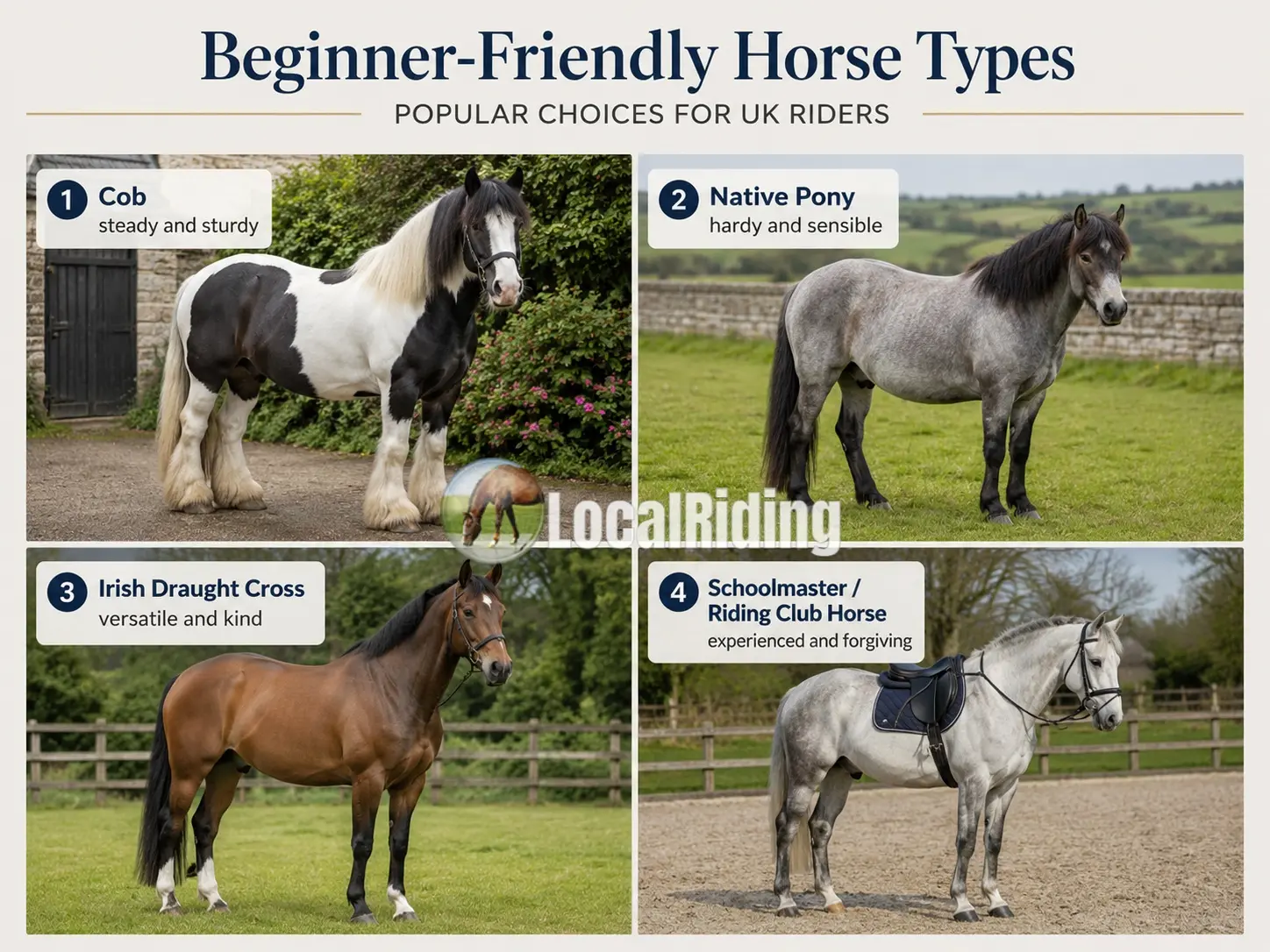 Beginner-friendly horse types for UK riders: a cob, a native pony, an Irish Draught cross and a schoolmaster riding club horse
Popular beginner-friendly types for UK riders — cobs, native ponies, Irish Draught crosses and experienced schoolmasters.
Horses Usually Better Suited to Novice Owners
- Older experienced horses: Horses aged around 10–18 may have more life experience and a more settled temperament.
- Cobs and cob types: Often steady, strong and practical, though they can still be forward, cheeky or opinionated.
- Native ponies: Hardy and sensible, but some can be clever, strong or prone to weight gain.
- Irish Draught crosses: Often popular for riding club, hacking and all-round work.
- Established riding club horses: Useful for owners who want hacking, lessons, clinics and low-level competitions.
Horses First-Time Buyers Should Approach Carefully
- Young horses: They require confident handling, consistent education and experienced support.
- Recently backed horses: Even if quiet, they may not yet understand the world.
- Ex-racehorses: Many make excellent riding horses but often need time and knowledgeable retraining.
- High-performance competition horses: They may be too sensitive, fit or sharp for a novice home.
- Horses sold as "projects": These are rarely suitable for inexperienced owners.
Temperament should be a priority. A kind, forgiving, predictable horse is usually more valuable to a first-time owner than flashy movement or impressive competition records.
What Do You Want the Horse For?
Be clear about your intended use. Buying for hacking is different from buying for affiliated showjumping, dressage, hunting, endurance or as a family pony.
Common First-Horse Goals
- Happy hacking: Look for a horse that is safe in traffic, sensible alone and in company, and comfortable in open spaces.
- Riding club activities: Look for an all-rounder that can school, hack, pop a small fence and travel calmly.
- Low-level dressage: Prioritise rhythm, soundness, rideability and trainability over extravagant movement.
- Showjumping: Look for confidence, carefulness, soundness and a record appropriate to your level.
- Family horse: Temperament, manners and predictability are essential. Character can be very tempting.
A horse should be bought for the job it will actually do, not the job it might do in perfect conditions. If you mostly want to hack twice a week, do not buy a fit, sharp competition horse because it looks impressive in an advert or you think it might impress your friends.
Understanding the Real Cost of Horse Ownership in the UK
The purchase price is only the beginning. The ongoing cost of keeping a horse in the UK varies widely depending on region, livery type, facilities, workload, health needs and whether you compete and at what level.
As a broad planning figure, many owners should expect horse ownership to cost several thousand pounds per year, with costs rising significantly for part or full livery, in expensive areas, or where the horse needs specialist care. Always check local prices and make up a budget before you buy. It's almost always a mistake to buy unprepared on impulse. If you are buying a pony, our First Pony Budget Calculator can help you put local figures together before you start viewing.
Typical Ongoing Costs to Budget For
- Livery: DIY is usually cheapest but requires daily work from you. Part and full livery costs quite a bit more, but does offer more support.
- Feed and forage: Hay, haylage, hard feed, balancers, supplements and salt.
- Bedding: Straw, shavings, pellets, paper or other bedding depending on yard rules and horse needs.
- Farrier: Trimming or shoeing every few weeks depending on hoof growth and workload.
- Veterinary care: Vaccinations, dental care, worming advice, emergencies and investigations.
- Insurance: Veterinary fees, third-party liability, mortality and optional loss of use.
- Saddle fitting: Initial saddle purchase and regular checks.
- Physio, dentist and bodywork: As appropriate, using qualified equestrian professionals.
- Rugs and rug repairs: Turnout rugs, stable rugs, fly rugs and cleaning your rugs.
- Transport: Trailer or horsebox, lorry hire, fuel, lessons, clinics and competition travel.
It all adds up, but don't let that put you off. The pleasure you get from owning a horse is hard to qualify to the uninitiated, but it's genuine and real. Only you can decide if that's what you want for your money.
Emergency Fund
Even insured owners need savings. Insurance may have exclusions, excesses, limits and delays. An emergency fund can help cover call-outs, transport to a referral hospital, diagnostic work or urgent farriery. Many new owners underestimate how quickly unexpected costs can build.
A good sound equestrian friend can mitigate a lot of the above costs by helping you, advising you and ensuring you enjoy and get the best from your horse owning experience. Someone, a friend you trust and who trusts you, who will work with you and give help without thought of reward and who will appreciate that you will do the same for them. Someone to talk to, hack out with, train with and share the costs of travel is a massive plus.
Livery Options: Choosing the Right Package
Before buying your horse, secure a suitable place to keep it. Do not assume you will find the right livery yard after purchase. Good yards often have waiting lists, and the yard environment can make or break a first ownership experience. A yard manager or owner that cares about the horses and not just the money is a rare find.
DIY Livery
DIY livery is usually the lowest, most affordable monthly cost, where you are responsible for all day-to-day care. Extra services can be provided for an extra charge and can include feeding, mucking out, turnout, bringing in, arranging appointments and dealing with emergencies. It can suit experienced owners with flexible schedules, but it can be demanding for beginners that work full-time or have many responsibilities.
Assisted DIY
Assisted DIY can include extra services such as turnout, bringing in, rug changes or feeding. This can be a good compromise for new owners who want involvement but need practical support. Costs vary based on the services included.
Part Livery
On part livery, the yard usually handles routine daily care such as feeding, mucking out and turnout, while you ride and manage the extras. This is often a sensible option for first-time owners who want guidance and consistency.
Full Livery
Full livery provides the most support and is useful for busy owners, competition riders or those who cannot attend daily. It is more expensive, so check exactly what is included: exercise, grooming, tack cleaning, holding for vet and farrier, bedding, feed and turnout may vary between yards.
Grass Livery
Grass livery can work well for hardy horses, retired horses or those suited to living out. However, check shelter, fencing, water, winter grazing, supplementary feeding, mud management and daily field check arrangements.
When viewing a yard, look at the horses already living there. Are they relaxed, well-fed, safe and appropriately managed? Is the yard tidy? Are staff approachable? Are turnout arrangements suitable for the type of horse you want? Are the paddocks full of old droppings or clear and clean? Is water readily and freely available in the paddocks?
In all livery types one item is regularly missed and that's muck-picking. Muck-picking involves the clearing of droppings from your horse's paddock. Failure to do so creates poached paddocks, flies and a general unhealthy grazing environment. Your horse will poop in the paddock and if not cleared daily the amount will build up quickly. Muck-picking is almost always an extra cost unless you do it yourself.
Where to Buy a Horse in the UK
Horses are sold through private adverts, dealers, breeders, word of mouth, riding schools, competition contacts, breed societies and charities. Each route has advantages and risks.
Private Sellers
Private sellers may offer a full history, especially if they have owned the horse for years. This can be valuable, but private sales often give buyers less legal protection than buying from a business. Ask detailed questions and get everything important in writing.
Professional Dealers
A reputable dealer may have several horses to try and may help match you with a suitable type. However, standards vary. Look for transparency, references, a physical yard, clear paperwork and willingness to allow independent vetting.
Breeders and Breed Societies
Breed societies can be useful if you want a specific type, such as a Welsh pony, Connemara, Highland, Fell, Dales, Irish Draught or native breed. This route may offer better background information, but youngstock and homebred horses still need careful assessment.
Re-homing Charities
Charities such as equine welfare organisations may rehome horses and ponies under loan or adoption agreements. This can be rewarding and often includes support, but not every rescue horse is suitable for a novice ridden home. Always read the terms & conditions carefully.
How to Read Horse Adverts Carefully
Horse adverts often use familiar phrases, but they can mean different things to different sellers. Read between the lines and ask direct follow-up questions.
Advert Phrases to Question
- "Not novice ride": Usually means the horse is too sharp, strong or complex for an inexperienced rider.
- "Needs confident rider": Ask exactly why. Does it nap, buck, spook, rear, bolt or become anxious?
- "Sold from field": The horse may be unfit, unsound, difficult to catch or not currently in work.
- "Project": Usually not suitable as a first horse.
- "Green but willing": May be genuine, but still needs experienced education.
- "No timewasters": Fine in itself, but do not let it pressure you into rushing.
- "Open to vet": Positive, but still choose your own independent vet.
Ask for recent, unedited videos showing catching, leading, grooming, tacking up, mounting, walk, trot, canter, transitions, hacking, traffic and loading if relevant. Videos are useful, but they never replace an in-person viewing.
Questions to Ask Before Viewing
Save time by asking detailed questions before travelling. A genuine seller should be willing to answer clearly.
- How long have you owned the horse?
- Why is the horse for sale?
- What is the horse's full ridden and management history?
- Has the horse ever bucked, reared, bolted, napped or been difficult to stop?
- Is the horse good to catch, lead, tie up, groom, clip, shoe, load and travel?
- Does the horse hack alone and in company?
- Is the horse good in traffic, open spaces and windy weather?
- What is the horse like after days off?
- Has the horse had any lameness, colic, laminitis, sarcoids, sweet itch, ulcers, kissing spines or respiratory issues?
- Is the horse currently shod or barefoot?
- When were teeth, vaccinations, worming and farriery last done?
- What does the horse eat and how is it turned out?
- Is the passport available and does the microchip match?
- Will the seller allow an independent five-stage vetting?
If answers are vague, inconsistent or defensive, proceed with caution.
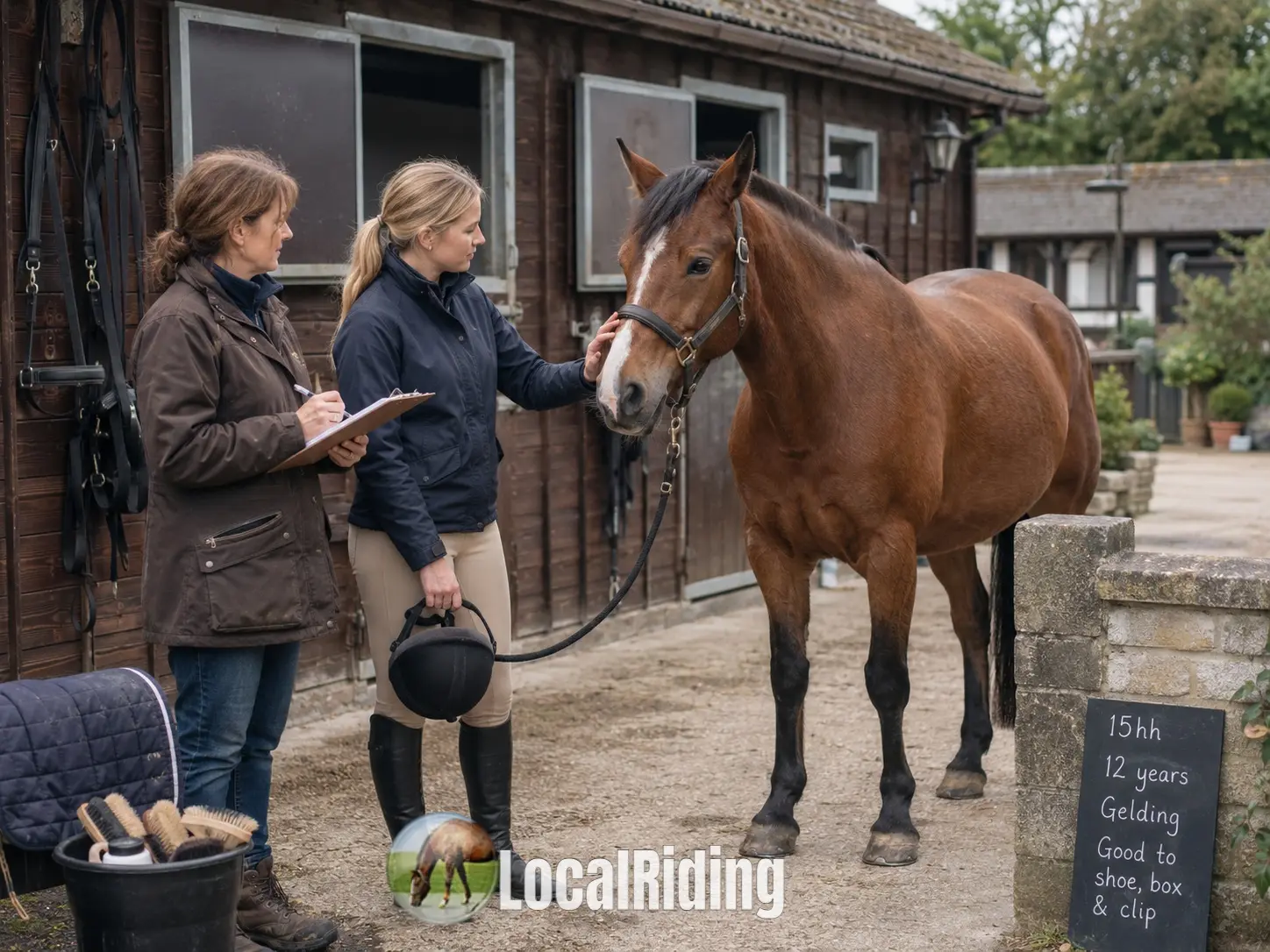 Prospective buyer and instructor assessing a bay gelding at a viewing, with a board showing 15hh, 12 years, gelding, good to shoe, box and clip
Always take an experienced person to a viewing and assess the horse calmly before you ride.
Trying the Horse: What to Do at a Viewing
Always take an experienced person with you, ideally your instructor. Do not let excitement override judgement. Arrive early if possible so you can see whether the horse is already caught, clean, tacked up or worked beforehand.
At the Viewing
- Watch the seller catch the horse from the field if possible.
- Observe stable manners, tying up, grooming and tacking up.
- Ask the seller to ride first.
- Watch the horse walk, trot and canter on both reins.
- Look for stiffness, unevenness, rushing, resistance or tension.
- Ride the horse only if you feel safe.
- Test the horse in situations that are relevant to your intended use.
What to Test
- Schooling: Transitions, steering, brakes, circles and canter work.
- Hacking: Alone, in company and near traffic if safe and appropriate.
- Handling: Grooming, picking out feet, rugging, leading and tying up.
- Loading: Only if transport manners matter to you.
- Jumping: Only if jumping is part of your plan, and keep it realistic.
Do not buy a horse you are afraid to ride at the viewing. Nerves are normal, but fear is relevant, an important factor and something that you may not get over.
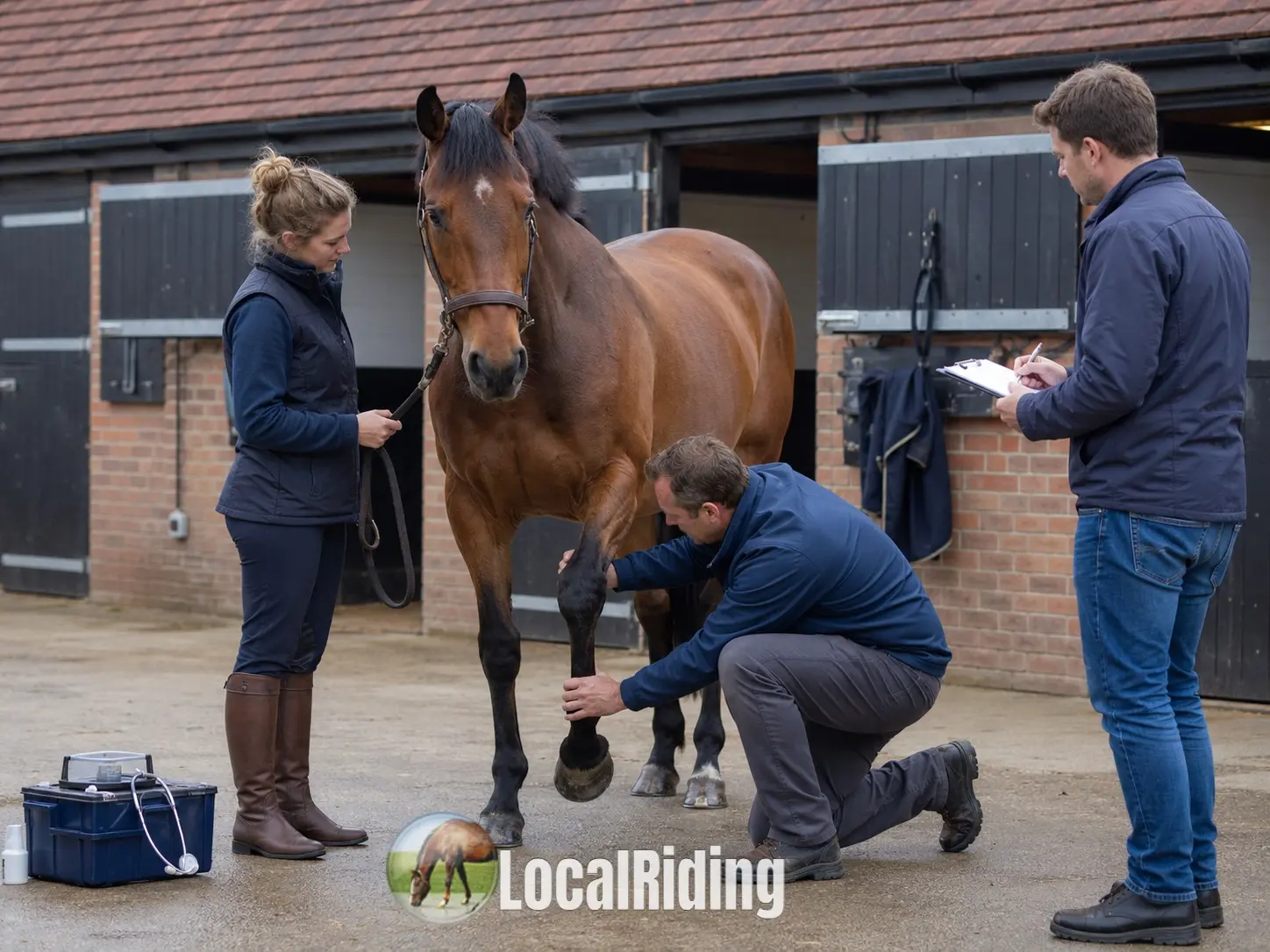 Vet carrying out a flexion test on a horse's leg during a pre-purchase vetting while a handler holds the horse and an assistant records findings
A five-stage pre-purchase vetting helps identify risks before money changes hands — always use your own independent vet.
The Pre-Purchase Vetting
A pre-purchase vetting is one of the most important steps in the buying process. It helps assess whether the horse is suitable for your intended use on the day of examination. It is not a guarantee of future soundness, but it can identify risks before money changes hands.
Two-Stage Vetting
A two-stage vetting is a shorter examination usually covering a clinical check at rest and a trot-up. It may be considered for companion horses, youngstock or low-value horses, but it provides less information than a five-stage vetting.
Five-Stage Vetting
A five-stage vetting is more comprehensive and is generally recommended for a horse intended for ridden work, competition or regular activity. It usually includes examination at rest, trot-up, strenuous exercise, a rest period and a final re-examination.
Use your own independent vet, not the seller's usual vet unless there is no alternative and any conflict of interest is declared. Tell the vet exactly what you want the horse for. A horse suitable for light hacking may not be suitable for eventing, hunting or affiliated competition.
Additional Tests
Depending on the horse and intended use, your vet may discuss blood tests, X-rays, ultrasound, endoscopy or other investigations. These cost extra, but may be worthwhile for higher-value horses, competition horses or horses with questionable history.
If the horse does not pass cleanly, do not panic, but do consider carefully. Some findings may be manageable; others may make the purchase too risky. Discuss the findings with your vet, instructor and/or insurer before deciding to buy.
Passport, Microchip and Legal Checks
Every horse in the UK must have a valid passport and microchip, and the passport should stay with the horse. Before buying, check that the passport details match the horse, including markings, age, sex, colour and microchip number.
A passport is an identification document, not absolute proof of legal ownership. You should still obtain a written receipt or sales agreement. Check whether the horse is signed out of the human food chain, as this affects medication records and veterinary treatment options.
Paperwork to Check
- Passport and microchip details
- Vaccination record
- Dental history
- Farrier history
- Veterinary history where available
- Competition record if relevant
- Loan or ownership agreements if the horse has changed hands recently
- Written receipt or sales contract
Sales Contracts and Deposits
Always get the sale terms in writing. A simple written agreement is better than relying on verbal promises. The agreement should identify the horse, buyer, seller, price, date, deposit terms, any tack or rugs included, known health or behaviour issues, and whether the sale is subject to vetting.
If you pay a deposit, agree in writing whether it is refundable if the horse fails the vetting. Avoid paying large sums before vetting and be cautious of sellers who pressure you to transfer money urgently.
Useful Contract Points
- Horse's registered name, stable name, passport number and microchip number
- Purchase price and payment method
- Any equipment included
- Statements made about behaviour, soundness and intended use
- Vetting conditions
- Deposit refund terms
- Collection date and risk transfer
Insurance and Liability
Arrange insurance before the horse arrives, or at least understand when cover begins. Veterinary fee insurance can help with unexpected illness or injury, while third-party liability cover is important because owners may be responsible for damage or injury caused by their horse.
Compare policies carefully. Look at veterinary fee limits, exclusions, excesses, age restrictions, dental cover, complementary treatment, loss of use, public liability and whether pre-existing conditions are excluded. Some insurers may request a vetting certificate for certain values or types of cover.
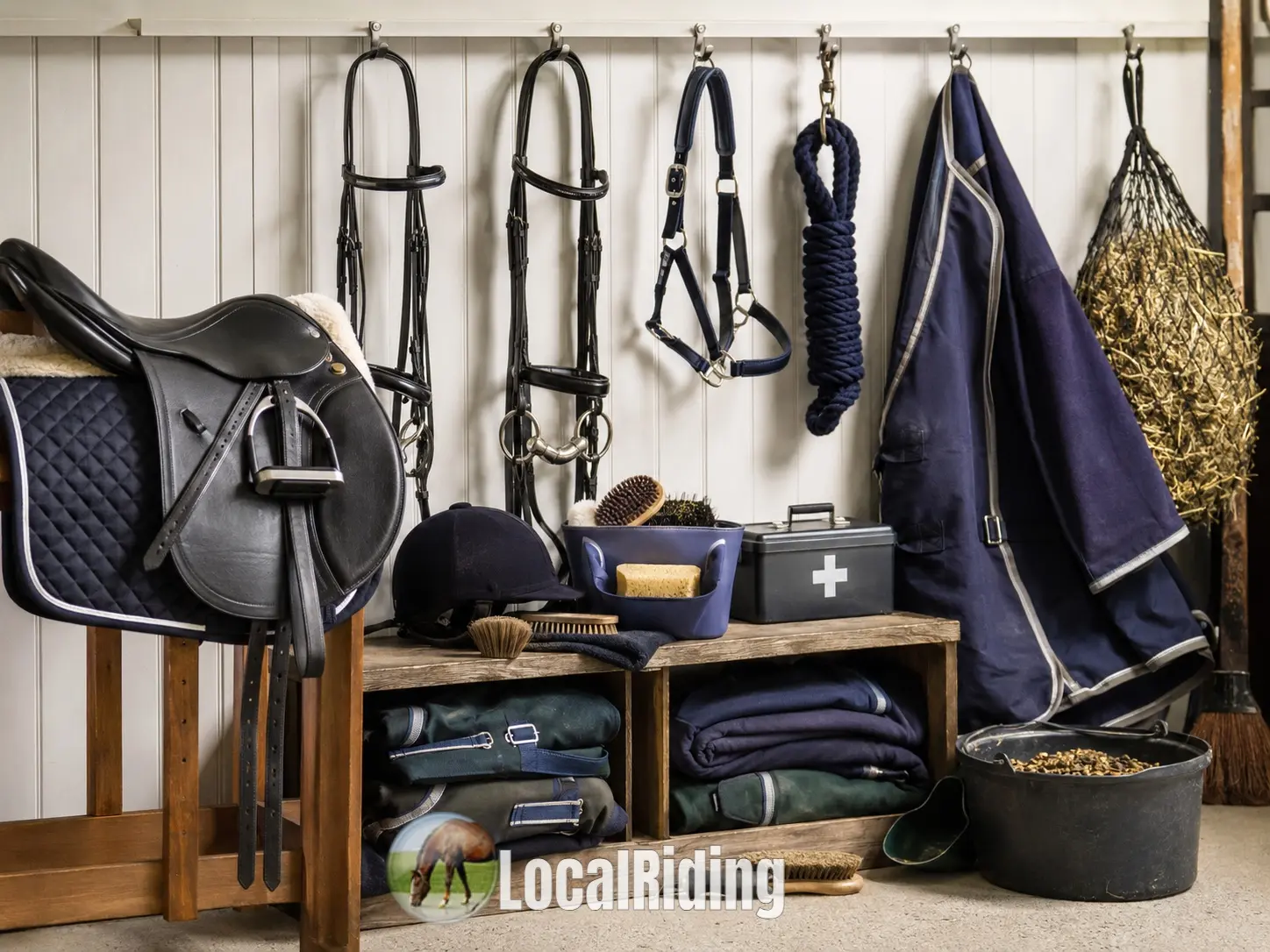 Essential first-horse tack and equipment hung in a tack room: saddle, bridle, headcollar and lead rope, turnout rug, grooming kit, first aid kit and haynet
Buy safe, well-fitting essentials first — saddle, bridle, headcollar, rugs, grooming kit and a first aid kit — and wait to see what your horse actually needs.
Essential Equipment for a First Horse
It is easy to overspend before your horse arrives. Buy essentials first and wait to see what the horse actually needs. Fit, safety and suitability matter more than matching colours.
Immediate Essentials
- Well-fitting headcollar and lead ropes
- Grooming kit and hoof pick
- Feed buckets and water buckets if not supplied by the yard
- Basic first aid kit and thermometer
- Suitable turnout rug or fly rug if needed
- Riding hat and boots for the owner
- Professionally fitted saddle
- Bridle and bit suited to the horse
- Saddlecloths and girth
- Hi-vis equipment for hacking
Do Not Guess Saddle Fit
A poorly fitting saddle can cause pain, behavioural problems and poor performance. Use a qualified saddle fitter and expect the saddle to need adjustment as your horse changes shape.
For example: buying a re-homed horse could give you an underweight or under-fed horse that will fill out and change muscular shape once properly fed and exercised.
Bringing Your New Horse Home
The first few weeks are about settling, observation and routine. Even a calm horse can feel unsettled after moving yards. Keep things simple and do not rush into competitions, intense schooling or major management changes.
First Week Tips
- Keep feed as similar as possible to the previous home, then change it gradually if needed.
- Allow time for your horse to settle into a turnout, stable and yard routine.
- Introduce field companions carefully and under supervision.
- Book initial farrier, dentist, saddle fitter and vet visits as needed.
- Ride lightly at first and build your relationship with your horse gradually.
- Record your horse's normal behaviour, its appetite, droppings and water intake.
- Consider hierarchy if your horse is turned out in a herd or around or with other horses. Behaviour can change when or while your horse is trying to fit in.
Some horses test boundaries in a new home. This does not always mean you bought the wrong horse, but it does mean you need to be consistent in handling, give good support and ensure a calm routine.
Common Red Flags When Buying
- The seller refuses independent vetting.
- The horse is already tacked up or sweaty when you arrive.
- The seller will not let you see the horse caught or handled.
- The passport is missing, delayed or does not match the horse.
- The seller gives vague answers about health or behaviour.
- The horse is advertised as suitable for novices but behaves anxiously or strongly.
- You are pressured to pay immediately.
- The price is unusually low with no clear reason.
- The seller discourages you from bringing an instructor.
- You feel uneasy but are tempted to continue because you like the horse.
Walking away can be disappointing, but it is often the wisest decision. There will be other horses.
Should You Buy, Loan or Share?
Buying is not the only route into horse ownership. A share or loan can be a more realistic first step, especially if you are still developing confidence or understanding your preferred type of horse.
Sharing
Sharing usually involves helping with costs and care in exchange for riding on agreed days. It is a good way to gain experience without full responsibility.
Loaning
Loaning gives more responsibility than sharing but may avoid the initial purchase price. Always use a written loan agreement that covers costs, insurance, care standards, termination, veterinary decisions and where the horse will live.
Buying
Buying gives the most control, but comes with the most responsibility. It is best suited to riders who are financially prepared, have regular support and are ready for long-term commitment.
Final Thoughts: Choose With Your Head and Your Heart
Buying your first horse should never be rushed. The right horse for you is not necessarily the prettiest, the cheapest or the most talented; it's often the horse that suits your ability, your lifestyle, budget and goals while being provided the care it deserves.
Always take expert advice, ask direct questions, view more than one horse, insist on proper vetting and be prepared to walk away. A careful buying process may feel slow, but it greatly increases your chance of finding a safe, suitable and enjoyable equine partner.
Your horse is for the life of your horse, not just for now, today or tomorrow. Choose wisely, budget realistically and build your equestrian support network before you buy.
Debbie Irwin
Livery Yard Manager & Equestrian Professional
Debbie has run professional showing yards and mixed livery yards in Lincolnshire and Essex for over 30 years. She has competed and taught at various levels. She writes about practical horse health, yard life, livery and everyday horse health and management.
Support Debbie on Ko-fi ☕Found this guide helpful? LocalRiding is run independently without ads. If you'd like to chip in towards the site's upkeep, you can buy Debbie a hot drink on a cold day on Ko-fi, she'll really appreciate it.