
Horse health
Rising Equine Vet Costs in the UK: How to Reduce Vet Bills Without Compromising Welfare
Equine vet fees are rising. What UK horse owners pay in 2026, why costs are increasing, and 10 practical ways to cut vet bills through zone visits, prevention and better planning.
By Debbie Irwin · 13 October 2026 · 12 min read
Equine veterinary fees are increasing, and for many owners the cost of keeping a horse healthy is becoming a serious financial concern. However, there are practical ways to manage expenditure, prevent avoidable illnesses and reduce veterinary costs without compromising your horse's welfare.
The Rising Cost of Equine Veterinary Care
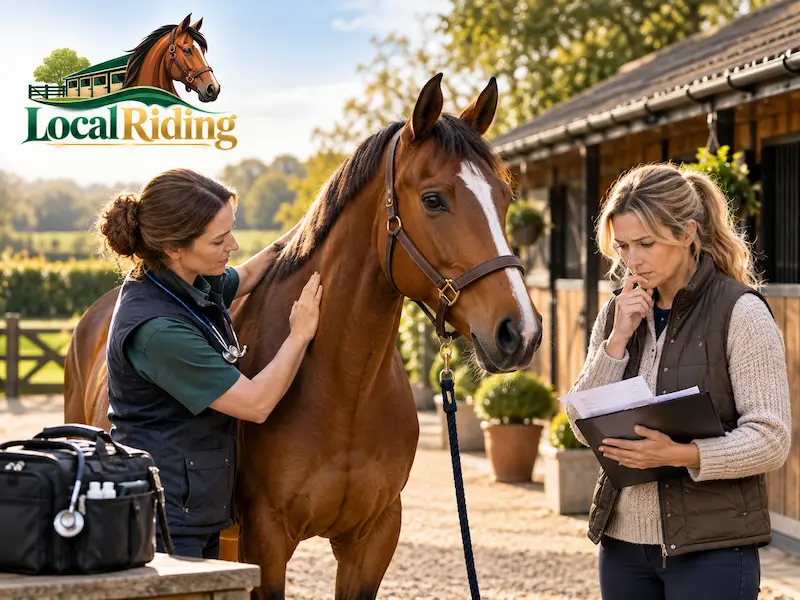 Equine vet examining a bay horse at the yard while its owner looks worriedly at the vet bill
Owning a horse has never been inexpensive. Between livery, feed, bedding, farriery, dentistry, insurance and routine veterinary care, even a healthy horse represents a considerable financial commitment.
However, veterinary bills have become an increasingly significant concern for British horse owners. What was once a relatively manageable visit for a vaccination, minor injury or routine examination can now cost considerably more than expected, particularly once call-out fees, diagnostics, medication and follow-up appointments are included.
There is evidence behind these concerns.
The British Equine Veterinary Association (BEVA), reporting results from the 2025 Society of Practising Veterinary Surgeons (SPVS) fees survey, found that equine consultation fees had risen by 10%, while charges for blood sampling and interpretation increased by 42%.
Not every charge increased. Some visit fees actually decreased, demonstrating that veterinary inflation is not uniform across all services.
For horse owners, the question is no longer simply how much veterinary care costs. It is also how to obtain appropriate, high-quality treatment while keeping expenditure manageable.
How Much Have Veterinary Prices Increased?
Figures from the Office for National Statistics (ONS) show substantial increases in the consumer price index for veterinary and other services for pets between 2020 and 2025.
Veterinary and Other Pet Services Price Index: 2020–2025
Vet and pet services prices, 2020–2025
ONS price index, annual averages (2015 = 100)
| Year | Price Index | Increase Since 2020 |
|---|---|---|
| 2020 | 117.0 | Baseline |
| 2021 | 121.6 | 3.9% |
| 2022 | 131.8 | 12.6% |
| 2023 | 148.1 | 26.6% |
| 2024 | 161.6 | 38.1% |
| 2025 | 173.0 | 47.9% |
UK veterinary and other pet services price index. Annual averages, 2015 = 100.
Overall increase from 2020 to 2025: approximately 47.9%.
Important: This ONS index covers veterinary and other services for pets. It is not a dedicated equine veterinary price index and should not be interpreted as evidence that every horse veterinary fee increased by 47.9%.
The BEVA/SPVS survey provides more directly relevant evidence of changing equine veterinary charges.
Source: Office for National Statistics — Veterinary and Other Services for Pets
What Does Equine Veterinary Care Cost in 2026?
The following prices illustrate charges published by UK equine veterinary practices during 2026. They are examples rather than national averages.
| Veterinary Service | Published Price Range |
|---|---|
| Routine consultation or examination | £48–£70 |
| Flu and tetanus vaccination | £48–£57 |
| Routine dental treatment, excluding sedation | £62–£72 |
| Standard daytime call-out | £46–£68 |
| Out-of-hours journey | £156–£192 |
| Written veterinary prescription | £21–£29 |
| Five-stage pre-purchase examination | £391–£436 |
Illustrative UK equine veterinary charges in 2026
Prices are rounded examples from published practice fee schedules and include VAT. Additional charges may apply for travel, sedation, diagnostics, medicines and procedures. Always request an up-to-date quotation.
The Real Cost of a Simple Vaccination
Consider a straightforward vaccination appointment.
A practice might charge approximately £50 for the vaccination and another £50–£60 for attending the yard. The total bill could therefore reach £100–£110.
However, the same vaccination might cost closer to £50 if performed during a free or subsidised zone visit.
The treatment is essentially the same. The difference is in how and when the appointment is arranged.
This is one of the simplest opportunities to reduce veterinary expenditure.
Why Are Equine Veterinary Costs Rising?
Veterinary practices face increasing operating expenses, including staffing, premises, vehicles, medicines, equipment, insurance and other business costs.
Modern equine medicine also provides diagnostic and treatment options that were less widely available in the past.
Portable digital radiography, ultrasound, endoscopy, advanced laboratory testing and specialist referrals can improve diagnosis and treatment, but also increase the potential cost of veterinary care.
Nevertheless, owners are entitled to ask whether every proposed investigation is necessary and what clinically appropriate alternatives may be available.
Veterinary Pricing and Competition
In March 2026, the Competition and Markets Authority (CMA) concluded a major investigation into veterinary services for household pets.
The investigation identified concerns about pricing transparency, consumer choice and competition, resulting in reforms intended to improve transparency and protect consumers.
These particular reforms concern household-pet veterinary services rather than equine practices.
Horse owners should not assume that measures such as the household-pet prescription fee cap automatically apply to equine veterinary prescriptions.
However, the broader principles of transparent pricing, informed consent and the ability to compare veterinary services are equally relevant to horse owners.
10 Practical Ways to Reduce Equine Veterinary Costs
1. Use Zone Visits and Shared Call-Outs
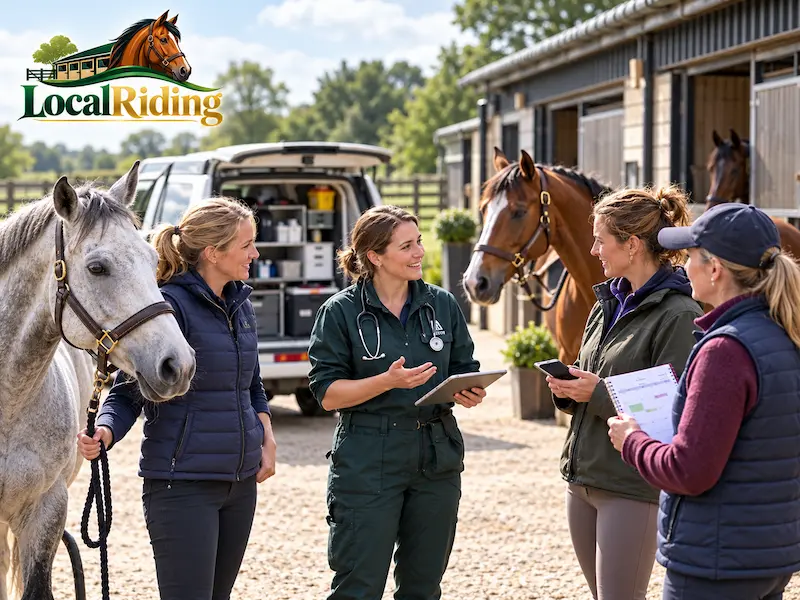 Equine vet with a tablet talking to a group of horse owners at a livery yard during a shared zone visit
Many equine veterinary practices offer discounted or free zone visits on particular days.
Where clinically appropriate, arrange vaccinations, non-urgent examinations and routine treatments to coincide with these visits.
Owners at the same livery yard can also arrange group appointments and share travel charges.
For example, a published 2026 veterinary price list from House & Jackson illustrates how group zone-day visits can substantially reduce the call-out charge per owner.
Potential benefit: Significant savings on routine veterinary travel costs.
2. Prevent Expensive Conditions Before They Develop
Prevention is often considerably less expensive than treating advanced illness.
Maintain a healthy body condition, provide an appropriate forage-based diet, introduce feed changes gradually and ensure regular hoof care and suitable exercise.
Particular attention should be paid to:
- Preventing obesity and laminitis.
- Maintaining appropriate grazing and pasture management.
- Monitoring older horses for metabolic conditions.
- Providing adequate forage and clean water.
- Reducing injuries through safe fencing and turnout.
- Recognising subtle changes in health and behaviour.
Potential benefit: Lower risk of serious illness, lengthy treatment and repeated veterinary visits.
3. Adopt Targeted Worm Control
Routine blanket worming can result in unnecessary expenditure and contribute to resistance to worming medicines.
Faecal worm egg counts, appropriate tapeworm testing, pasture management and veterinary advice can help determine when treatment is required.
BEVA recommends risk-based parasite control rather than indiscriminate deworming.
However, routine faecal egg counts do not reliably detect every important parasite or stage. Seasonal testing and treatment decisions must therefore be tailored to each horse.
Potential benefit: More effective parasite management, reduced unnecessary medication and improved long-term wormer effectiveness.
4. Maintain Regular Dental and Hoof Care
Dental problems can cause discomfort, difficulty chewing, weight loss and performance problems.
Regular dental assessment can identify developing problems before treatment becomes more complicated.
Use an appropriately qualified equine dental technician for procedures within their permitted scope of practice, or an equine veterinary surgeon when examination, sedation or complex treatment is necessary.
Similarly, regular farrier visits help maintain hoof health and may reduce the risk of preventable foot problems.
Potential benefit: Reduced risk of advanced dental conditions and avoidable hoof-related veterinary care.
5. Compare Prescription Medicine Prices
Owners of horses receiving long-term medication may be able to save money by requesting a written veterinary prescription and purchasing medicines from a reputable authorised supplier.
Prescription and monitoring fees may apply, and the vet must still meet the relevant prescribing and under-care requirements.
Always compare the total cost, including prescription charges, delivery costs, the amount supplied and any necessary re-examinations.
Never substitute human medicines or change prescribed doses without veterinary authorisation.
Potential benefit: Lower long-term medication costs where suitable alternatives are available.
6. Request Estimates and Discuss Treatment Options
Before agreeing to non-emergency investigations or procedures, request an itemised estimate.
Ask whether the estimate includes:
- Consultation and examination fees.
- Travel and call-out charges.
- Diagnostic scans and laboratory tests.
- Sedation and medicines.
- Hospitalisation and aftercare.
- VAT and possible follow-up appointments.
Discuss whether investigations are essential immediately or whether a staged diagnostic approach is clinically appropriate.
Remember that early diagnosis can sometimes prevent more expensive complications.
Potential benefit: Better financial planning and fewer unexpected charges.
7. Compare Veterinary Practices
Different practices may charge different prices for similar treatments.
Compare routine examination fees, vaccination packages, dental treatment, prescriptions and travel charges.
However, price should not be the only consideration. Equine expertise, emergency availability, diagnostic facilities and continuity of care are also important.
A cheaper examination may not represent better value if essential services are unavailable or tests need repeating.
Potential benefit: Better value while maintaining appropriate veterinary expertise.
8. Review Your Horse Insurance
Horse insurance can protect owners against some substantial veterinary expenses, but policies vary considerably.
Compare:
- Veterinary-fee limits.
- Policy excesses.
- Age restrictions.
- Pre-existing condition exclusions.
- Diagnostic and treatment cover.
- Time-limited or condition-specific restrictions.
Some policies stop covering a previously claimed condition after a specified treatment period.
If comprehensive insurance is unaffordable, consider whether a limited policy combined with emergency savings offers a suitable alternative. Our First Pony Budget Calculator can help you plan monthly savings.
Potential benefit: Better financial protection and fewer surprises when claiming.
9. Learn Basic Equine First Aid
Every horse owner should know how to recognise potential illness and respond appropriately to common injuries.
Learn to monitor:
- Temperature.
- Pulse and respiration.
- Hydration and appetite.
- Digital pulses and hoof temperature.
- Changes in movement or behaviour.
- Wounds and abnormal swelling.
Keep a suitable equine first-aid kit and your vet's emergency telephone number readily available.
Photographs and short videos can sometimes help veterinary communication, but should never delay urgent treatment or replace an examination when one is required.
Potential benefit: Earlier recognition of illness and more informed veterinary decisions.
10. Work Together With Other Horse Owners
Livery yards and riding clubs can organise coordinated vaccination days, dental clinics, parasite-control programmes and veterinary educational sessions.
A yard-wide healthcare calendar can reduce missed appointments, improve biosecurity planning and make shared veterinary visits easier to arrange.
Potential benefit: Reduced duplicated expenditure and more consistent healthcare standards.
How Much Could Better Planning Save?
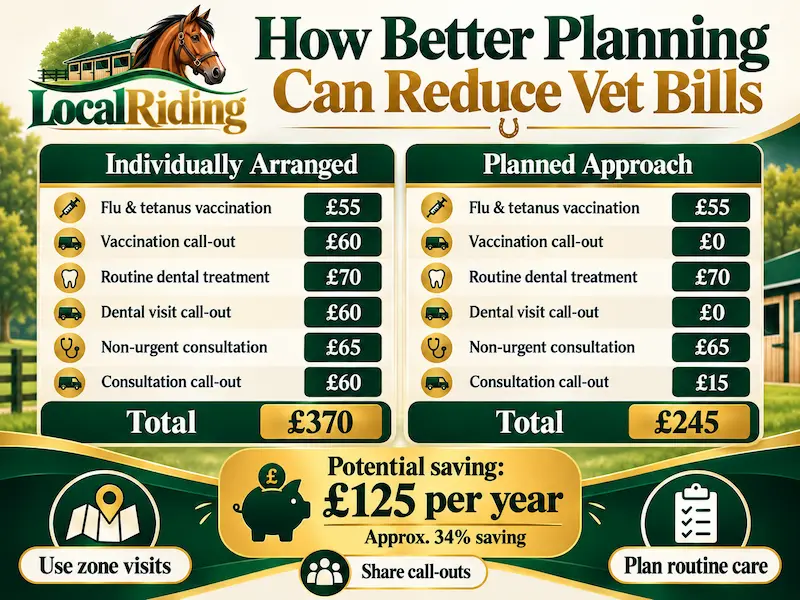 How better planning can reduce vet bills: individually arranged visits cost £370 a year versus £245 with zone visits and shared call-outs, a saving of about £125
Consider a hypothetical owner with one generally healthy horse who requires routine vaccinations, dental treatment and a non-urgent veterinary consultation during the year.
| Expense | Individual Visits | Planned Visits |
|---|---|---|
| Flu and tetanus vaccination | £55 | £55 |
| Vaccination call-out | £60 | £0 |
| Routine dental treatment | £70 | £70 |
| Dental visit call-out | £60 | £0 |
| Non-urgent consultation | £65 | £65 |
| Consultation call-out | £60 | £15 |
| Annual Total | £370 | £245 |
Illustrative annual veterinary cost comparison
Illustrative saving: £125 per year, approximately 34%.
These figures are examples rather than guaranteed savings. They assume suitable discounted or free zone visits are available and appointments can be scheduled without compromising the horse's welfare.
For larger yards, coordinated preventive healthcare may offer even greater collective benefits.
When Saving Money Could Cost Much More
There is an important distinction between managing veterinary costs and delaying necessary treatment.
Contact your veterinary surgeon immediately if your horse develops any of the following:
- Colic: Repeated rolling, pawing, abdominal discomfort or other signs of colic.
- Laminitis: Reluctance to move, painful feet or a characteristic rocked-back stance.
- Severe lameness: Sudden inability to bear weight or suspected fracture.
- Serious wounds: Deep wounds, punctures near joints or tendons, or uncontrolled bleeding.
- Eye problems: Painful eyes, injury or sudden changes in vision.
- Breathing difficulties: Severe respiratory distress or collapse.
- Neurological symptoms: Sudden incoordination, seizures or severe weakness.
- Choke: Suspected oesophageal obstruction or significant swallowing difficulties.
Do not administer leftover prescription medicines, antibiotics or painkillers without veterinary direction.
The least expensive veterinary emergency is often the one recognised and treated before complications develop.
Horse Insurance or an Emergency Fund?
This is a decision worth reviewing annually, particularly if your horse is ageing or insurance premiums have increased.
Veterinary Insurance
Insurance can offer valuable financial protection against eligible veterinary claims, including serious injury, surgery and hospitalisation.
However, policies may contain excesses, exclusions, age restrictions and condition-specific treatment limits.
Emergency Savings
A dedicated veterinary savings fund provides money for uninsured expenses, excesses and treatment excluded by an insurance policy.
For example, setting aside £50 each month would accumulate £600 in one year and £1,800 over three years, assuming no withdrawals or interest.
However, savings alone may not be sufficient if a serious veterinary emergency occurs before the fund has grown.
For some owners, suitable insurance combined with a dedicated emergency fund provides the most practical financial protection.
A Simple Preventive Healthcare Calendar
A written healthcare schedule helps reduce missed appointments and encourages early recognition of problems.
| Frequency | Recommended Action |
|---|---|
| Daily | Check appetite, droppings, movement, behaviour, legs and hooves. |
| Weekly | Review body condition, fencing and equipment safety. |
| Regularly | Arrange farrier visits appropriate to the horse. |
| Seasonally | Review grazing, parasite control, body weight and feeding arrangements. |
| At least annually | Arrange dental assessment, more frequently where clinically indicated. |
| As scheduled | Maintain vaccinations according to veterinary, yard and competition requirements. |
| Annually | Review insurance, emergency savings and veterinary charges. |
Suggested equine preventive healthcare schedule
Vaccination intervals and parasite-control programmes should be discussed with your vet and tailored to the individual horse.
Questions Every Horse Owner Should Ask Their Vet
Before agreeing to non-emergency veterinary treatment, it is entirely reasonable to ask:
- What is the total expected cost, including VAT?
- Are there any additional charges?
- Is this investigation or procedure essential now?
- Are there alternative treatments?
- Can routine work be arranged on a zone day?
- Can I request a written prescription?
- What are the risks of monitoring the condition before further investigations?
- What symptoms would require immediate reassessment?
- Could preventive management reduce future problems?
A constructive relationship with your veterinary surgeon is extremely valuable.
Owners should not feel embarrassed about explaining financial limitations. Veterinary surgeons need to understand those limitations when considering appropriate diagnostic and treatment options.
The objective should always be a realistic veterinary care plan that protects the horse's welfare.
The Future of Equine Veterinary Pricing
Recent scrutiny of the veterinary industry has increased public awareness of pricing transparency, consumer choice and fair competition.
The CMA's 2026 household-pet reforms demonstrate that concerns about pricing are being taken seriously.
However, those reforms do not automatically apply to equine veterinary services or establish that equine practices have engaged in the same conduct.
Horse owners can nevertheless encourage veterinary practices to publish clear fee schedules, explain additional charges and offer affordable preventive healthcare options.
Practices that provide transparent estimates, shared visits, preventive healthcare plans and reliable emergency cover deserve recognition for the value they offer.
Final Thoughts: Saving Money Should Never Mean Compromising Welfare
The rising cost of equine veterinary care is a genuine concern, especially when combined with increasing livery, feed, bedding, transport and other horse-keeping expenses.
But owners are not powerless.
Good management can reduce preventable illness. Routine healthcare can detect problems earlier. Shared veterinary visits can reduce travel costs. Comparing medication prices and reviewing insurance can improve financial planning.
Perhaps most importantly, greater knowledge helps owners make informed decisions rather than simply accepting an unexpected bill without understanding their options.
The aim is not to use the vet less when veterinary care is needed. It is to keep horses healthier, use veterinary services more efficiently and ensure that every pound spent contributes to their welfare.
A little preparation today may prevent considerable expense — and unnecessary suffering — tomorrow.
Further Reading and Sources
- British Equine Veterinary Association (BEVA) — Equine veterinary guidance and industry information.
- Office for National Statistics — Veterinary and other pet services price index.
- British Horse Society — Horse care, ownership costs and preventive healthcare.
- Competition and Markets Authority — Veterinary services market investigation.
- House & Jackson — Published equine veterinary price list.
- World Horse Welfare — Horse welfare and emergency healthcare guidance.
Published by LocalRiding.com | October 2026
Disclaimer: This article provides general educational guidance and does not replace individual veterinary advice. Prices are illustrative and may change. Always consult your veterinary surgeon about your horse's specific healthcare requirements.
Debbie Irwin
Livery Yard Manager & Equestrian Professional
Debbie has run professional showing yards and mixed livery yards in Lincolnshire and Essex for over 30 years. She has competed and taught at various levels. She writes about practical horse health, yard life, livery and everyday horse health and management.
Support Debbie on Ko-fi ☕Found this guide helpful? LocalRiding is run independently without ads. If you'd like to chip in towards the site's upkeep, you can buy Debbie a hot drink on a cold day on Ko-fi, she'll really appreciate it.