
Horse health
Feeding Your Horse in Winter: A UK Practical Guide
Winter feeding in the UK requires careful consideration of your horse's changing needs. This guide covers forage, concentrates, supplements, and managing weight through the cold months.
By Debbie Irwin · 27 April 2026 · 13 min read
Why Winter Feeding Needs a Different Approach
Winter feeding in the UK requires more thought than simply giving a bigger bucket feed. Cold weather, wet fields, reduced grass growth, frozen water, restricted turnout and longer stabling hours all affect how a horse uses energy and maintains condition. For many horses, the most important winter feed is not hard feed at all — it is good-quality forage, clean water and a carefully monitored routine.
Horses are hindgut fermenters. This means they are designed to eat fibre steadily over many hours, and the fermentation of forage in the hindgut helps generate internal warmth. In practical terms, a horse with enough suitable fibre is usually better supported in cold weather than a horse given a large, starchy bucket feed but left short of hay or haylage overnight.
The right winter feeding plan depends on the individual horse. A clipped competition horse in regular work has very different needs from a native pony living out, a retired veteran, a laminitis-prone cob or a poor doer recovering from weight loss. The aim is to feed according to body condition, workload, forage quality, health history and the weather — not simply according to the calendar.
Start with Body Condition, Not Guesswork
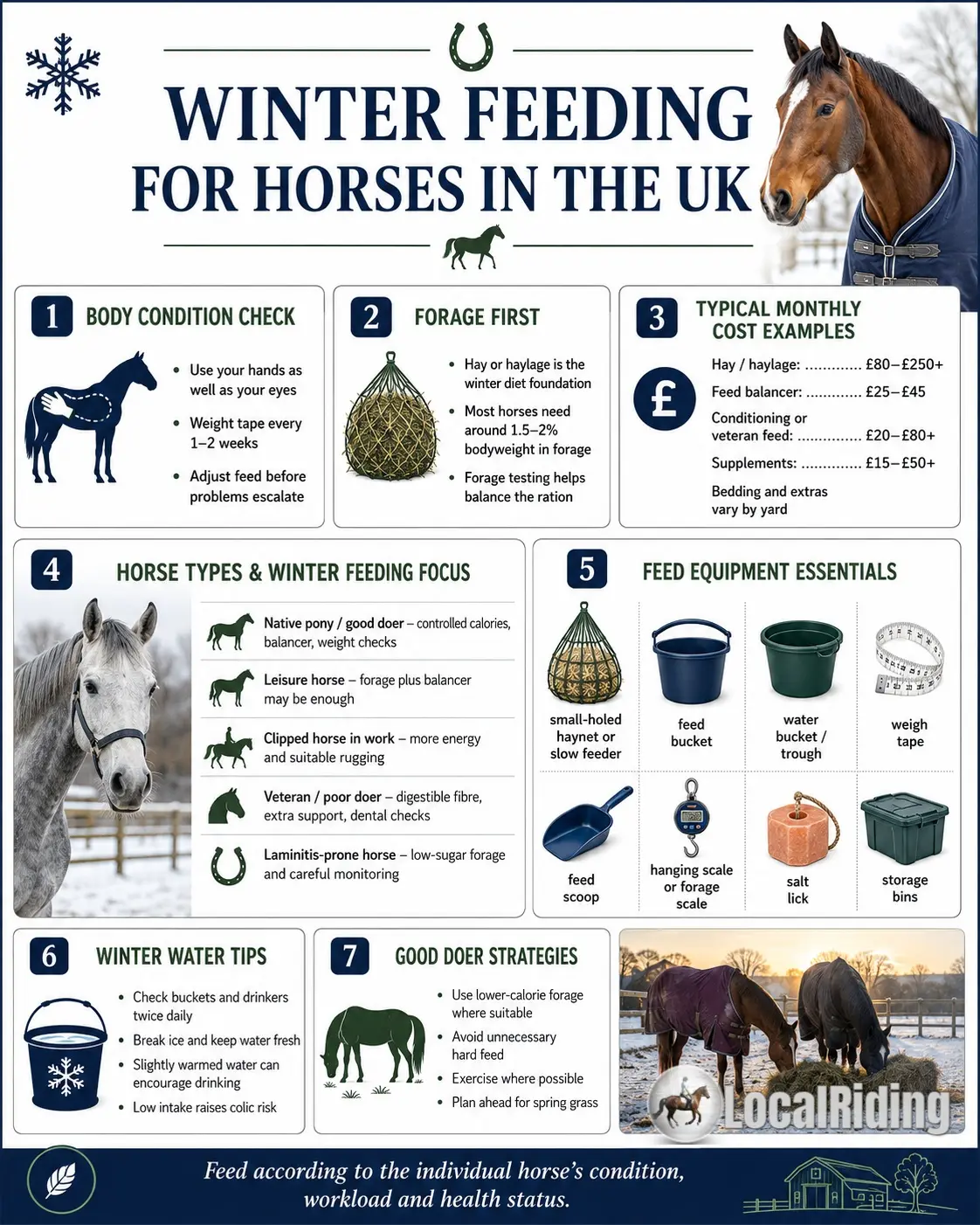 Winter feeding for horses in the UK infographic: body condition checks, forage first, typical monthly costs, horse types and feeding focus, feed equipment essentials, winter water tips and good doer strategies
Winter feeding for UK horses at a glance — body condition, forage, costs, horse types, equipment, water and good-doer strategies.
Before changing your horse’s feed, assess their body condition. Winter coats and rugs can hide weight gain or weight loss, so use your hands as well as your eyes. Feel along the ribs, neck, shoulders, withers, back and quarters. You should usually be able to feel the ribs with light pressure but not see them prominently on a healthy leisure horse.
In the UK, body condition scoring is widely used to help owners assess whether a horse is underweight, ideal or overweight. The BHS describes a healthy fat covering as generally around 2.5–3 on its 0–5 scale unless a vet advises otherwise, while Blue Cross also uses a 0–5 system with 3 described as healthy. These scoring systems are useful because they encourage objective assessment rather than relying on appearance alone.
Winter Weight Monitoring Tips
- Use a weight tape every one to two weeks and record the result.
- Take side-on photographs monthly to compare condition over time.
- Remove rugs regularly to check for weight change, rubs, sweating or sores.
- Feel under the winter coat rather than relying on visual judgement.
- Adjust feed before weight gain or weight loss becomes extreme.
Good feeding is proactive. It is easier to prevent a horse becoming too thin or too fat than to correct a major problem halfway through winter.
Forage: The Foundation of Winter Feeding
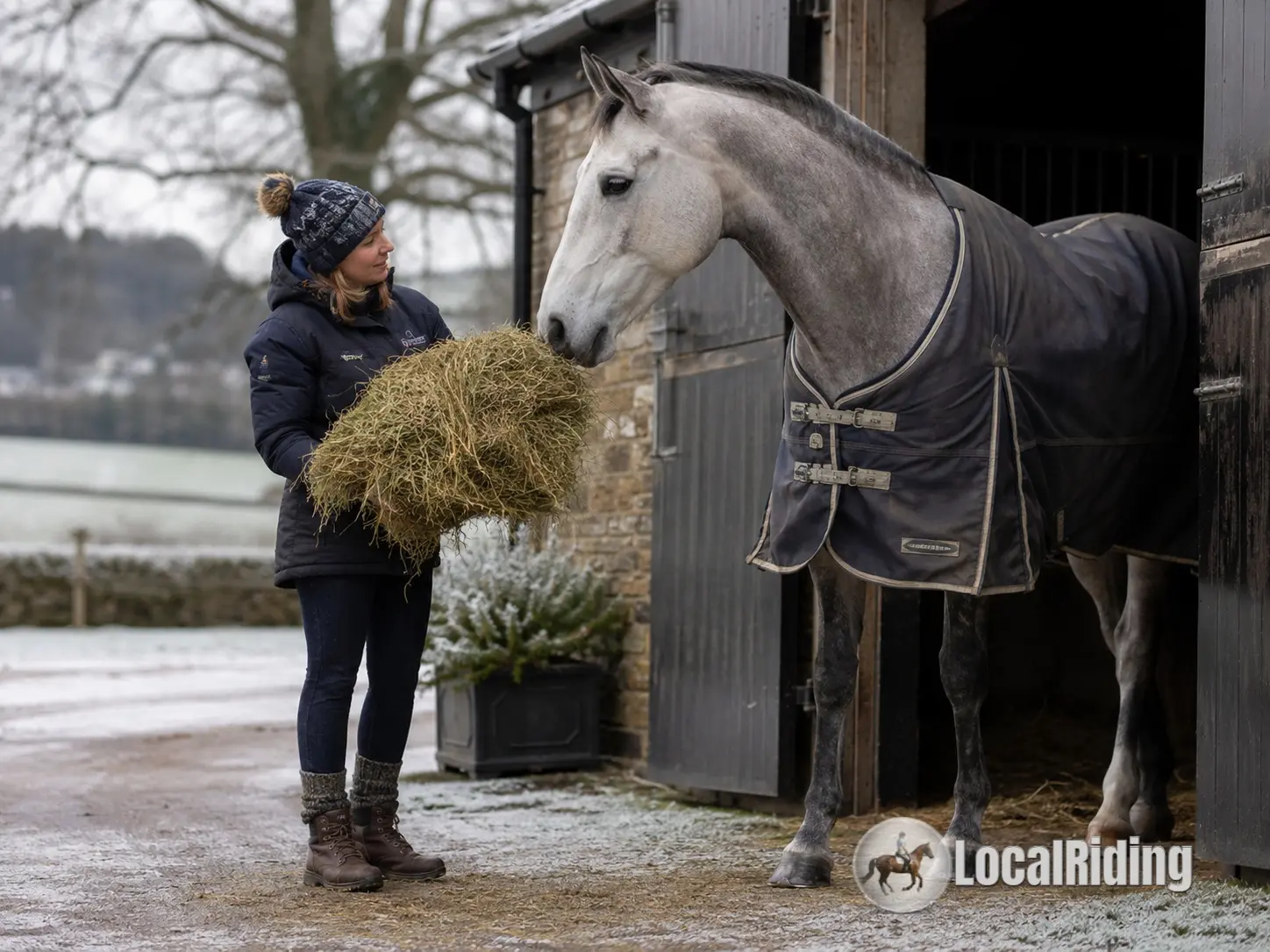 UK horse owner offering a section of hay to a rugged grey horse outside a stable on a frosty winter morning
Good-quality forage is the foundation of almost every horse's winter diet.
Forage should form the basis of almost every horse’s winter diet. Hay, haylage, grass and suitable forage replacers provide fibre, support gut health and help keep the horse occupied during long stabled periods. The BHS advises feeding good-quality forage and feeding according to bodyweight and workload, with feed changes made gradually over 10–14 days to reduce the risk of digestive upset.
As a general guide, many horses need around 1.5–2% of their bodyweight per day in forage on a dry matter basis, with adjustments for condition, workload, health and turnout. The old minimum of 1% bodyweight is an absolute floor rather than an ideal target for most horses. A 500kg horse may therefore need roughly 7.5–10kg of forage dry matter per day, but actual hay or haylage weights must account for moisture content.
Hay or Haylage?
Both hay and haylage can work well, but they are not identical. UK hay quality varies widely depending on grass type, cutting date, weather during baling and storage. Haylage is often more palatable and easier to make in damp UK summers, but it usually contains more water, so horses often need a higher fresh weight to receive the same dry matter intake.
Hay: Advantages and Considerations
- Usually lower moisture than haylage.
- Often suitable for good doers if lower in energy and sugar.
- Can be dusty or mouldy if poorly made or stored.
- May need soaking or steaming for horses with respiratory sensitivity.
Haylage: Advantages and Considerations
- Often more palatable, useful for poor doers and fussy eaters.
- Usually less dusty than dry hay.
- Can be higher in energy depending on the crop.
- Must be stored correctly and used within the recommended time once opened.
- Not all haylage suits laminitis-prone or overweight horses.
If you are feeding a horse with laminitis risk, equine metabolic syndrome, obesity, recurrent colic, ulcers or respiratory disease, forage choice matters even more. A forage analysis can help you understand energy, protein, sugar, starch and mineral levels, allowing the ration to be balanced more accurately.
Forage Testing: Why It Is Worth Considering
Forage testing is still underused by many UK horse owners, but it can make winter feeding far more accurate. Two bales that look similar can differ significantly in energy, sugar, protein and mineral content. Without analysis, owners often guess — and guessing can lead to weight gain, weight loss or nutritional gaps.
A forage analysis is particularly useful for:
- laminitis-prone horses and ponies;
- native breeds and good doers;
- poor doers and veterans;
- competition horses in winter work;
- yards buying large quantities from one supplier;
- owners wanting to choose the right balancer or supplement.
Testing helps you decide whether your forage provides enough energy, whether it needs supplementing, and whether sugar levels are appropriate for your horse. It also helps avoid unnecessary hard feed.
Does Your Horse Need Hard Feed in Winter?
Many leisure horses in the UK do not need a traditional concentrate feed in winter. If they are maintaining condition on forage, are not in hard work and have no special health requirements, adding a large bucket feed can create more problems than it solves.
The BHS notes that many leisure horses do well on a forage-based diet, but because it is difficult to know exactly what vitamins and minerals they are receiving unless forage is tested, a balancer or vitamin and mineral supplement may be useful.
When a Balancer May Be Enough
A feed balancer is often suitable for horses and ponies that need vitamins, minerals and quality protein without extra calories. This is especially useful for good doers, native ponies, cobs, horses on restricted grazing and those that gain weight easily.
When Extra Calories May Be Needed
Some horses do need more than forage and a balancer during winter. This may include:
- veteran horses struggling to maintain weight;
- horses in medium to hard work;
- clipped horses working regularly;
- poor doers;
- horses living out in exposed conditions;
- horses recovering from illness or weight loss;
- mares in late pregnancy or lactation, under veterinary or nutritionist guidance.
For these horses, choose high-fibre, oil-based or conditioning feeds rather than simply increasing cereals. Large starch-heavy feeds can increase the risk of digestive upset and may make some horses sharper. Feed little and often, and split larger rations into multiple small meals.
[[winter-feeding-calculator]]
Feeding Good Doers, Cobs and Native Ponies in Winter
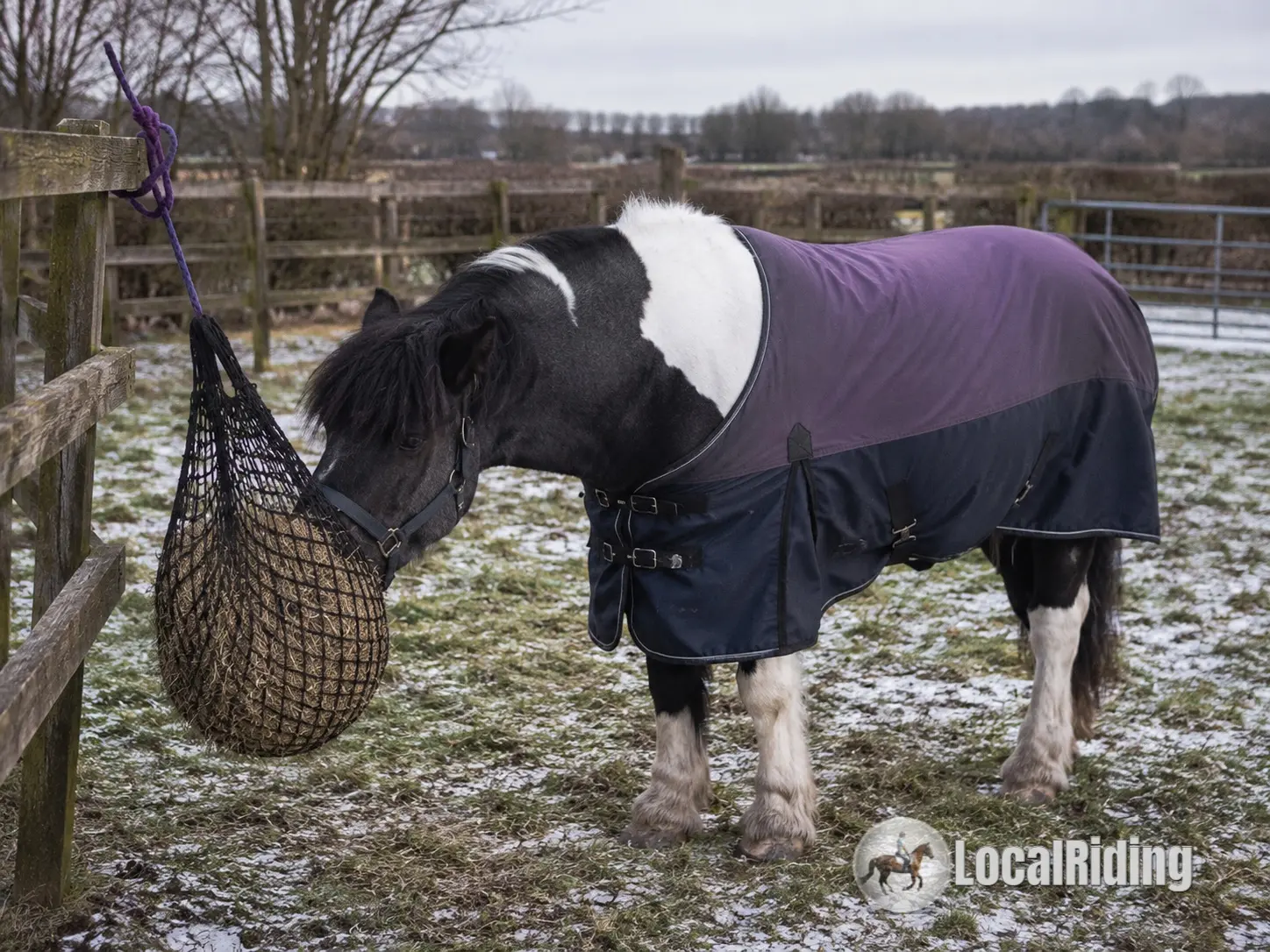 Rugged cob eating from a small-holed haynet in a frosty winter paddock to slow intake
Small-holed haynets and slow feeders extend eating time for good doers and native ponies.
Many UK horse owners are managing good doers rather than poor doers. Native breeds, cobs and some warmbloods can maintain or gain weight through winter, especially if rugged heavily, fed ad lib rich forage and given unnecessary hard feed.
Winter can be a useful time for overweight horses to lose a little condition gradually and safely before spring grass arrives. However, weight loss must be managed carefully. Starving a horse or leaving them without forage for long periods is not appropriate and may increase the risk of gastric ulcers, stress and stereotypic behaviour.
Practical Strategies for Good Doers
- Use lower-calorie forage where possible.
- Consider soaking hay to reduce water-soluble carbohydrates if advised.
- Use small-holed haynets or slow feeders to extend eating time.
- Feed a balancer rather than high-calorie mixes.
- Avoid unnecessary rugs on unclipped, overweight horses.
- Keep horses moving through turnout, hacking, groundwork or arena work.
- Monitor body condition every two weeks.
- Plan early for spring grass and laminitis risk.
Laminitis-prone horses can still be at risk in winter, especially during periods of sunny frosty weather, on stressed grass, or if they remain overweight. Seek veterinary and nutritionist advice for horses with a history of laminitis, equine metabolic syndrome or Cushing’s disease/PPID.
Feeding Poor Doers and Veterans in Winter
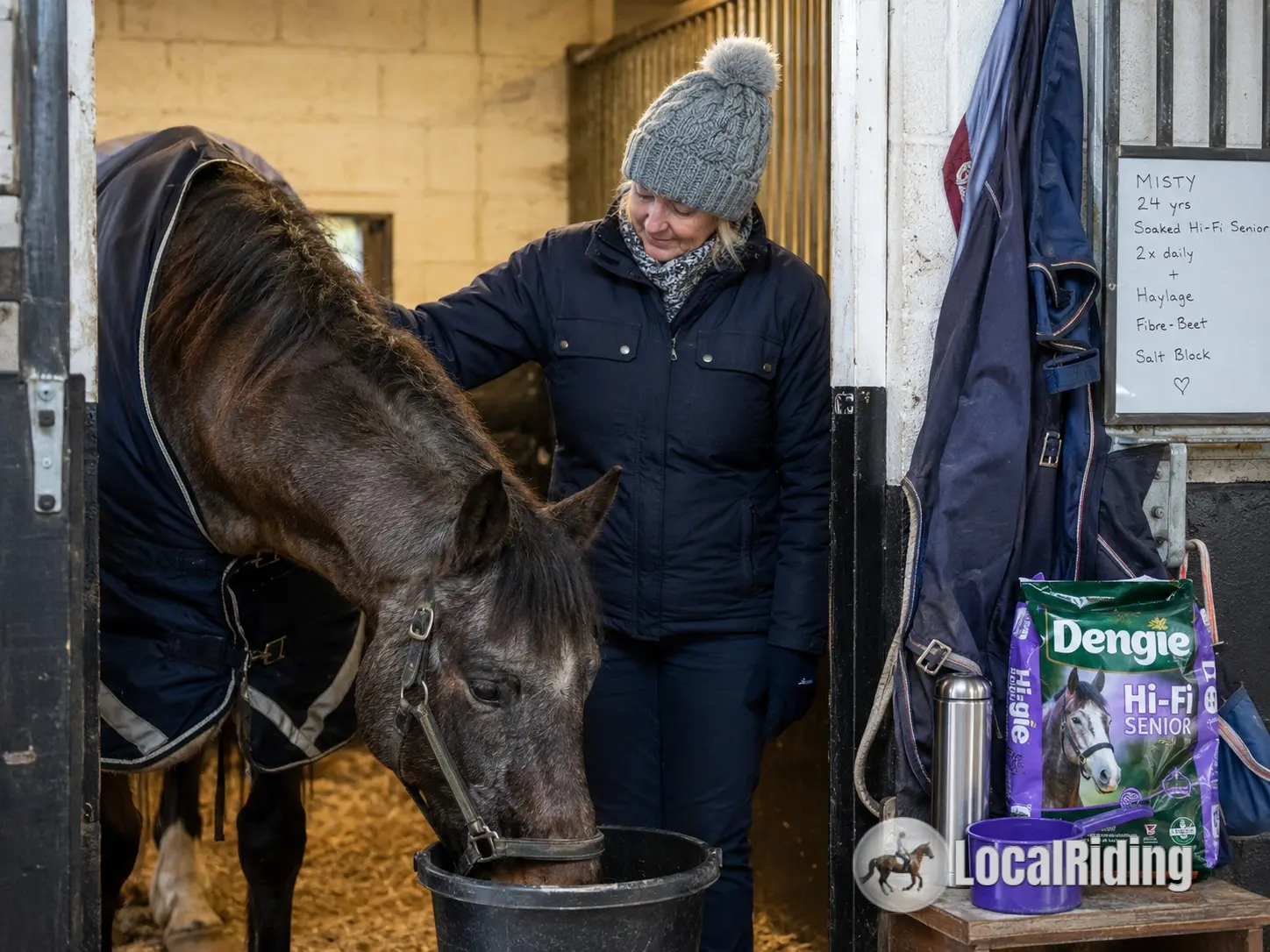 Owner feeding a soaked senior bucket feed to a rugged veteran horse in a stable in winter
Veterans and poor doers often need soaked, digestible fibre feeds and closer winter monitoring.
Poor doers and older horses need closer monitoring in winter because weight loss can happen gradually under thick coats and rugs. Dental problems, reduced digestive efficiency, arthritis, social stress, worm burden or underlying disease may all contribute to poor condition.
Before simply adding more feed, check the basics:
- When were the horse’s teeth last checked?
- Is the horse able to chew hay properly?
- Is the horse being bullied away from forage in the field?
- Is the horse warm, dry and sheltered?
- Is the worming programme based on testing and veterinary advice?
- Could pain, PPID, ulcers or another condition be involved?
Useful Feeding Options for Horses Losing Condition
- Good-quality haylage or more digestible forage.
- High-fibre mashes.
- Unmolassed beet pulp, soaked correctly.
- Chopped fibre feeds.
- Oil or high-oil feeds introduced gradually.
- Veteran feeds designed for older horses.
- Forage replacers for horses with poor teeth.
Veterans with poor teeth may struggle with long-stem hay or haylage. In these cases, soaked fibre feeds, grass nuts, hay replacer cubes or veteran mashes may be needed. Always introduce changes gradually and ensure the horse can eat comfortably.
Water: The Overlooked Winter Essential
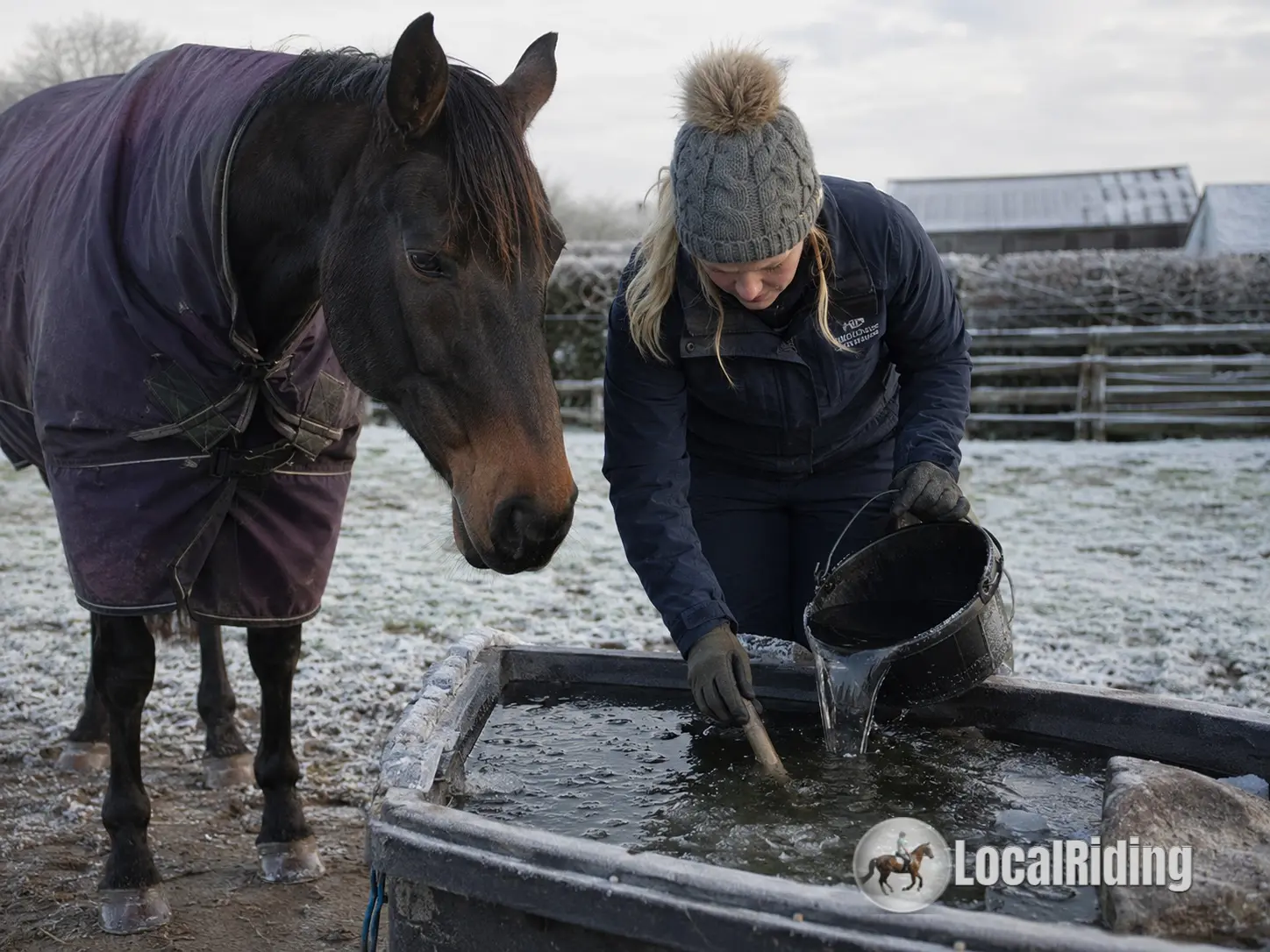 UK horse owner breaking and removing ice from a frozen water trough beside a rugged horse in winter
Check water at least twice daily in freezing weather and remove ice to keep horses drinking.
Fresh water is just as important in winter as it is in summer. Horses may drink less in cold weather, especially if water is very cold or frozen. Blue Cross warns that horses tend to drink less in winter, which increases the risk of impaction colic, and recommends regular water checks, multiple water sources and warmer water where practical.
Winter Hydration Tips
- Check buckets, troughs and automatic drinkers at least twice daily during freezing weather.
- Break and remove ice rather than leaving it floating in the bucket.
- Offer slightly warmed water where possible.
- Use insulated buckets or place buckets in sheltered areas.
- Provide more than one water source for horses living out.
- Monitor droppings; very dry droppings may indicate reduced water intake.
- Use soaked feeds or mashes if suitable for the horse.
Automatic drinkers can freeze, and because you cannot easily see how much the horse has drunk, they should be checked carefully. Some owners prefer buckets in very cold weather because intake is easier to monitor.
Salt and Electrolytes in Winter
Many owners think of electrolytes only in summer, but salt remains important in winter. Horses still need sodium and chloride, and some will not consume enough from forage and feed alone. A plain salt lick or a small amount of salt in feed can help encourage drinking, although individual requirements vary.
Horses in regular work, clipped horses, hunters and competition horses may still sweat in winter, especially under rugs or during fast work. These horses may need additional electrolyte support, but products should be used according to workload, sweat loss and manufacturer guidance.
Winter Feeding for Horses in Work
Workload is a major factor in winter feeding. A lightly hacked horse may need little more than forage and a balancer, while a hunter, eventer, dressage horse or showjumper in regular training may need more calories, protein and recovery support.
Light Work
For hacking, light schooling and low-level leisure riding, many horses do well on forage plus a balancer. Keep an eye on weight, energy levels and topline.
Medium Work
Horses schooling several times per week, competing occasionally or hunting lightly may need extra digestible fibre, oil or a performance balancer. Avoid overfeeding starch if the horse is already energetic.
Hard Work
Horses in hard work may need a carefully structured ration with adequate energy, protein, vitamins, minerals and electrolytes. This is where professional nutrition advice is valuable, particularly if the horse is also clipped, travelling or stabled more.
Rugging and Feeding Work Together
Rugging affects winter feeding because a cold horse uses more energy to stay warm, while an over-rugged horse may conserve too much energy and gain weight. A clipped horse usually needs more protection from wind and rain than an unclipped native pony with a thick winter coat.
Rugs should be removed regularly so the horse’s body condition and skin can be checked. GOV.UK’s welfare code also advises that rugs and hoods should be correctly fitted and regularly removed so condition and general health can be checked, ideally daily.
Do not use feed to compensate for poor rugging or lack of shelter. Equally, do not assume every horse needs heavy rugs and extra feed. Management should be based on the individual.
Supplements: What May Be Useful in Winter?
Supplements should be targeted, not added randomly. If a horse is already receiving a fortified feed at the recommended amount, adding several supplements may be unnecessary and expensive.
Common Winter Supplements
- Vitamin and mineral balancer: Useful when feeding forage-only or low-calorie diets.
- Joint supplements: Sometimes used for older horses or those feeling stiff in cold weather.
- Digestive support: May help during feed changes, travel, stress or reduced turnout.
- Hoof supplements: Useful for horses with poor horn quality, but results take months.
- Oil or omega supplements: Can support condition and coat quality.
For horses with medical conditions, speak to your vet or a qualified equine nutritionist before adding supplements, especially if the horse is on medication.
How to Change Feed Safely
Winter often brings changes: new hay, different haylage, less grass, more stabling or extra bucket feed. The horse’s gut needs time to adapt. The BHS recommends making feed changes gradually, ideally over 10–14 days, to reduce the risk of colic.
Safe Feed Change Rules
- Introduce new forage gradually where possible.
- Increase bucket feed slowly, not suddenly.
- Split larger feeds into smaller meals.
- Keep starch and sugar appropriate for the horse.
- Monitor droppings, appetite and behaviour during changes.
- Do not make several major changes at once.
Practical Winter Feeding Plans by Horse Type
Native Pony or Good Doer
Prioritise controlled forage, a low-calorie balancer, salt, exercise and careful weight monitoring. Avoid unnecessary mixes, heavy rugging and unrestricted rich haylage unless advised.
Leisure Horse in Light Work
Base the diet on good-quality forage, with a balancer or vitamin and mineral supplement if needed. Add hard feed only if weight, energy or workload justifies it.
Clipped Horse in Regular Work
Provide suitable rugs, adequate forage and extra calories if condition drops. Digestible fibre and oil-based feeds are often preferable to large cereal meals.
Veteran Horse
Check teeth, weight and comfort. Use easily chewed fibre sources, veteran feeds or forage replacers if long-stem forage becomes difficult. Monitor closely under rugs.
Laminitis-Prone Horse
Manage weight carefully, choose appropriate low-sugar forage, consider forage testing, avoid unnecessary hard feed and involve your vet or nutritionist if there is a history of laminitis, EMS or PPID.
Poor Doer
Increase forage quality and availability first, then add high-fibre conditioning feeds, oil or soaked feeds as appropriate. Rule out dental, worming, pain or disease issues if weight loss continues.
Common Winter Feeding Mistakes
- Feeding more hard feed instead of more forage: Fibre should usually be increased first.
- Overfeeding good doers: Many native ponies and cobs gain weight through winter if over-rugged and overfed.
- Ignoring water intake: Frozen or icy water can increase the risk of dehydration and impaction colic.
- Changing feeds suddenly: Sudden changes can upset gut bacteria and increase colic risk.
- Not checking under rugs: Weight gain, weight loss, rubs and skin problems can be missed.
- Assuming haylage is always better: It may be too rich for some horses.
- Not budgeting for forage: Hay and haylage use rises significantly during poor weather and restricted turnout.
When to Ask for Professional Help
Speak to your vet or a qualified equine nutritionist if your horse is losing weight, gaining too much weight, has laminitis risk, is elderly, has dental problems, suffers from recurrent colic, has ulcers, has metabolic disease or needs a performance ration. Feeding advice should always be tailored to the individual horse.
Also seek veterinary advice promptly if your horse stops eating, shows signs of colic, passes very dry or reduced droppings, drinks much less than usual, becomes dull, or rapidly loses condition.
Final Thoughts
Winter feeding in the UK is about balance. Most horses need forage first, clean water, steady routines and regular condition checks. Some need extra calories; others need careful restriction. Some thrive on hay and a balancer; others require haylage, soaked fibre, veteran feeds or specialist support.
The best winter feeding plan is not the biggest bucket feed. It is the plan that keeps your horse healthy, hydrated, comfortable and at an appropriate weight through cold, wet and changeable British weather.
Debbie Irwin
Livery Yard Manager & Equestrian Professional
Debbie has run professional showing yards and mixed livery yards in Lincolnshire and Essex for over 30 years. She has competed and taught at various levels. She writes about practical horse health, yard life, livery and everyday horse health and management.
Support Debbie on Ko-fi ☕Found this guide helpful? LocalRiding is run independently without ads. If you'd like to chip in towards the site's upkeep, you can buy Debbie a hot drink on a cold day on Ko-fi, she'll really appreciate it.