
Horse health
Stable Management for UK Horse Owners: Daily Routines and Best Practice
Good stable management forms the backbone of every well-run yard. This comprehensive guide covers daily routines, mucking out techniques, and best practice for UK horse owners.
By Debbie Irwin · 30 March 2026 · 11 min read
In-depth, practical stable management advice for UK horse owners, sharers, loaners and yard staff.
Why Good Stable Management Matters
Good stable management is the foundation of horse welfare. A clean, safe and well-run yard helps reduce the risk of illness, injury, stress, respiratory problems, hoof issues and avoidable behaviour problems. In the UK, where horses may spend more time stabled during wet winters, dark evenings and periods of restricted turnout, daily management has a direct impact on equine health and wellbeing.
Stable management is not only about mucking out and filling haynets. It includes observation, feeding, hydration, turnout planning, bedding choice, ventilation, biosecurity, record keeping, safety checks and recognising when your horse is not quite right. A well-managed stable should support your horse's natural needs as far as possible: access to forage, fresh water, clean air, companionship, movement and a predictable routine.
In the UK, horse owners and keepers also have a legal duty of care. Anyone responsible for a horse must take reasonable steps to meet that horse's welfare needs, including suitable environment, diet, ability to express normal behaviour, appropriate companionship and protection from pain, suffering, injury and disease.
The Value of a Consistent Routine
Horses are prey animals and thrive on routine. Predictable feeding, turnout, exercise and rest periods help horses feel secure. Sudden changes can increase stress, especially for sensitive horses, older horses, competition horses and those on box rest.
A consistent routine does not mean every day must be identical, but the key events should be reliable. For example, horses should know when forage arrives, when they are likely to be turned out and when the yard settles for the evening. This can reduce anxiety-related behaviours such as box walking, weaving, door kicking, companion dependence or constant calling.
Good routines also help horse owners. When daily checks happen in the same order, it is easier to spot changes in appetite, droppings, water intake, movement, mood or general condition.
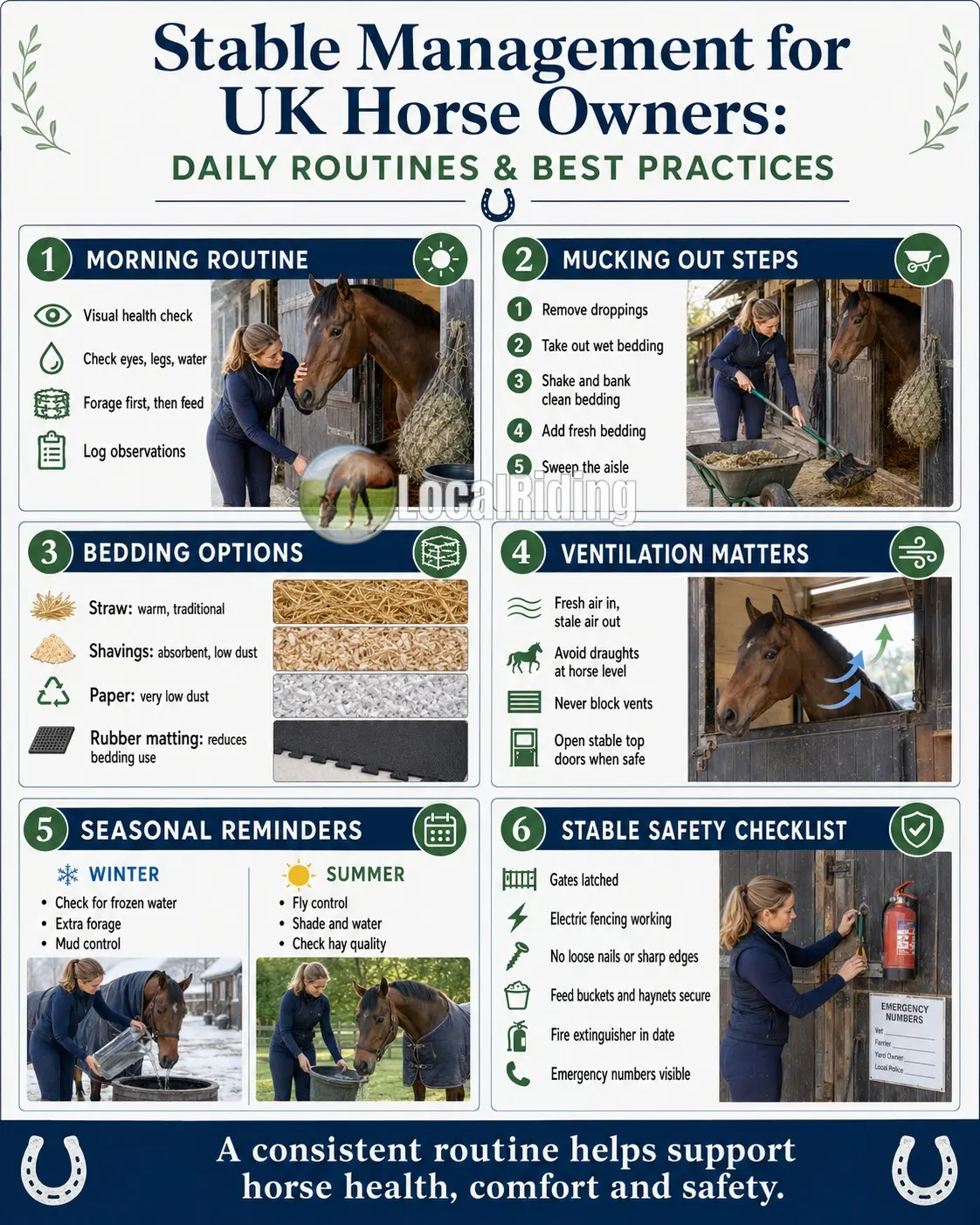 Stable management for UK horse owners infographic: morning routine, mucking out steps, bedding options, ventilation, seasonal reminders and a stable safety checklist
Stable management at a glance — daily routines, mucking out steps, bedding options, ventilation, seasonal reminders and a safety checklist.
Morning Stable Routine
The morning routine should combine practical yard work with a basic health assessment. Before opening the stable door, pause and observe the horse. A few seconds of quiet observation can reveal important information.
Morning Checklist
- Observe from outside the stable: Is your horse bright, alert and standing normally? Are they interested in you and their breakfast?
- Check behaviour: Look for signs of dullness, agitation, sweating, pawing, kicking at the belly, lying down unusually or not eating.
- Inspect the stable: Check droppings, urine patches, disturbed bedding, signs of rolling, damaged fittings or uneaten forage.
- Check water: Buckets and drinkers should be clean and working. In winter, check for ice. In summer, check that water hasn't become warm, dirty or contaminated.
- Check legs and body: Feel for heat, swelling, cuts, tenderness, rubs from rugs, loose shoes or signs of mud fever.
- Feed forage first: Forage should form the basis of your horse's diet. Providing hay or haylage rather than or before hard feed helps support digestive health.
- Record anything unusual: A yard diary or horse tracking app can be useful for seeing trends and noting reduced appetite, changes in droppings, medication, farrier visits, training and exercise plans.
Small changes matter. A horse that leaves feed, drinks significantly more or less than usual, stands differently, seems unusually quiet or has fewer droppings may be showing early signs of a problem.
Evening Stable Routine
The evening routine is your final opportunity to ensure your horse is comfortable, fed, watered and safe for the night. This is especially important during winter when horses may be stabled for longer periods.
Evening Checklist
- Repeat the health check: Look for injuries, swelling, lameness, signs of colic or changes in behaviour.
- Top up water: Horses should always have access to clean drinking water.
- Provide enough forage: Avoid long periods without fibre. Use suitable haynets or hay bars, use floor feeding or slow feeders depending on your horse and yard setup.
- Check bedding: Skip-out. Remove fresh droppings and wet areas if needed, especially for horses prone to thrush or respiratory problems.
- Check rugs: Rugs should be dry, correctly fitted and appropriate for your horse's coat, clipping status, age, condition and the weather.
- Secure the yard: Close the gates, check stable bolts, switch off lights and electrics, secure feed rooms and confirm emergency contact details are known or available.
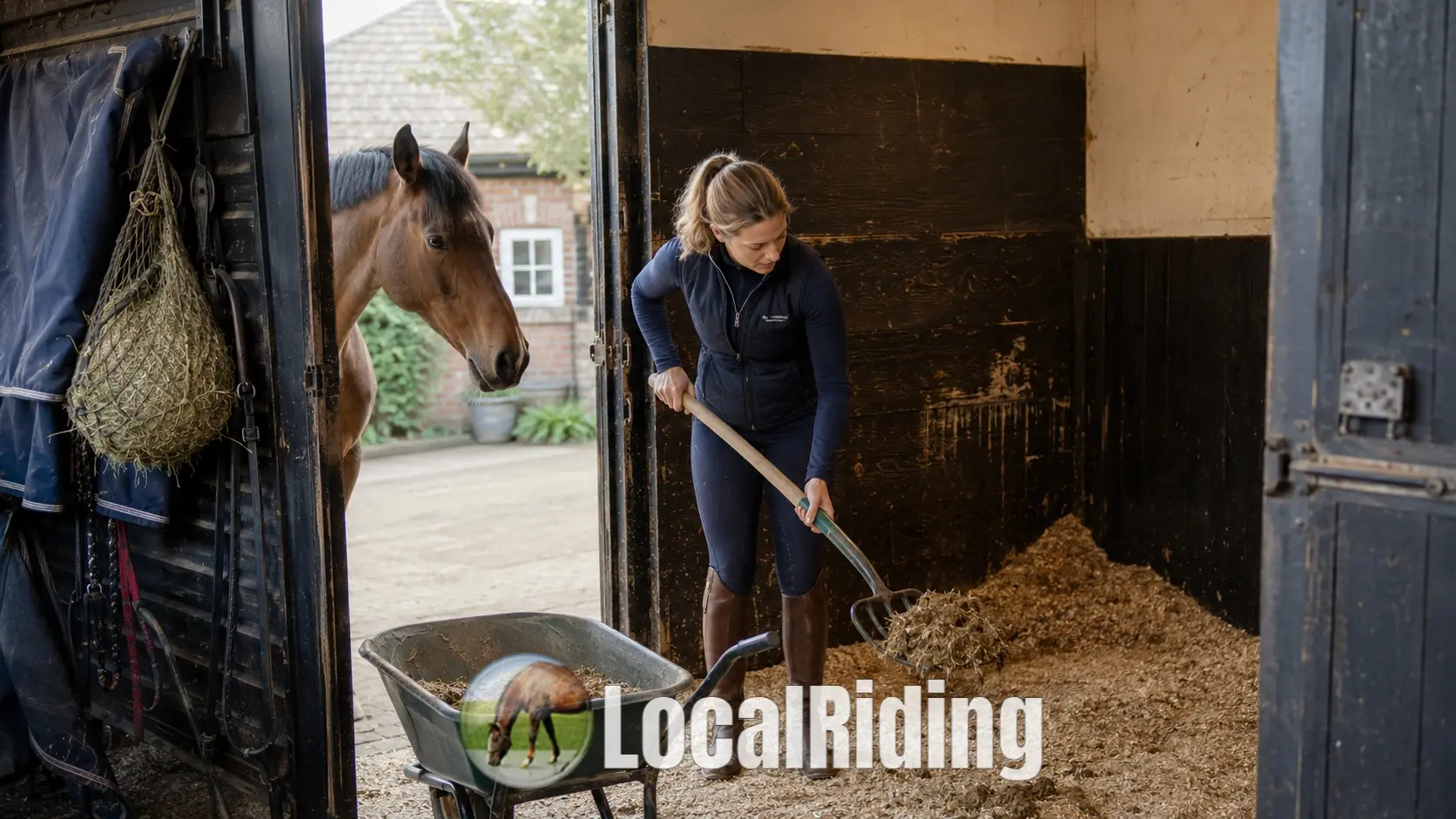 Horse owner mucking out a stable, forking soiled bedding into a wheelbarrow while a bay horse looks on from the doorway
Remove droppings and wet bedding first, then lift and shake out the clean bedding to keep waste and costs down.
Mucking Out: Hygiene, Comfort and Efficiency
Mucking out is one of the most important daily jobs on a UK yard. A clean bed supports hoof health, reduces ammonia build-up, helps protect your horse's lungs and gives your horse a comfortable place to rest.
Full Muck Out Method
- Remove droppings: Use a fork or shovel to remove all solid waste first.
- Remove wet bedding: Dig out saturated areas, particularly where urine collects.
- Lift and shake clean bedding: Separate reusable clean bedding from waste and droppings to reduce costs.
- Allow the floor to dry: If possible, leave the floor exposed to dry while the horse is turned out or tied safely elsewhere.
- Disinfect when needed: Use stable-safe disinfectant periodically, especially between horses or after illness.
- Re-lay the bed: Spread clean bedding evenly and create banks if appropriate.
- Sweep the doorway and aisle: Tidy walkways, sweep up mess, pick up droppings, reduce slip risks and improve yard hygiene.
A full muck out is generally the best option for horses stabled for long periods, horses with respiratory conditions, very wet horses and yards aiming for the highest hygiene standards.
Deep Litter and Semi-Deep Litter Systems
Some UK yards use deep litter or semi-deep litter systems, particularly in winter. These systems can reduce daily labour and create a warm base, but they must be managed carefully. Droppings should still be removed daily, fresh bedding added regularly and ammonia levels monitored. If the stable smells strongly of urine, the system is not working well.
Deep litter is usually unsuitable for horses with equine asthma, allergies, hoof infections or very wet habits. It also requires a proper full strip-out at regular intervals.
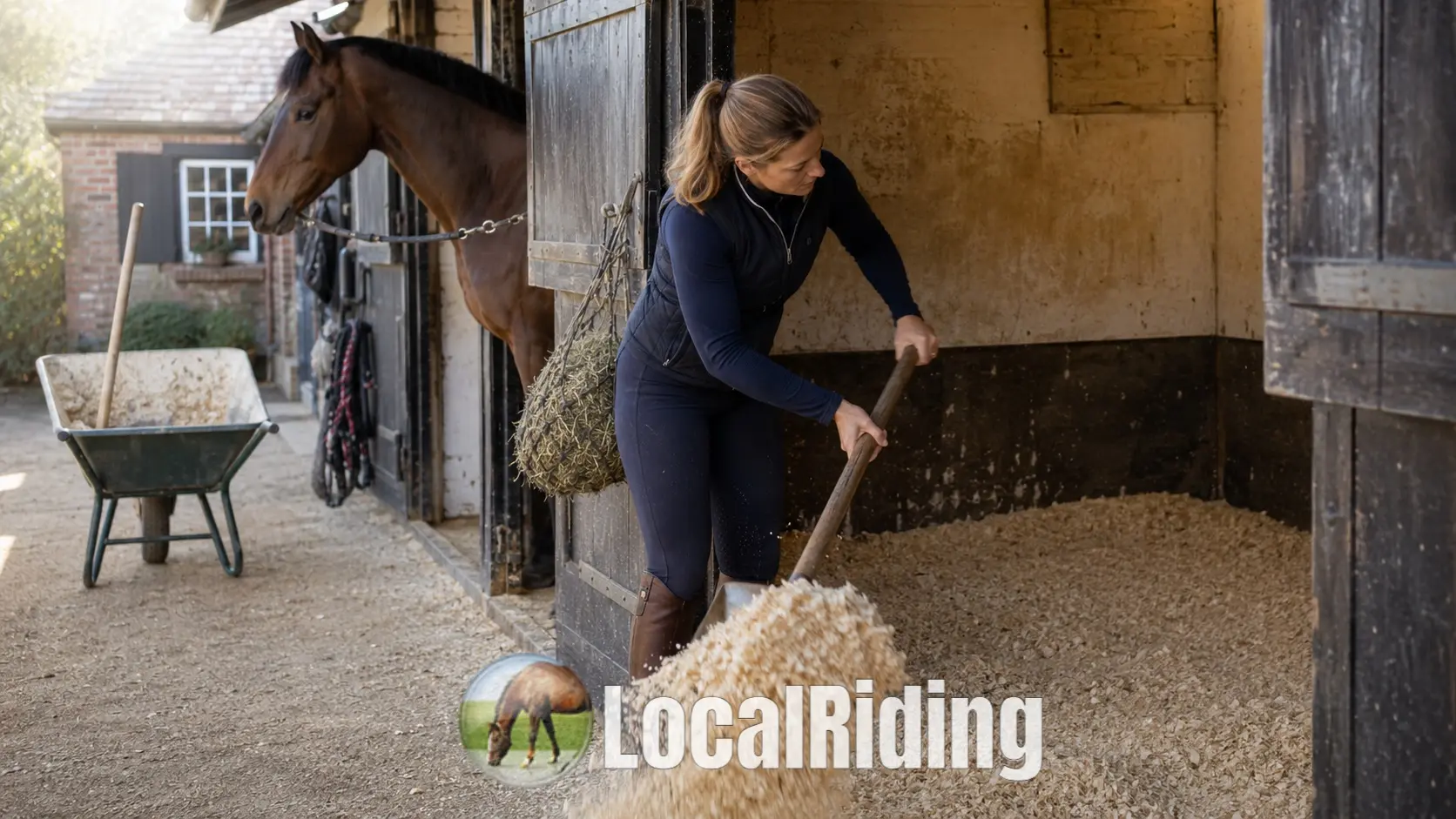 Horse owner laying a fresh shavings bed in a stable with a bay horse tied outside beside a full haynet and wheelbarrow
Choose bedding to suit the horse, stable and yard — good-quality, dust-extracted shavings are absorbent and easy to manage.
Choosing Bedding for UK Stables
Bedding choice affects cost, mucking-out time, dust levels, warmth, absorbency, disposal and horse comfort. The best bedding depends on the horse, stable design, storage space, local supply and muck-heap arrangements.
Straw
Straw is traditional, warm and often economical. It creates a deep, inviting bed and is widely available in many rural areas. However, poor-quality straw can be dusty and some horses eat too much of it. It is usually less absorbent than shavings and may not be ideal for horses with respiratory issues.
Wood Shavings
Good-quality, dust-extracted shavings are popular on UK yards. They are absorbent, easy to muck out and suitable for many horses. They can be more expensive than straw, but may reduce waste when managed well.
Paper and Cardboard
Paper and cardboard bedding can be very low dust and useful for horses with respiratory sensitivities. It is often absorbent and easy to store, although it can become heavy when wet and may not suit every muck-heap system.
Wood Pellets
Wood pellets are increasingly used in UK stables. They are compact to store, highly absorbent and can be economical once the bed is established. They require correct preparation with water before use and careful daily management.
Rubber Matting
Rubber matting can reduce bedding use and provide cushioning, but it is not a replacement for bedding altogether. Most horses still need a dry lying area. Mats must be fitted well, cleaned regularly and laid on a suitable level surface with adequate drainage.
Ventilation and Respiratory Health
Ventilation is one of the most important aspects of stable design and management. Horses produce moisture, heat and ammonia, while bedding and forage can contribute dust and mould spores. Poor ventilation increases the risk of coughing, irritation and respiratory disease.
A good stable should allow fresh air to enter and stale air to leave without creating a direct draught at horse level. Opening top doors and windows, keeping vents clear and avoiding over-sealing stables in winter can all help. Popular barn-type stables should open barn doors wide for part of the day to allow fresh air to circulate through. A stable that feels warm but smells stale is not healthy.
Ventilation must be balanced with comfort. Horses should not stand in direct cold draughts, but they do need clean air. If a clipped or older horse is cold, use appropriate rugging rather than blocking vents.
Forage, Feeding and Water Management
Most horses need a forage-based diet; hay, haylage or grass should form the bulk of their intake. Stable management should support natural trickle feeding wherever possible. Long periods without forage can increase your horse's stress and may contribute to digestive problems.
Haynets should be tied safely and checked for damage. Floor feeding may encourage a more natural eating position, but it is not always practical for messy horses or those on certain bedding types. Slow feeders can be useful for good doers, but they should be introduced carefully and checked for safety.
Water is just as important as feed. Buckets should be scrubbed regularly, automatic drinkers checked daily and frozen supplies dealt with promptly in winter. Reduced water intake can increase the risk of impaction colic, particularly when horses are eating dry forage.
Turnout and Movement
Even the best stable does not replace turnout and movement. Horses are designed to move, graze and interact with other horses. UK turnout can be challenging during wet winters, but daily movement should be maintained wherever possible through turnout in a paddock, in-hand walking, ridden exercise, regular groundwork or schooling time in a suitable arena.
Where turnout is restricted, stable enrichment becomes more important. Forage variety, treat balls, safe licks, mirrors for suitable horses and regular interaction can help reduce boredom. However, enrichment should not be used as a substitute for turnout when turnout is safely available.
Seasonal Stable Management in the UK
Winter
- Check water buckets and drinkers for ice at least twice daily.
- Provide adequate forage (hay) to support warmth and gut health.
- Manage mud around gateways and stable entrances to reduce slipping, mud fever and thrush risk.
- Check rugs daily for leaks, rubs, slipping and correct weight.
- Keep ventilation open even in cold weather.
- Use lighting safely during dark mornings and evenings.
Spring
- Monitor grass growth, especially for good doers, native breeds and horses prone to laminitis.
- Review body condition after winter.
- Clean and store heavy winter rugs properly.
- Plan field rotation and repair poached areas.
Summer
- Increase fly control measures, including fly rugs, masks, repellents and good muck-heap management.
- Check water more frequently during hot weather.
- Provide shade and avoid intense exercise in the hottest part of the day.
- Keep stables cool, airy and clean.
Autumn
- Prepare for winter by checking drainage, lighting, bedding storage and rug repairs.
- Review forage supplies and hay quality.
- Plan turnout arrangements before fields become waterlogged.
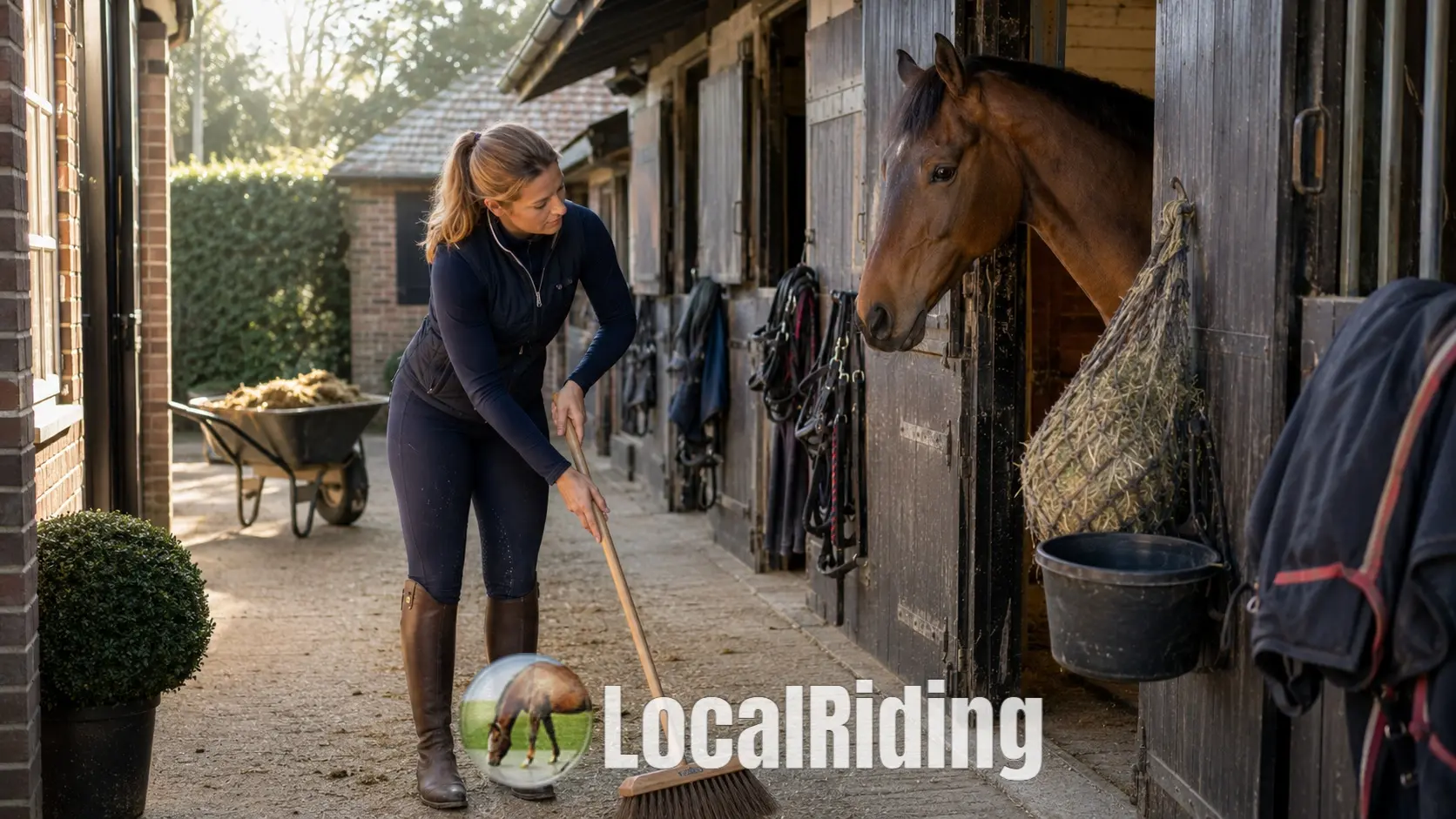 Horse owner sweeping a tidy stable yard aisle while a bay horse watches over the stable door
A swept, tidy yard is safer and healthier — keep walkways clear of droppings, bedding and trip hazards.
Stable Yard Hygiene, Muck Heaps and Biosecurity
A tidy yard is not just more pleasant; it is safer, healthier and demonstrates good management. Sweep walkways, keep tools stored properly and prevent hay, bedding and equipment from blocking exits. Wet bedding, droppings and spilled feed attract flies and vermin, so all waste should be managed carefully.
Muck heaps should be positioned away from stables, feed rooms and watercourses where possible. They should be managed to reduce run-off, odour and flies, and forked up properly. Access by horses or dogs should be prevented.
Biosecurity is also important on livery yards, competition yards and busy private yards. New horses should be monitored carefully, shared equipment should be cleaned and horses with infectious symptoms such as nasal discharge, fever or coughing should be isolated promptly and assessed by a vet. The yard manager should set rules and update and amend them as necessary depending on local conditions. Stable yard clients should follow the rules to keep their horse(s) safe and healthy.
Stable Safety Checklist
Run through your own yard safety check daily and assist yard managers to carry out a more thorough inspection weekly.
- Stable doors, bolts and hinges secure
- No loose nails, sharp edges, broken boards or protruding metal
- Water buckets and feed bowls clean and safe
- Haynets tied safely and removed when damaged
- Electric cables, lights and heaters safely installed and protected
- Fire extinguishers accessible and in date
- Emergency contact numbers displayed clearly
- Headcollar and lead rope available in an emergency
- Yard walkways swept and free from trip hazards
- Gates and fencing checked before turnout
Record Keeping and Communication
Good records are especially valuable on livery yards where several people may care for the same horse. A simple yard diary can record feeding changes, turnout, exercise, farrier visits, worming, vaccinations, medication, injuries, saddle checks and behaviour changes. A horse tracking app can be useful to help you share your horse's history (worming, vaccinations, health issues, medication, etc.) with the yard manager, vet, or other equine professional.
Clear communication prevents mistakes. Feed charts should be updated, supplements labelled, emergency numbers visible and any special instructions written down. If your horse is on medication, the dose, timing and end date should be recorded clearly.
Common Stable Management Mistakes
- Over-rugging: Horses can overheat, especially if unclipped, overweight or in mild weather.
- Poor ventilation: Closing every window and top door can trap ammonia, dust and moisture.
- Inconsistent feeding: Sudden feed changes can upset your horse's digestive system.
- Ignoring water intake: Dirty, frozen or empty water buckets are a serious welfare issue.
- Leaving wet beds: Wet bedding can contribute to hoof problems, skin issues and ammonia build-up.
- Untidy, messy yards: Untidy tools, haynets and loose equipment, scrappy muck heaps and messy barns can all create avoidable hazards.
Final Thoughts
Stable management is a daily cycle of observation, care and many small decisions. The best stable yards are not necessarily the smartest or most expensive; they are the ones where horses are checked carefully and regularly, where beds are kept clean, the water is fresh, forage is available, air quality is good, help is available and routines are consistent.
For UK horse owners, good stable management must adapt to the seasons. Wet winters, rich spring grass, summer flies and autumn mud all bring different challenges. By planning ahead, working with the yard manager, keeping good records and responding quickly to changes in your horse's behaviour or health, you can create a sound stable environment that supports your horse's comfort, safety, health and long-term wellbeing.
Debbie Irwin
Livery Yard Manager & Equestrian Professional
Debbie has run professional showing yards and mixed livery yards in Lincolnshire and Essex for over 30 years. She has competed and taught at various levels. She writes about practical horse health, yard life, livery and everyday horse health and management.
Support Debbie on Ko-fi ☕Found this guide helpful? LocalRiding is run independently without ads. If you'd like to chip in towards the site's upkeep, you can buy Debbie a hot drink on a cold day on Ko-fi, she'll really appreciate it.