
Horse health
Preparing Your Horse for Winter: The Complete UK Horse Owner's Checklist
Get your horse ready for a British winter: health checks, rugging, clipping, turnout, stables, forage, water, hooves and emergency planning, with a month-by-month plan and printable checklist.
By Debbie Irwin · 22 March 2026 · 17 min read
British winters bring their own particular challenges for horse owners. Shorter days, persistent rain, muddy fields, freezing temperatures and unpredictable weather can all affect your horse's health, comfort and daily routine. But with a little preparation during autumn, you can make winter considerably easier for both of you.
Whether your horse lives out all year, spends winter in a stable or follows a mixture of turnout and stabling, preparing before the worst weather arrives is time well spent.
The key isn't simply keeping your horse warm. It's ensuring they have appropriate forage, fresh water, shelter, companionship, freedom to move and consistent daily care.
Some horses thrive throughout winter with minimal intervention. Others, particularly those that are elderly, underweight, clipped or managing health conditions, need more support.
This LocalRiding guide covers everything you should consider before winter arrives, from veterinary checks and rug repairs to winter grazing, stable management, feeding and emergency planning.
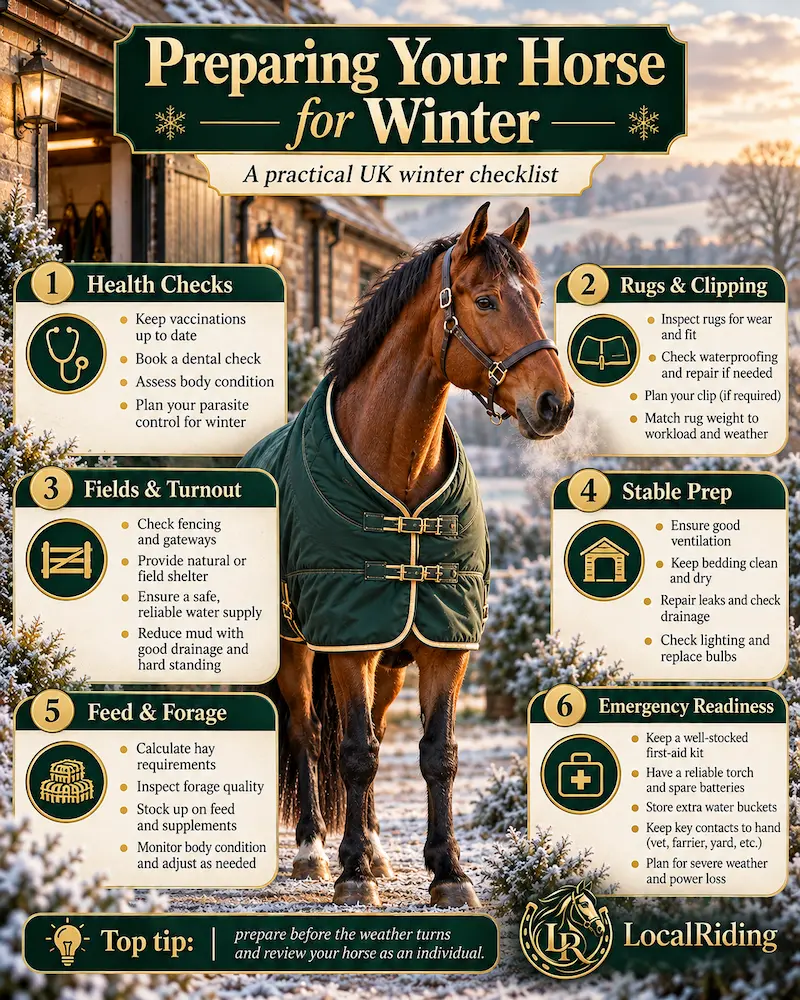 Preparing your horse for winter: a practical UK checklist infographic
1. Start with a Pre-Winter Health Check
Autumn is an excellent opportunity to review your horse's general health before colder weather makes everyday management more demanding.
A horse entering winter in good health and with an appropriate body condition is usually better placed to cope with seasonal changes.
Vaccinations
Check that your horse's vaccinations are up to date, particularly equine influenza and tetanus.
Vaccination intervals vary according to individual circumstances, veterinary recommendations and competition requirements.
Some governing bodies and venues have specific vaccination rules, so check these well before booking winter training or competitions.
If your horse's vaccination history is incomplete or has lapsed, ask your vet whether a new primary course is required.
Dental Care
Dental problems can affect a horse's ability to chew forage efficiently.
This becomes particularly important during winter when grazing may be limited and hay or haylage forms a greater proportion of the diet.
Arrange a dental examination if one is due, especially for horses that are losing condition, dropping partly chewed feed or showing difficulty eating.
Older horses may require more frequent checks and specially adapted forage.
Review Your Worm-Control Programme
Autumn is an important time to review parasite management, including the risks associated with encysted small redworm.
Unlike adult small redworms, encysted larvae can remain within the intestinal wall and aren't detected by an ordinary faecal worm egg count.
Historically, many horses received routine late-autumn or winter treatment. However, modern parasite-control guidance increasingly emphasises individual risk assessment and appropriate testing.
Discuss your horse's worming history, previous faecal egg counts, grazing management and potential need for testing or treatment with your vet or qualified wormer prescriber.
A small redworm blood test may help inform decisions for some lower-risk horses, but it's not appropriate as a stand-alone assessment for every horse.
Avoid giving worming products unnecessarily. Anthelmintic resistance is an important and growing concern.
Hoof and Farrier Assessment
Arrange routine farriery before weather conditions deteriorate.
Check for cracked hoof walls, loose shoes, thrush, abnormal wear or persistent sensitivity.
Your farrier can advise whether adjustments to trimming or shoeing are appropriate for your horse's winter workload and turnout conditions.
Body Condition Scoring
Assess your horse's body condition before winter and continue monitoring it throughout the season.
A horse that's already underweight may struggle to maintain condition in prolonged cold and wet weather.
However, an overweight horse or native pony may benefit from carefully managed, gradual seasonal weight loss.
For these horses, unnecessary additional feeding and heavy rugging can contribute to continued weight gain and metabolic health problems.
LocalRiding Tip: Use body condition scoring alongside a weigh tape or weighbridge where possible. Record results every few weeks so gradual changes don't go unnoticed beneath a thick winter coat.
2. Assess Whether Your Horse Actually Needs Rugging
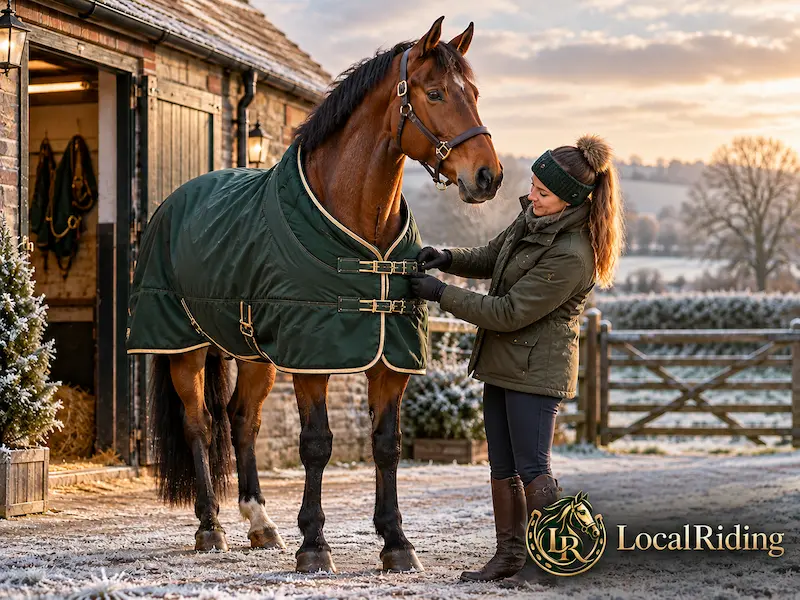 A horse owner checking the fit of a winter turnout rug outside the stable
One of the most common winter management mistakes is assuming every horse needs a thick rug as soon as temperatures fall.
Horses are naturally adapted to tolerate a range of outdoor conditions.
Their winter coat provides insulation by trapping air, while the digestion of fibre generates heat that contributes to maintaining body temperature.
Many healthy, unclipped horses, especially native breeds and cob types, cope well without rugs when they have sufficient forage and appropriate shelter.
Which Horses May Need Rugs?
Additional protection may be beneficial for:
- Fully or partially clipped horses.
- Elderly horses struggling to maintain condition.
- Horses that are underweight.
- Animals with certain health conditions.
- Fine-coated horses less adapted to prolonged winter exposure.
- Horses recovering from illness or injury.
The decision should be based on the individual horse and its circumstances.
Cold, wet and windy conditions may be more challenging than a dry, frosty day.
Inspect Your Existing Rugs
Before winter begins, lay out every rug and inspect it carefully.
Check:
- Outer fabric for tears and excessive wear.
- Stitching and seams.
- Surcingles and belly straps.
- Chest buckles and fastenings.
- Leg straps or tail cords.
- Lining for damage and excessive dirt.
- Areas that could cause rubbing.
- Correct fit around the shoulders, withers and chest.
A simple water-beading check may help identify obvious waterproofing problems, but it doesn't guarantee that a rug will remain waterproof during prolonged heavy rain.
Professional washing, repair and reproofing can extend a rug's useful life.
Arrange these services early rather than waiting until every other owner needs winter rugs cleaned.
Avoid Over-Rugging
Too much insulation can cause sweating, discomfort, rubbing and difficulty regulating body temperature.
Check your horse underneath its rug daily, particularly around the shoulders, withers and chest.
Feel for warm, damp skin or signs of excessive heat.
Don't rely solely on external temperatures or a rigid rug-weight chart.
A correctly fitted lightweight rug may be more appropriate than a heavyweight rug, while some horses won't need a rug at all.
Always keep a suitable spare available for horses that depend on rugging, particularly in periods of persistent rain.
3. Plan Your Winter Clipping Strategy
Clipping can help horses that continue working throughout winter.
A thick winter coat is effective insulation, but a horse doing substantial exercise may sweat heavily and take longer to dry afterwards.
Clipping removes some of that insulation and can improve comfort during work, provided the horse's management is adjusted appropriately.
Common Clip Types
| Clip | Typical suitability |
|---|---|
| Bib clip | Light work or limited sweating |
| Trace clip | Light to moderate work |
| Chaser clip | Moderate work and regular exercise |
| Blanket clip | Horses needing greater sweat removal while retaining some back and hindquarter coverage |
| Hunter or full clip | Horses in demanding work, with suitable rugging and management |
The best clip depends on workload, living arrangements, coat thickness and the individual horse.
A horse living out throughout winter may benefit from retaining more natural insulation than one working intensively and spending considerable time stabled.
Before Clipping
Check that:
- Clippers and blades are clean and functioning correctly.
- Electrical equipment is safe.
- The horse is comfortable with clipping.
- The coat is clean and sufficiently dry.
- Suitable rugs are available if needed.
If your horse is nervous or inexperienced, introduce clippers gradually and consider professional assistance.
Don't clip excessively simply for appearance. Remove only as much coat as your horse genuinely needs.
4. Prepare Winter Turnout Fields Before the Rain Arrives
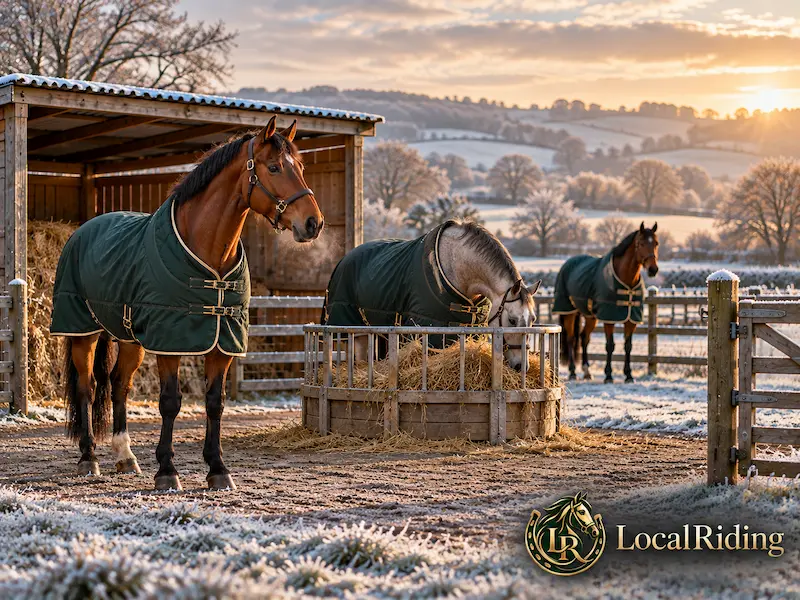 Rugged horses in a frosty winter paddock with shelter and hay available
Field management is one of the most important and often underestimated aspects of winter horse care.
A well-maintained turnout area supports movement, social contact, grazing and normal behaviour.
However, persistent rain and high stocking densities can quickly damage pasture.
Inspect Fencing and Boundaries
Walk around each winter field before ground conditions worsen.
Check for:
- Broken posts and rails.
- Loose electric tape or damaged fencing.
- Exposed wire or sharp objects.
- Unsafe gates and latches.
- Damaged hedges and boundaries.
- Fallen branches and poisonous plants.
- Holes, unstable ground or hidden hazards.
Strong winds and winter storms can create new hazards, so continue inspecting throughout the season.
Improve Muddy Gateways
Gateways, feeding areas and water troughs are usually the first places to become heavily poached.
Deep mud increases the difficulty of moving around and can contribute to lower-leg skin problems, hoof contamination and slipping injuries.
Where suitable, install properly constructed equine-safe ground-stabilisation systems, hardstanding or drainage improvements.
Avoid simply tipping sharp rubble into muddy gateways. Inappropriate materials can create additional injuries and drainage problems.
Protect Heavily Used Grazing
Where land availability allows, consider rotational grazing or designating a winter turnout area to protect other paddocks.
But don't restrict horses to unsuitable areas simply to preserve grass.
Access to movement and social contact remains important, even when pasture management is difficult.
Provide Shelter
Horses living outdoors should have access to effective shelter from adverse weather.
This might include:
- Established hedgerows.
- Suitable woodland edges.
- Purpose-built field shelters.
- Windbreaks or other appropriate structures.
Remember that deciduous trees provide less protection once their leaves have fallen.
Shelter must be safely located and large enough for the horses using it, with management that reduces bullying or competition for access.
A field shelter surrounded by deep mud may require ground improvements to remain useful.
5. Prepare Stables for Winter Occupation
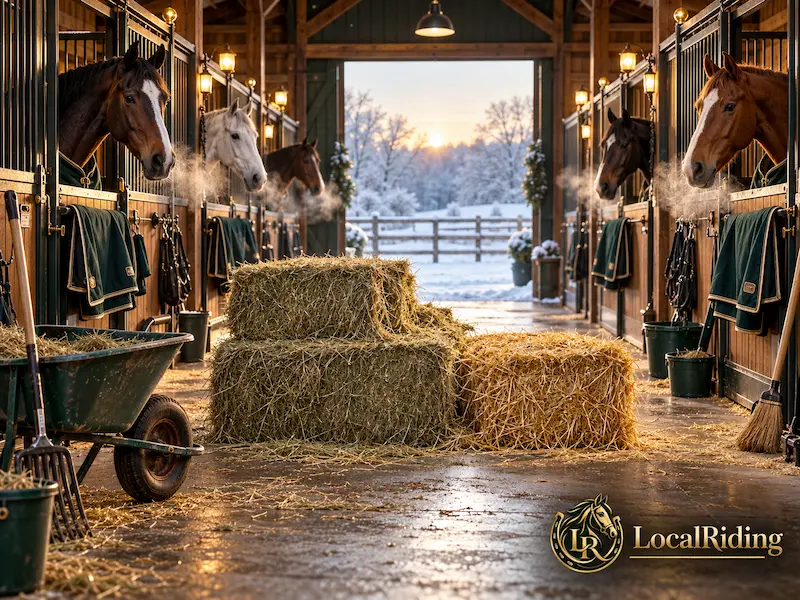 A well-ventilated stable barn stocked with hay and bedding on a winter morning
If your horse will spend more time indoors, autumn is the time to check that the stable is safe, dry and well ventilated.
Check the Building
Inspect the roof, guttering, doors, drainage, lighting and flooring.
Repair leaks before heavy rain arrives.
Check that:
- Stable doors open and close properly.
- Bolts and hinges are secure.
- Floors don't have dangerous damage.
- Water isn't entering the stable.
- Lighting and electrical fittings are safe.
- There are no exposed nails or sharp edges.
Ventilation Is Essential
It's tempting to close every window and door when temperatures drop.
However, poor ventilation allows moisture, dust, ammonia and airborne contaminants to build up.
These can contribute to respiratory irritation and exacerbate conditions such as equine asthma.
Provide adequate ventilation without unnecessarily exposing the horse to severe draughts.
Clean bedding, suitable forage and careful stable management are more valuable than simply making the building warmer.
Stock Bedding Supplies
Arrange a reliable supply of suitable bedding before winter demand increases.
Straw, shavings, wood pellets and other options all have advantages depending on availability, dust levels, absorbency and the horse's needs.
Remember that a horse spending longer indoors may use more bedding than during summer.
Plan sufficient storage without allowing bedding to become damp or contaminated.
6. Calculate Your Winter Hay and Forage Requirements
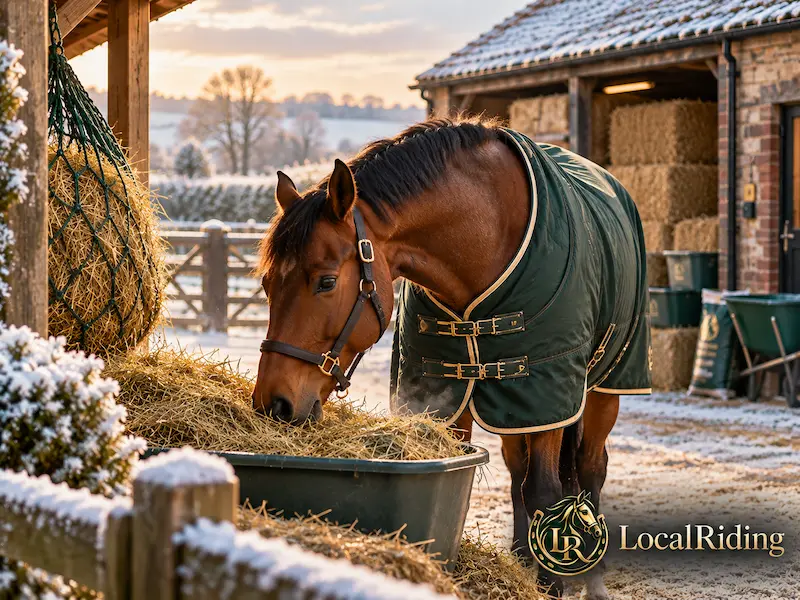 A rugged horse eating plentiful hay on a cold winter morning
Forage is the foundation of winter feeding.
When grass growth slows, supplementary hay or haylage often becomes essential.
The amount required depends on bodyweight, grazing, forage quality, workload and individual health.
How Much Hay Does a Horse Need?
As a broad starting point, many adult horses require total daily forage dry matter equivalent to approximately 1.5–2% of bodyweight, with adjustments for individual needs.
For a 500 kg horse, that represents approximately 7.5–10 kg of forage dry matter per day.
Because hay contains some moisture, the corresponding weight of hay offered will be higher.
A horse receiving all its forage from hay may therefore require roughly 9–12 kg daily, depending on hay dry matter and nutritional requirements.
This is a planning illustration rather than a feeding prescription.
Horses with limited turnout, dental difficulties, obesity, laminitis risk or metabolic disorders may need individually managed diets.
Plan for the Full Winter
As an example:
A horse consuming 10 kg of hay daily for 150 days would require 1,500 kg of hay before allowing for wastage.
That is approximately 1.5 tonnes.
Calculate requirements for your own circumstances, including grazing availability, hay bale weight, storage conditions and anticipated wastage.
Buying forage early can improve planning, but don't assume prices will always rise at a particular time.
Use reputable suppliers, confirm the quality and weight of the forage, and avoid purchasing more than you can safely store.
Inspect Forage Quality
Check for:
- Visible mould.
- Excessive dust.
- Unusual or musty smells.
- Dampness and poor storage.
- Contamination with foreign material.
If forage quality is uncertain, seek professional advice or consider analysis.
For horses with respiratory sensitivities, appropriate low-dust forage management is especially important.
Feeding Several Horses Together
When feeding hay in groups, provide sufficient space and feeding points to minimise competition.
Subordinate horses may otherwise receive less forage than intended.
Where appropriate, use suitable hay feeders to reduce contamination and wastage, ensuring they are safe for the animals using them.
7. Don't Overlook Winter Water Supplies
Fresh drinking water is essential throughout the year.
In freezing conditions, buckets, troughs, taps and pipework may freeze, leaving horses without adequate water.
A horse eating predominantly dry forage still needs an adequate supply of drinking water.
Insufficient water intake can increase the risk of dehydration and impaction colic.
Prepare Before the First Freeze
- Insulate vulnerable pipework.
- Check automatic drinkers.
- Keep spare buckets available.
- Store an emergency supply of clean water.
- Check troughs regularly for ice.
- Maintain access to a reliable alternative water source.
In freezing conditions, water may need checking several times a day.
Safe access is just as important as quantity. Slippery ice around troughs can become dangerous.
Don't assume a frozen field trough will thaw sufficiently during the day.
8. Protect Hooves and Lower Legs from Winter Conditions
Persistent mud and wet bedding can create additional challenges for hoof and skin health.
Check your horse's feet daily.
Remove stones and compacted debris, inspect the frog and sole, and look for loose shoes or cracks.
Watch for Winter Hoof Problems
Common concerns include:
- Thrush.
- Hoof abscesses.
- Loose or lost shoes.
- Damaged hoof walls.
- Bruising and excessive wear.
Maintain regular farrier appointments rather than automatically lengthening intervals because the horse is working less.
Check for Mud Fever
Mud fever, or pastern dermatitis, affects the skin around the lower legs, heels and pasterns.
Check regularly for scabs, inflammation, swelling or painful skin.
Avoid aggressive scrubbing and repeated unnecessary washing.
If skin becomes inflamed or infected, seek veterinary advice about appropriate management and treatment.
Provide Suitable Dry Standing
Where practical, provide access to well-drained hardstanding, a suitable field shelter or clean, dry stabling.
The aim isn't to eliminate all contact with wet ground, but to reduce prolonged exposure to saturated, contaminated conditions.
For more detailed guidance, see LocalRiding's Equine Winter Hoof Care article.
9. Maintain Movement, Exercise and Companionship
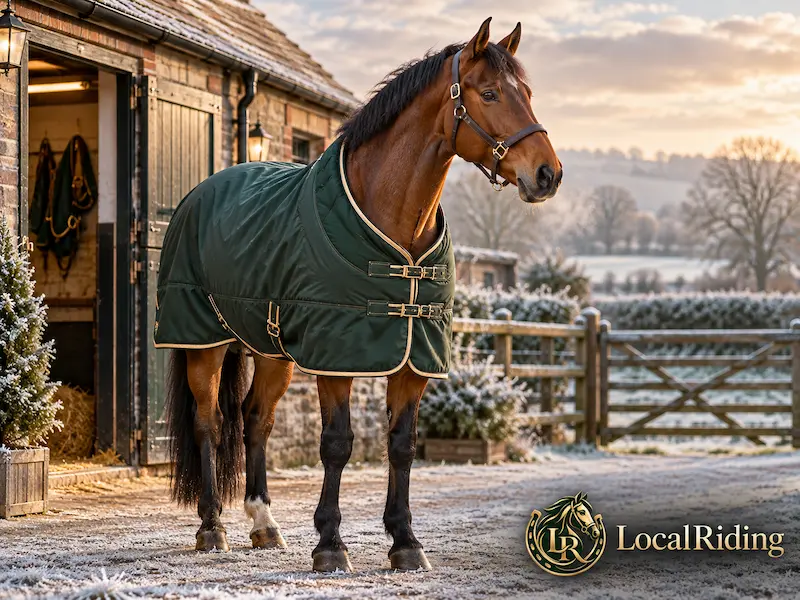 A horse in a winter turnout rug ready to go out to the paddock
Winter can significantly change a horse's routine.
Shorter daylight hours and restricted field access sometimes mean horses spend much longer in stables than they did during summer.
However, horses remain social, active animals throughout the year.
They still need suitable opportunities to move, forage and interact with other horses.
Plan for Reduced Turnout
If winter turnout is limited, consider alternatives such as:
- Safe surfaced turnout areas.
- Suitable in-hand exercise.
- Appropriate ridden work.
- Horse walkers, when properly supervised and suitable.
- Enrichment and increased forage opportunities.
- Safe social interaction with other horses.
A reduction in exercise should be reflected in the feeding programme.
An animal doing substantially less work may need fewer dietary calories.
Introduce Routine Changes Gradually
Moving abruptly from full-time grazing to prolonged stabling can affect diet, gut health and behaviour.
Where practical, introduce changes gradually over approximately 10–14 days, adjusting for individual circumstances.
Monitor eating, drinking, droppings and behaviour during the transition.
Adapt Riding to Winter Ground
Frozen ruts, ice, deep mud and waterlogged arenas can all increase injury risk.
Assess conditions before exercising.
Never force work on dangerous footing simply to maintain a normal riding schedule.
10. Pay Extra Attention to Older Horses and Vulnerable Animals
Not every horse enters winter with the same ability to maintain body temperature and condition.
Older horses, youngsters and animals with existing medical problems may need additional support.
Older Horses
Older horses may have difficulty maintaining weight, particularly where dental problems or reduced digestive efficiency affect forage consumption.
Monitor condition closely and ask your vet or nutritionist about suitable feeding options where necessary.
Some elderly horses also benefit from additional shelter, suitable rugs and carefully managed turnout.
Overweight Horses and Native Ponies
For healthy overweight horses, sensible seasonal weight reduction may be beneficial.
However, this should be gradual, monitored and consistent with welfare.
Don't use cold exposure, prolonged forage deprivation or excessive exercise as aggressive weight-loss methods.
Ponies with laminitis risk or metabolic disease require particular care.
Horses with Respiratory Problems
More time stabled can increase exposure to dust and airborne irritants.
Ensure good ventilation, suitable bedding and appropriate forage.
If a horse develops persistent coughing, nasal discharge or breathing difficulty, seek veterinary assessment.
11. Prepare for Winter Emergencies
Bad weather can make minor problems considerably more difficult to manage.
Storms may damage fencing, electricity supplies can fail, and frozen roads may delay access to the yard.
Preparing in advance reduces the chance of a manageable situation developing into an emergency.
Check Your Equine First-Aid Kit
Inspect supplies for damage and expiry dates.
Useful items include:
- A suitable equine thermometer.
- Sterile dressings and wound pads.
- Veterinary-approved cleansing supplies.
- Bandaging materials.
- Scissors and disposable gloves.
- Clean towels.
- A torch or headlamp.
- Important emergency contact details.
Avoid keeping or administering prescription medication without appropriate veterinary direction.
Check that everyone responsible for your horse knows where the first-aid kit is stored.
Create a Winter Emergency Plan
Make sure you know:
- Who will check your horse if you cannot reach the yard.
- How to contact your vet out of hours.
- How emergency transport can be arranged.
- Who can authorise veterinary attention if you're unavailable.
- Where horses can be moved if a field or stable becomes unsafe.
- How water will be supplied if pipes freeze.
Keep contact details accessible to other authorised carers.
Personal Safety Matters Too
Winter yard work often takes place in poor light, heavy rain or freezing conditions.
Check paths and lighting, wear suitable footwear, and avoid taking unnecessary risks around icy surfaces or damaged structures.
Keep a charged mobile phone available and consider how someone would know if you suffered an accident while working alone.
12. Budget for the Extra Cost of Winter
Winter horse ownership can be considerably more expensive than summer management.
Potential increases include:
- Additional forage.
- Bedding.
- Rug cleaning and repairs.
- Assisted turnout or bringing in.
- More frequent stable management.
- Arena lighting.
- Fuel for additional yard visits.
- Field maintenance.
- Emergency repairs.
Prepare a winter budget before the season starts.
Buying supplies thoughtfully, maintaining equipment and coordinating deliveries with other yard users may help reduce expenditure.
However, don't compromise essential welfare to meet a budget.
13. Your September-to-March Winter Preparation Plan
September: Assess and Plan
Review health and body condition, inspect rugs, examine turnout areas and estimate winter forage requirements.
Arrange any outstanding dental, veterinary or farrier appointments.
October: Complete Essential Preparation
Finish stable maintenance, check drainage and fencing, prepare bedding supplies and confirm clipping and rugging arrangements.
Review parasite control with your vet or wormer prescriber.
November: Establish the Winter Routine
Begin any seasonal feeding or stabling changes gradually.
Monitor grazing, water, body condition and the horse's comfort.
December–January: Maintain and Monitor
Check water for freezing, maintain forage supplies, inspect rugs daily and watch for mud-related hoof and skin problems.
Continue appropriate movement, turnout and companionship.
February–March: Review and Adapt
Assess body condition and winter field damage.
Consider changing rug requirements as temperatures vary.
Prepare for changes in spring grazing and workload.
Remember that UK weather differs significantly between regions and from one year to another.
Use this schedule as a guide, not a substitute for observing actual conditions.
14. The LocalRiding Winter Preparation Checklist
Use this checklist before the season begins, and revisit it as winter progresses.
Health and Veterinary Care
- Vaccinations reviewed.
- Dental examination arranged if due.
- Parasite-control plan reviewed with a qualified adviser.
- Body condition recorded.
- Farrier appointment scheduled.
- Any existing health conditions reviewed.
Rugs and Equipment
- Rugs inspected for damage.
- Rug fit checked.
- Repairs and reproofing completed.
- Suitable spare rug available where needed.
- Clipping equipment checked.
- Grooming and first-aid supplies stocked.
Fields and Turnout
- Fencing and gates inspected.
- Muddy gateways assessed.
- Water troughs checked.
- Shelter available.
- Field hazards removed.
- Winter turnout arrangements confirmed.
Stables
- Roof and gutters checked.
- Ventilation adequate.
- Flooring and doors safe.
- Bedding supplies arranged.
- Lighting working.
- Feed and forage stored safely.
Feeding and Water
- Winter forage requirements calculated.
- Reliable forage supplier identified.
- Feed ration reviewed for winter workload.
- Body condition monitoring planned.
- Water supplies protected against freezing.
- Emergency water available.
Emergency Planning
- Vet and farrier contact numbers accessible.
- Backup horse-care arrangements confirmed.
- Emergency transport plan available.
- First-aid kit inspected.
- Storm and power-failure plans considered.
- Winter costs allowed for in the budget.
Final Thoughts: A Well-Prepared Horse Is a Happier Winter Horse
Winter horse care doesn't need to involve expensive products, heavyweight rugs or complicated routines.
For most horses, the priorities remain remarkably consistent throughout the year: suitable forage, fresh water, movement, companionship, shelter and appropriate healthcare.
What changes in winter is the level of planning needed to provide them reliably.
By preparing fields, checking equipment, reviewing nutrition and organising veterinary care before the worst weather arrives, you can reduce unnecessary stress and help prevent avoidable problems.
Above all, assess your horse as an individual.
A healthy native pony living out with good shelter may need very different management from an elderly Thoroughbred or a fully clipped competition horse.
The best winter preparation isn't about doing more of everything. It's about anticipating your horse's needs and making sure the essentials are consistently in place.
With thoughtful preparation, both you and your horse can approach the British winter with confidence.
This article provides general educational guidance and does not replace individual veterinary or qualified professional advice.
Debbie Irwin
Livery Yard Manager & Equestrian Professional
Debbie has run professional showing yards and mixed livery yards in Lincolnshire and Essex for over 30 years. She has competed and taught at various levels. She writes about practical horse health, yard life, livery and everyday horse health and management.
Support Debbie on Ko-fi ☕Found this guide helpful? LocalRiding is run independently without ads. If you'd like to chip in towards the site's upkeep, you can buy Debbie a hot drink on a cold day on Ko-fi, she'll really appreciate it.